Get Full Government Meeting Transcripts, Videos, & Alerts Forever!
Get email alerts on the Opioid Crisis topic
No spam. Unsubscribe anytime.
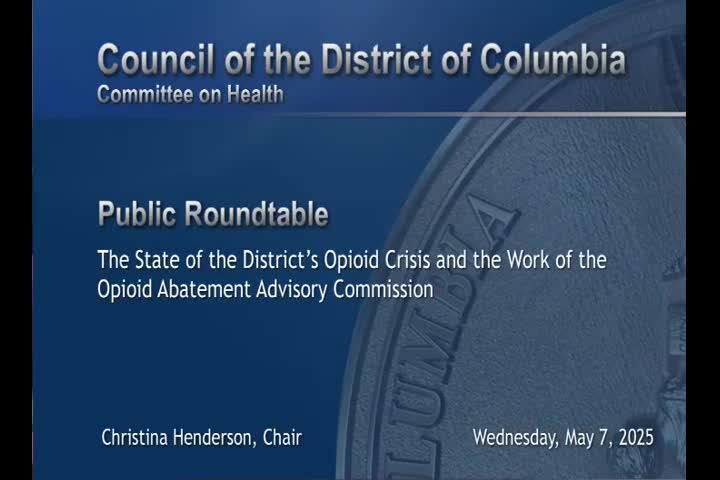
Fatal opioid deaths fall in 2024 but disparities persist, DC roundtable finds
Summary
At a May 7 Committee on Health roundtable, city and community officials said fatal opioid overdoses declined in 2024 but that nonfatal overdoses, the changing drug supply and racial and age disparities remain urgent challenges.
At a public roundtable Wednesday, Councilmember Christina Henderson, chair of the Committee on Health, reported a significant decline in fatal opioid overdoses in the District of Columbia while warning that major problems remain.
"Since 2018, the district has been grappling with an opioid crisis that has tragically claimed the lives of 2,660 residents," Henderson said, and she noted that city data show a 34 percent drop in fatal overdoses in 2024 compared with 2023. She added: "this positive trend has so far continued into 2025."
Why this matters: the decline in deaths is the most immediately visible metric of progress, but city officials and providers told the Committee that the crisis persists in other measures and in particular populations. The Office of the Chief Medical Examiner and health agencies have begun to refine toxicology and real‑time surveillance, and the Mayor’s Live Long DC plan and the Opioid Abatement Advisory Commission are directing funding and program work.
Officials and service providers described the mixed picture. The city reported more than 18,000 suspected opioid overdoses reversed with naloxone by Fire and EMS and community partners since 2018. However, nonfatal overdoses have not fallen at the same pace; the roundtable record shows 4,798 nonfatal overdoses in the most recent year, a 6.3 percent decline from the prior year.
The roundtable also highlighted stark disparities. Henderson said the burden of fatal overdoses remains concentrated among older Black men, with particularly high impacts in several wards. "The impact of this crisis has disproportionately affected older Black men," she said, and the committee record shows Black men accounted for about 71 percent of fatal overdoses between February 2024 and January 2025. Nearly 60 percent of fatal overdoses involved people aged 50 or older.
City agencies emphasized that the decline in deaths likely reflects many factors rather than a single policy change. Department of Behavioral Health Director Barbara J. Bazaron said the administration had pursued a “whole of government” approach and credited a combination of harm reduction, expanded access to medication for addiction treatment, peer supports and enhanced data systems.
The panel also flagged a changing illicit drug supply — including wider detection of nonopioid adulterants — as a continuing risk to public safety and a driver of nonfatal overdoses.
Looking ahead: witnesses at the roundtable called for continued, sustained investment in surveillance, harm reduction and treatment access, and urged the commission and agencies to speed grant disbursements and to prioritize programs that address housing and reentry barriers that complicate recovery.
Methodology: The account above summarizes testimony and remarks delivered to the Committee on Health at a May 7, 2025 public roundtable and relies on statistics and statements presented by participants and city officials during that session.