Get Full Government Meeting Transcripts, Videos, & Alerts Forever!
Get email alerts on the Electric Reliability topic
No spam. Unsubscribe anytime.
State energy officials say summer 2025 outlook is cautiously optimistic but warn of winter and transmission challenges
Summary
At the Assembly's annual oversight hearing on electric reliability, state agencies and grid operators said recent procurement and battery additions reduced near‑term shortage risk but flagged winter peak growth, transmission build and data‑center load as key medium‑ and long‑term challenges.
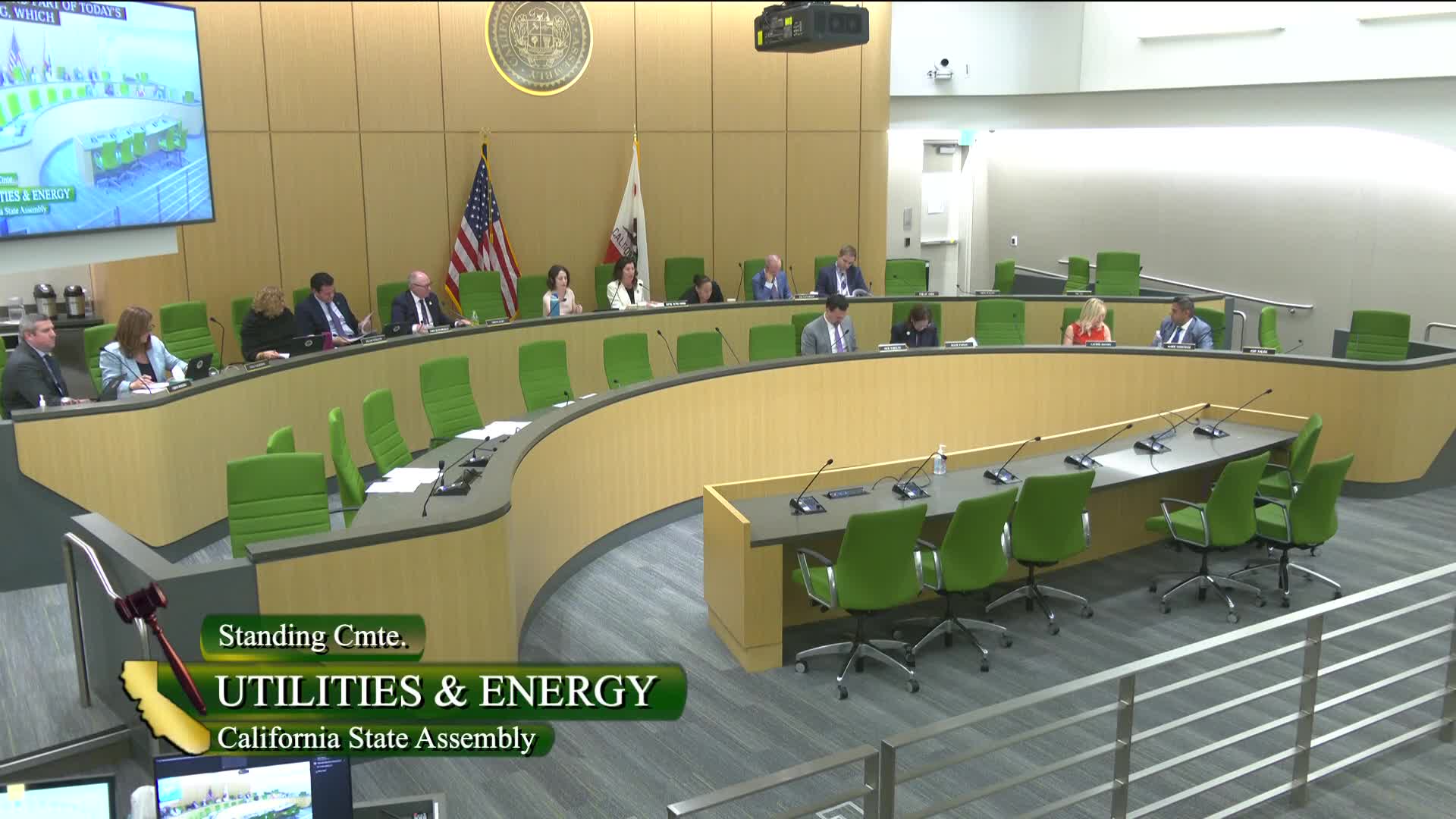
State energy regulators, grid operators and power providers told the Assembly Committee on Utilities and Energy that California enters summer 2025 better prepared than in recent years but remains exposed to extraordinary combined heat and wildfire events, winter peak growth and transmission constraints.
Panelists from the California Public Utilities Commission, the California Energy Commission, the California Independent System Operator and the Department of Water Resources described a series of coordinated actions since the 2020 and 2022 grid stress events: a large volume of procurement orders, fast growth in battery storage and resources placed under contract, interconnection queue reforms, and a strategic reliability reserve maintained by DWR. Elliot Mainzer, president and CEO of the CAISO, said probabilistic and deterministic studies show an expected surplus heading into summer — although he added that “wildfires and the potential for widespread heat” remain risks.
Vice chair Sivagunda of the California Energy Commission summarized near‑term and long‑term drivers of demand: a Commission forecast projects roughly 21 gigawatts of new peak demand over the next 15 years from electrification, electric vehicles and data centers, while climate change will raise both daytime highs and overnight minimums. She and other panelists called particular attention to the growing risk of a dual peak — higher winter demand driven by building electrification — which changes the resource mix needed for reliability.
Panelists highlighted several system improvements and remaining headwinds:
- Resource additions and storage: Agencies reported more than 25 GW of named capacity added to the CAISO area since 2020 and roughly 11 GW of batteries now online. The CPUC described procurement orders totaling about 8.8 GW of targeted clean capacity under IRP directives, and officials said record volumes of new capacity came online in 2024.
- Strategic reserve and contingencies: Officials said the state retains contingency volumes — described as roughly 3,000 MW of strategic reserve in DWR contracts — to lean on during extraordinary events, though some of those backstop contracts expire in 2026 and will need replacement or alternative supplies.
- Transmission and interconnection: CAISO described a 20‑year transmission outlook and an aggressive transmission plan that has risen to many billions of dollars per year in recent filings. CAISO also reported that FERC‑approved reforms to the interconnection queue have cleared about two‑thirds of pending requests in the early months after implementation, helping to focus study resources on projects that match system needs.
- Market integration: Officials said the Western Energy Imbalance Market and the newly approved extended day‑ahead market increase the region’s ability to move power where it is needed; CAISO said those tools have provided substantial production‑cost savings over the last decade.
Speakers from investor‑owned utilities and public providers echoed the agencies’ themes: Jillian Clegg of PG&E highlighted Diablo Canyon’s contribution this summer (Unit 1 already in extended operation; Unit 2 entering extended operation in August 2025), noted PG&E’s near‑term resource readiness and called for faster permitting and tariff clarity to avoid project delays. Ryan Tracy of Sonoma Clean Power and other community choice and independent providers warned that winter reliability — and the requirement for “clean firm” resources that can deliver through winter evenings — deserves far more programmatic attention. Rebecca Lee of NRG and representatives from municipal utilities emphasized demand flexibility, better interagency alignment and improved information sharing as ways to keep costs down.
Committee members asked about data center load, Diablo Canyon’s role and whether the state should expand regional market arrangements. Panelists said data‑center demand is a large uncertain variable and urged engagement with the hyperscale community on flexibility; they said that firm, dispatchable clean resources would be valuable in many futures; and they generally supported expanded regional markets and the Pathways initiative to shift energy more efficiently across the West.
Why it matters: The state’s clean‑energy transition is adding variable renewable resources and storage at record pace, but that future resource mix changes the reliability question: it increases the value of transmission, clean firm resources, demand flexibility and regional market tools while creating new winter reliability challenges that were not the central design point of past planning.
What to watch next: transmission project approvals and construction schedules, the outcome of CPUC procurement and resource‑adequacy refinements (slice‑of‑day implementation), the results of the Energization OIR and the extent to which strategic reserve contracts are renewed or replaced when they expire in 2026.