
Hazel Park board votes to enter closed session to review Allen Law Group report after debate over Open Meetings Act
Get AI-powered insights, summaries, and transcripts
Subscribe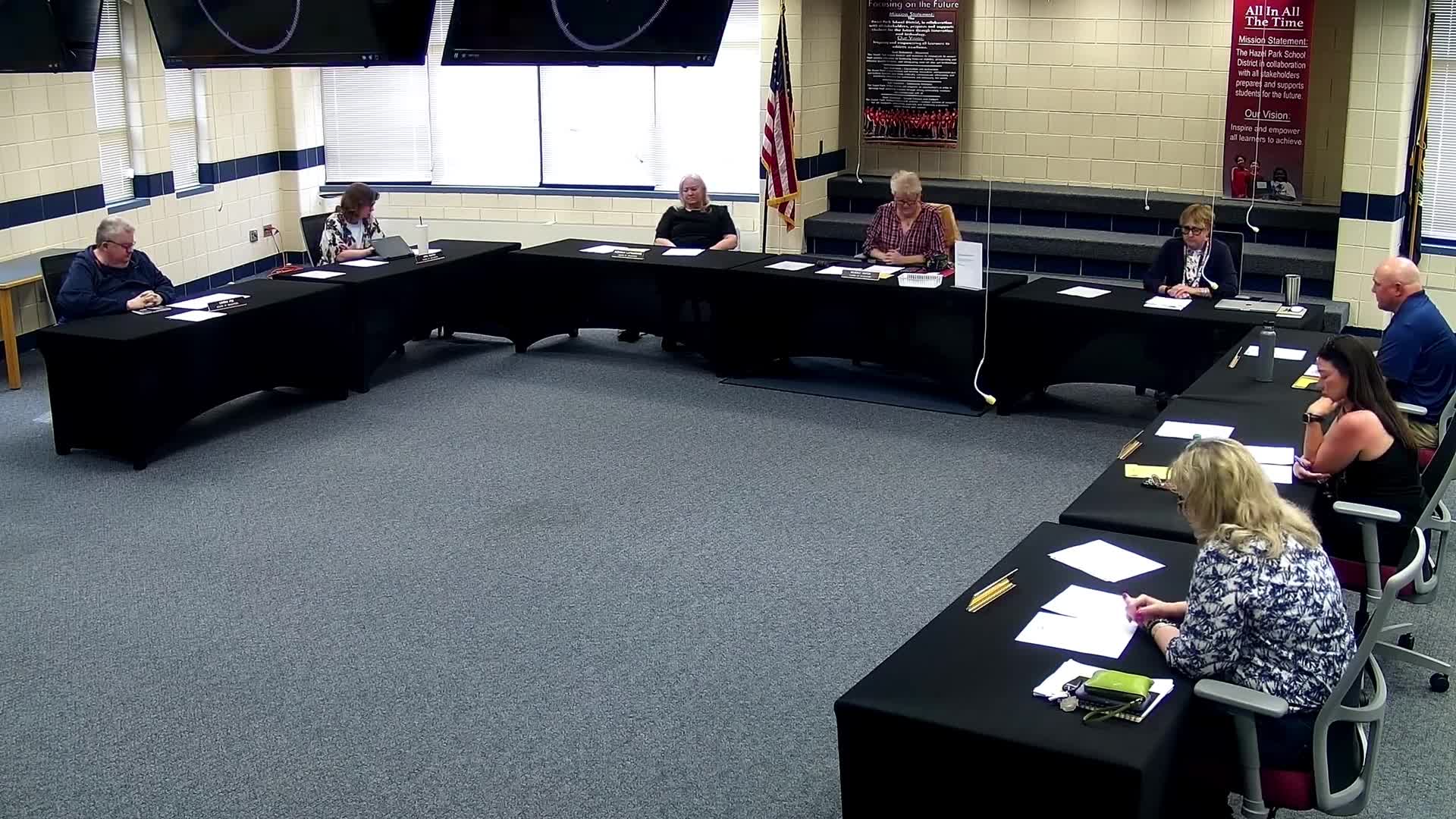
Summary
The Hazel Park School District board voted to go into a closed session to review a report from the Allen Law Group after members debated whether the report constituted a legal opinion subject to attorney-client privilege and whether the board had authority to meet behind closed doors without its retained board attorney present.
The Hazel Park School District of the City of board voted to recess into a closed session to receive and discuss a report from the Allen Law Group, after a lengthy discussion about whether the report constituted a legal opinion protected by attorney‑client privilege and whether the meeting complied with the Open Meetings Act.
Board President Pam called the special meeting to order and members approved the agenda. The board then moved to a motion to recess into closed session “under section 8(1)(h) to consider material exempt from discussion or disclosure by state or federal statute — attorney‑client privilege.” The motion was made by Heidi and seconded by Monica.
The motion generated extended discussion. Several board members raised concerns that the Allen Law Group had been retained as independent investigators and were not the district’s attorneys, and questioned whether reviewing the firm’s findings in closed session was permitted when the board had not yet received a written legal opinion from the board’s retained counsel. Board members also said they were uncomfortable proceeding without Tim Gardner, the board’s hired attorney from the Truman Law Group, present to explain the legal consequences and options.
An attorney representing Allen Law Group told the board the firm’s written findings included a legal opinion as to whether the facts uncovered amounted to violations of law or board policy and that that opinion could be discussed in closed session. The Allen Law Group attorney said Truman (the board’s counsel) could later advise the board about recommended employment actions based on that opinion.
The board initially voted to recess into closed session with a 4‑3 tally. After further discussion — including a statement that a two‑thirds vote was required to enter a closed session for attorney‑client privileged matters under the Open Meetings Act — the board reconvened for another roll call and re-held the motion. On the subsequent vote the motion passed 6‑1. Members who opposed doing the matter in closed session said they preferred the discussion occur in open session and that it was unfair to the employee on leave to hear findings in private without the board’s retained counsel present.
After holding the closed session, the board returned to regular session. A motion to return to regular session was made by Heidi, seconded by Monica, and the roll call reflected the meeting’s return to open session. There was no public comment at the meeting’s public comment periods. Board members offered brief administrative remarks and then adjourned.
The Allen Law Group report was described to the board as an investigatory report with an accompanying legal opinion about whether the allegations constituted violations of law or board policy. The board was told that Truman Law Group (Tim Gardner) is expected to review the Allen Law Group material and advise the board next week about recommended employment actions; any decision to make the Allen Law Group report public would require a formal board action to waive attorney‑client privilege or otherwise release the material.
No formal employment actions or disciplinary decisions were announced at the meeting. The board did not take any vote at the meeting to release the report or to take employment action; members were told those steps would follow after the board’s counsel provides further legal advice.
Meeting records show the board considered the motion twice because of uncertainty about the required vote threshold under the Open Meetings Act; the final, controlling vote to enter closed session was 6‑1. The meeting record does not specify any dates for follow‑up meetings beyond a reference that the board attorney would appear “next week.”