Get Full Government Meeting Transcripts, Videos, & Alerts Forever!
Get email alerts on the City Budget Forecast topic
No spam. Unsubscribe anytime.
San Antonio staff warns of multi‑year shortfall; consultants propose hybrid zero‑based review
Summary
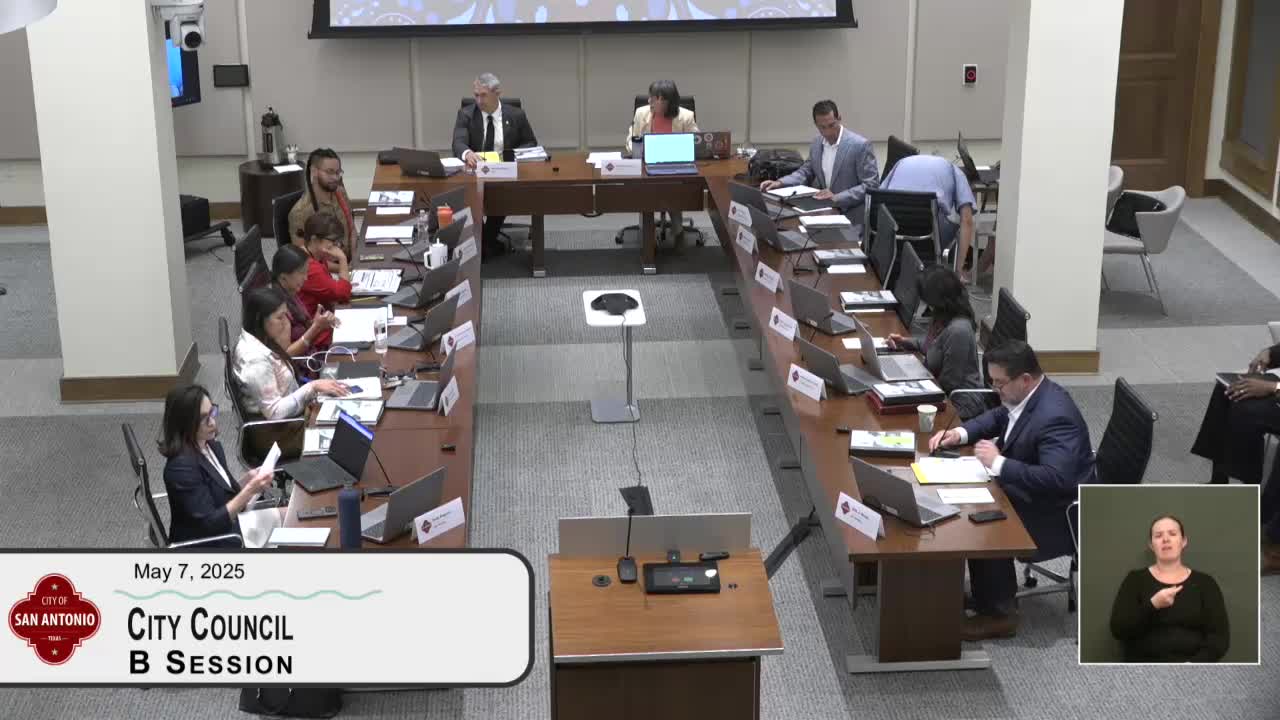
SAN ANTONIO — City of San Antonio budget staff told the City Council on May 7, 2025, that revenue collections for fiscal 2025 are coming in below projections and that a five‑year forecast shows growing structural gaps that will require spending reductions or other adjustments.
SAN ANTONIO — City of San Antonio budget staff told the City Council on May 7, 2025, that revenue collections for fiscal 2025 are coming in below projections and that a five‑year forecast shows growing structural gaps that will require spending reductions or other adjustments.
The city’s budget director, Cristina Tay, told the council that shortfalls are driven by weaker sales and hotel tax receipts, lower airport activity and declines in assessed property values amid protests, exemptions and litigation. “Based on this update, the general fund is $2.4 million less than we expected when we adopted the budget in September,” Tay said. She and her team said staff will refine projections through June and provide updates ahead of the council’s goal‑setting session.
Why it matters: City staff said the current fiscal picture is manageable for the remainder of FY25 but that without changes the five‑year forecast shows a structural imbalance. The city’s presentation projected a roughly $31 million gap in FY26 that could grow to about $148 million in FY27, figures staff said reflect current revenue assumptions and planned cost growth.
Drivers and numbers - Sales taxes and hotel occupancy taxes have grown more slowly than budgeted; staff said hotel occupancy and average nightly rates are lower than expected. Airport revenues are also underperforming compared with the budget. - Staff said assessed property value reductions following protests, exemptions and arbitration are lowering expected property tax collections; those valuation changes will also affect future years’ receipts. - The presentation included a multi‑year forecast that assumes limited property value growth; staff described the forecast as a planning tool, not a proposed budget.
Consultants’ review and recommendation PFM Consulting, the fiscal consultant that reviewed the city’s budget process, told council members it had evaluated multiple budgeting methodologies and recommended a combined approach that retains the city’s existing forecasting and strategic priority setting while incorporating targeted zero‑based budgeting elements for selected programs. "Our recommendation is a combined approach that uses elements of zero‑based budgeting where appropriate and maintains transparency and accountability," said Victoria Tadri of PFM Consulting.
PFM outlined a timeline that staff and council discussed: staff will continue refining revenue and expenditure estimates through June, the city will conduct a community budget survey (staff said the survey was scheduled for May 12), the proposed budget is expected in mid‑August and adoption was scheduled for Sept. 18 under the timeline presented to council.
Council reaction and next steps Council members asked detailed questions about the drivers of the forecast, how the city will protect core services and whether staffing or fee increases were likely. Councilmember White said he would not support a property tax increase. "I will never support any increase in property taxes," he said. Councilmember Vicky Rodríguez urged the council to protect services that address poverty, health access and housing and warned against disproportionate cuts to departments serving the most vulnerable.
Several council members emphasized use of the comprehensive review to identify process improvements and program duplications rather than across‑the‑board cuts, and asked staff to provide more detailed, department‑level data as PFM’s recommendations are implemented. Staff said the review will include several department‑level sessions over the summer and that a mid‑year budget adjustment is possible if updated receipts require it.
What the council directed or will do next - Staff will refine the FY25 projections and bring updated 6‑plus‑6 reports to the council ahead of the June goal‑setting session. - The city will continue the comprehensive budget review with department sessions in summer and coordinate community engagement tied to the budget timeline. - Staff signaled a potential mid‑year adjustment and said they will present options to close the FY26 and FY27 structural gaps, including spending reductions or other measures; no formal policy or vote was taken at the May 7 meeting.
Context and caveats City staff and consultants repeatedly cautioned that the five‑year forecast is a planning tool and not the adopted budget. Several numbers presented are preliminary and subject to change as updated valuation information, receipts and economic indicators arrive. Staff noted that legal and statutory limits (including state rules governing property tax rate increases and voter‑approved bonds) constrain revenue options and that certain changes would trigger additional processes such as voter approval.
The presentation and council discussion focused on process and priorities rather than on specific program eliminations; the council is scheduled to receive updated projections and additional department‑level detail before decisions are required later this year.