Get Full Government Meeting Transcripts, Videos, & Alerts Forever!
Get email alerts on the Personnel Compensation topic
No spam. Unsubscribe anytime.
County staff outline vehicle take‑home program, biweekly automobile allowance set at $610.24
Summary
Office of Central Services deputy fleet manager LP Monroe and Office of Finance payroll manager Teresa Pinkney briefed the commission on vehicle take-home categories, IRS tax implications and an automobile allowance increased to $610.24 biweekly for eligible executives.
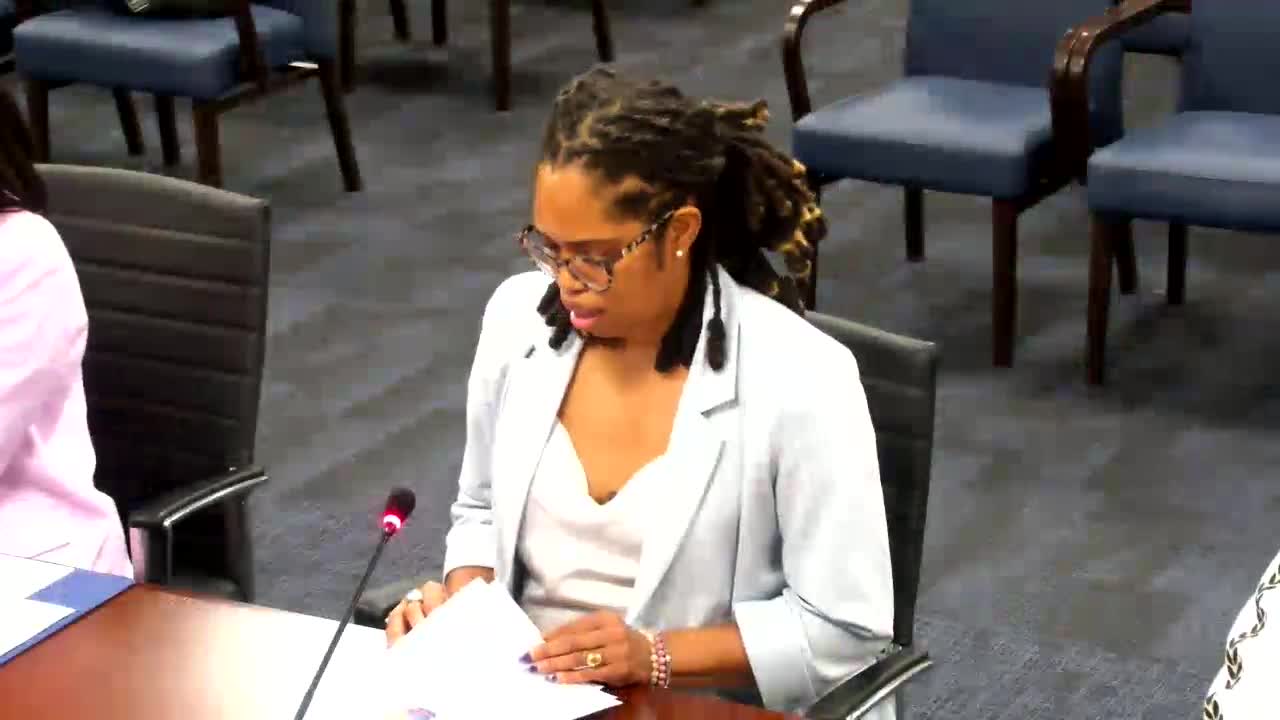
LP Monroe, deputy fleet division manager for Prince George's County Office of Central Services, and Teresa Pinkney, Office of Finance payroll manager, presented the county's vehicle take‑home options and the automobile allowance at the May 7 Compensation Review Commission meeting.
Monroe described four categories used in county policy: county-owned operational vehicles authorized for essential job functions, executive-assigned vehicles approved by the county executive, personal-vehicle mileage reimbursement for work use, and a biweekly automobile allowance for eligible executives.
"The automobile allowance" Monroe said, "is intended to cover fuel, insurance and vehicle payments," and the presentation lists the biweekly payment as $610.24. Monroe said that figure reflects market values for commonly assigned models (Camry, Durango, Tahoe, Blazer and selected EVs) and includes fuel and insurance costs.
Eligibility and administration
- Operational county-owned vehicles: assigned at the agency director or deputy director's discretion for essential operational needs; these vehicles typically carry county markings and job‑essential equipment. - Executive/leadership vehicles: employees seeking an executive-assigned vehicle must submit a VAR form to the county executive's office for approval; Monroe said approval is discretionary and taxable per IRS guidelines. - Personal-vehicle mileage reimbursement: for employees using personal vehicles on county business, reimbursed per policy. - Automobile allowance: biweekly payment listed at $610.24; Monroe asked employees to submit forms "as soon as possible, preferably before Dec. 5," and said staff prefer final forms in November to meet internal processing deadlines.
Monroe said the county is "right‑fitting" fleet assignments to match job functions and replace older vehicles with more fuel- and emissions‑efficient models. The presentation noted the county is adding hybrids and electric vehicles into administrative and some public-safety roles where appropriate.
Police and sheriff vehicles
Monroe explained vehicle classification for public safety: command staff commonly drive Durangos or similar vehicles, while administrative public‑safety staff use hybrids such as Camrys or Highlanders; the county is working to add EVs and hybrids where feasible.
Councilmembers and vehicles
Monroe said council members do not receive assigned take‑home vehicles but may use a pool car for official business. She also said council members are eligible for the automobile allowance if they elect it; "they either get the allowance or they use the fleet," Monroe said.
Questions from commissioners addressed EV adoption, right‑fitting vehicles to job functions, inclusion of public-safety vehicles in the chart and deadlines for allowance paperwork. Monroe and Pinkney provided the requested clarifications.
Ending
Monroe and Pinkney closed by offering to provide further details on fleet transition plans and the salary-comparison materials the commission requested for its next meeting.