Get Full Government Meeting Transcripts, Videos, & Alerts Forever!
Get email alerts on the Stormwater topic
No spam. Unsubscribe anytime.
Wellington staff outline stormwater operations, monitoring and water‑quality work
Summary
Public Works staff described pump operations, remote monitoring and ongoing maintenance designed to reduce flood risk and treat stormwater before it discharges to the regional system.
Wellington Public Works staff described how the village operates and maintains its stormwater system to manage flooding and improve water quality.
The village said pumps run whenever needed and rely on multiple fail‑safes: emergency floats start pumps automatically if water reaches preset elevations, pumps shut off when emergency conditions clear, and diesel backup generators power pumps during outages. "If the power goes out, we also have backup diesel generators to power the pumps," a Public Works representative said.
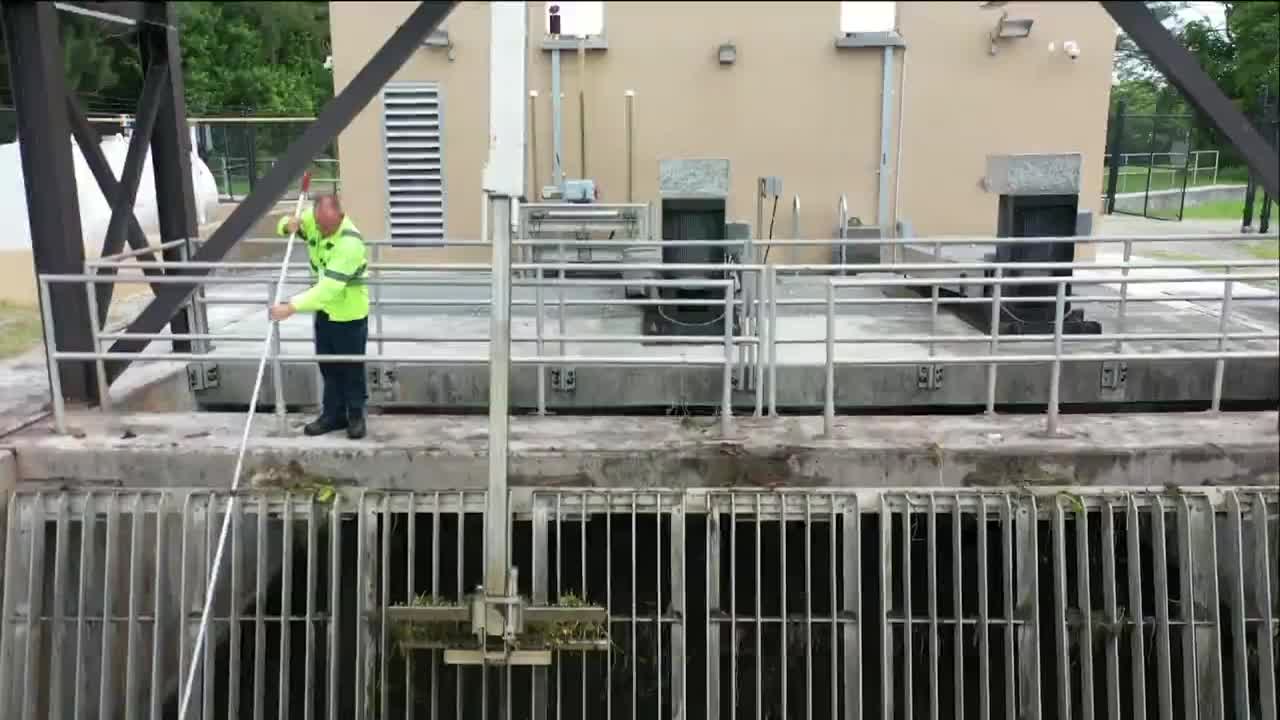
The presentation said Wellington uses a SCADA (Supervisory Control And Data Acquisition) system to monitor rainfall, water levels and pump status remotely. SCADA enables staff to start and stop pumps, operate trash rakes and check rain‑gauge records remotely.
Why it matters: Wellington officials said continuous monitoring and routine maintenance are essential because heavy storms can overload local infrastructure. Speakers cited past events that pushed the system to its limits, including Tropical Storm Faye (February 2008) and Hurricane Isaac (February 2012), and noted that the amount of rainfall — not merely the presence of a named storm — drives flood risk.
At the operational level, Public Works said the village maintains canals, vents and culvert crossings and has the right of way on land between private property lines and canals to perform that work. Staff described routine clearing of roots, sand and debris from pipes and said the village is re‑sloping canal vents to increase conveyance and storage capacity. The village coordinates with the South Florida Water Management District in advance of heavy rain; discharge gates are opened and pumps lowered to create storage capacity prior to storms.
Water‑quality measures: Speakers stressed that the village treats water before it enters the regional system as well as managing volume. Stormwater is routed through catch basins, berms, swales, lakes, ponds and retention areas; vegetation in swales and treatment areas slows flows and filters pollutants, including sediments, heavy metals and hydrocarbons. Public Works noted a prior project called "Section 24," described as a retention area south of the meeting site that holds water to allow nutrients and sediment to settle before discharge into the regional system.
Public outreach: The presentation encouraged property owners to review their local drainage and, ahead of storm season, contact Public Works for site visits. A short video shown near the end of the meeting reiterated maintenance responsibilities and urged residents to call staff with system concerns.
Ending: Officials said continued capital and maintenance work, together with SCADA monitoring and coordination with regional water managers, are the village’s primary tools to reduce flood risk and protect downstream water quality.