Get Full Government Meeting Transcripts, Videos, & Alerts Forever!
Get email alerts on the Rfa Process topic
No spam. Unsubscribe anytime.
CAB members and applicants raise procedural concerns about RFA process and scoring
Summary
Board members and applicants said the RFA scoring platform and timing caused confusion and may disadvantage new or smaller providers; staff committed to additional training and an optional reflection meeting.
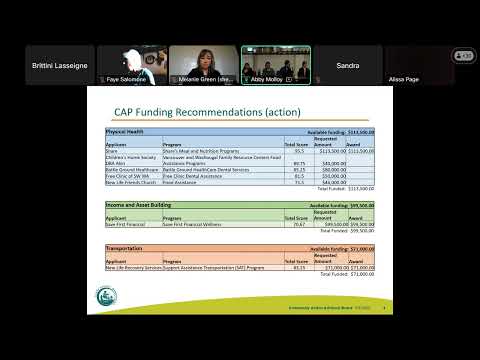
During the meetingafter votes on awards, CAB members and public commenters spent substantial time discussing the RFA review process, scoring platform usability and communication about an anticipated 20% state funding reduction.
Several CAB members described technical and accessibility problems with the countys application-review platform (Bonfire). CAB member Nikia Hunter said the platform created navigation challenges and asked for accessibility accommodations, noting, “Maybe color coding...to help myself in my dyslexia to keep a track of what is tasked to me.” Faye Salomon urged staff to provide step-by-step instructions for reviewers: “When we get instructions ... we need to hear how to do things step by step. Dont assume that somebody's going to know that.” Staff responded that Bonfire imposes certain limitations but that the county is evaluating alternative systems and that individual PDFs of submissions can be downloaded to make review easier.
Multiple CAB members recommended more group review time and targeted training. One reviewer said small-group working sessions during the review period were helpful for troubleshooting and suggested the county offer more scheduled office hours or in-person working sessions. County staff committed to a dedicated training and system overview at the July meeting focused on the homeless crisis response system and the CABs role in scoring and monitoring.
Applicants and other community members who spoke during open public forum said communications about state budget expectations affected their proposals. Sarah Gongora Garcia, program manager with Seymour CSW, said applicants had been asked to plan for a 20% reduction and that her agency prepared its proposal accordingly: “we did receive directive in early December...we were directed to give a proposal with our applicant at a 20% reduction.” Another commenter, Ren Avatri, urged the CAB to review whether the scoring and award method disproportionately advantages larger or more experienced providers and to consider process changes so newer or smaller organizations can compete.
Staff acknowledged the timing challenge: county staff had prepared RFAs under an assumption of reduced state funding and then received unofficial, higher Commerce estimates late in the process. Staff said the change allowed them to offer larger awards in some categories, but also created operational timing and communications issues for applicants and providers planning staffing and services.
As a next step, staff said they will circulate a doodle poll for an optional reflection meeting to collect CAB feedback on process improvements, and they will schedule training in July to review system priorities, scoring expectations and technical review procedures.
The discussion did not change the awards the CAB approved earlier in the meeting; staff reiterated that any changes to awards would require explicit justification tied to RFA criteria.