Get Full Government Meeting Transcripts, Videos, & Alerts Forever!
Get email alerts on the Bus Driver Relief topic
No spam. Unsubscribe anytime.
Committee rejects amendment and recommends approving end of TNC van relief pilot amid dispute over $35,000 reallocation
Summary
After extended public and union comment, the county committee voted 5‑0 to reject an amendment reallocating $35,000 from a van-based driver relief pilot to overtime for in‑house security and then voted 5‑0 to recommend adoption of a budget amendment that would end the transportation network company (TNC) van relief pilot program.
Milwaukee County’s Committee on Transit and Transportation on an 5‑0 vote recommended adoption of a county budget amendment that would not implement the transportation network companies (TNC) van driver relief pilot as directed in the 2025 adopted budget, after rejecting an amendment that sought to reallocate $35,000 to overtime for in‑house public safety officers.
Milwaukee County Transit System (MCTS) leaders Kevin Pumphrey, chief operating officer, and Julie Esch, interim director, told the committee they had operated a van‑based pilot for nearly a year but concluded the limited funding and operational constraints made a different allocation of the money more productive. Pumphrey said the agency could use the funds to expand public safety officer (PSO) and transit safety officer (TSO) overtime and training, arguing PSOs cover more ground and are more likely to prevent security incidents than van pickups alone.
“Our data consistently shows an operator is more likely to have a security incident on the bus than while waiting to be relieved,” Pumphrey said, describing recent ride‑alongs and noting PSOs’ daily routines and visibility can respond to operators’ safety needs.
Union representatives and several supervisors urged continued van relief or a negotiated solution rather than an abrupt end. Tom Stawicki, legislative director for ATU Local 998, said the amendment to move the $35,000 to overtime was well intentioned but “falls short of any meaningful goal,” and that some cost assumptions in MCTS materials obscured the pilot’s effectiveness. Stawicki noted the $35,000 was intended to support a transportation service to get operators from relief points back to stations and argued schedule and payroll changes could reduce overtime costs.
Donnell Shorter, former ATU Local 998 president, and members of ATU described instances of operators waiting outdoors in bad weather and of operators being assaulted or threatened while waiting at relief points. MCTS union speakers said targeted van service for higher‑risk relief points achieved meaningful use in some locations and asked the committee to keep the program in place while internal negotiations continue.
Supervisor Rowland (district) said MCTS staff told him the $35,000 could pay roughly six weeks for the van relief program or about six months of additional security overtime, and cited systemwide incident data: 34 assaults on bus operators in the prior calendar year, with three reported at relief points. MCTS staff said, if used for van relief, the $35,000 would extend the pilot only until about early August 2025 before funds were exhausted.
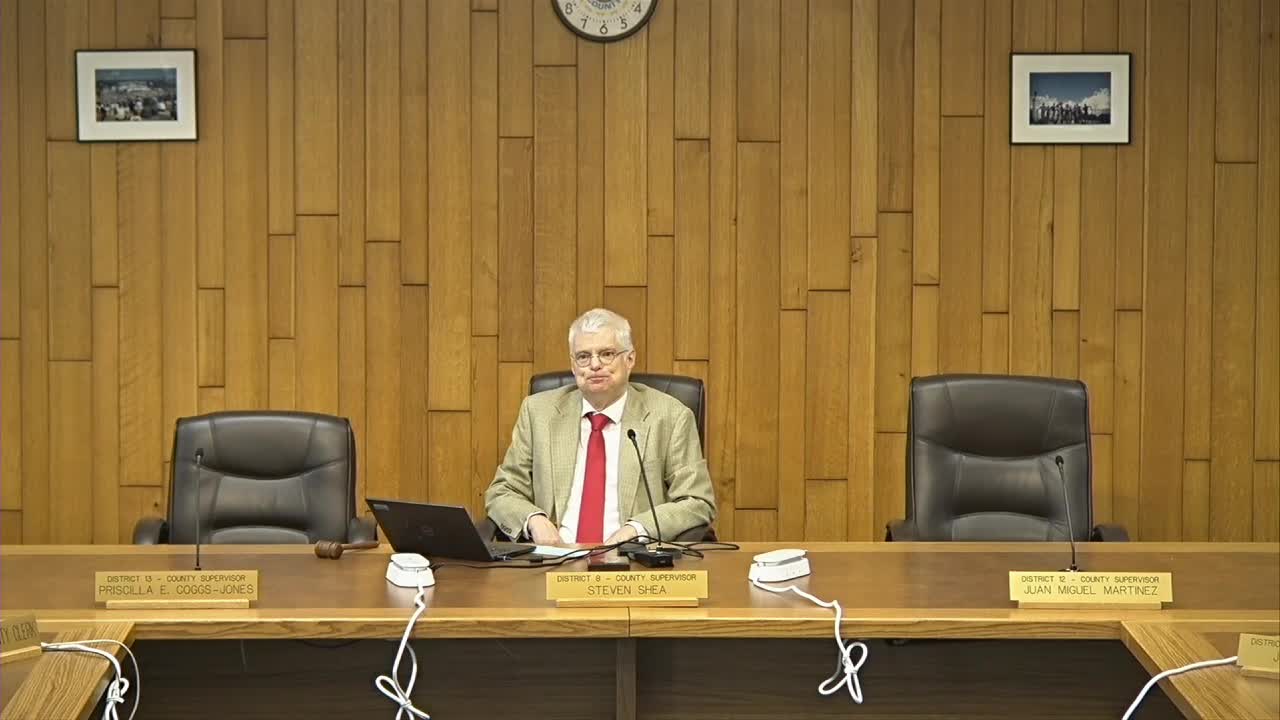
At the committee meeting, Supervisor Martinez moved to reject the proposed amendment (to reallocate the $35,000); the motion to reject the amendment carried on a 5‑0 roll call. The committee then voted 5‑0 to recommend adoption of the budget amendment as presented, which effectively approves not implementing the TNC van driver relief pilot program as directed in the 2025 adopted budget.
Speakers raised implementation and bargaining issues: MCTS said the pilot had been negotiated with the union and that some aspects were under collective bargaining, and MCTS staff also said one relief van had been damaged in an accident earlier in the year and was undergoing additional maintenance checks after in‑house repairs.
The committee’s recommendation now proceeds to the county board and the finance committee for their consideration as part of the formal county budget and amendment process.