Get Full Government Meeting Transcripts, Videos, & Alerts Forever!
Get email alerts on the Roads Funding topic
No spam. Unsubscribe anytime.
Lake County supervisors direct staff to study dedicated road sales tax; return in 3–6 months
Summary
The Lake County Board of Supervisors agreed by consensus to direct staff to research the feasibility of a dedicated sales tax or other funding options for unincorporated county roads and return with findings within three to six months; the board did not authorize placing a measure on the ballot.
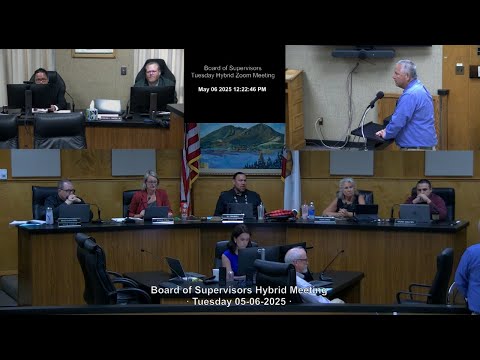
Supervisor Dwight Owen, sponsor of the item, asked the Lake County Board of Supervisors on Tuesday to authorize staff time to study whether the county could place a dedicated sales tax for unincorporated road maintenance on a future ballot.
"Probably my biggest complaint as a supervisor is our county roads," Owen said, noting funding shortfalls in unincorporated areas and asking staff to investigate whether a special tax could be viable.
The board reached consensus to direct staff — including County Director March and other departments, and coordinating with the auditor and tax collector — to research options for a dedicated roads tax, possible rates (for example, quarter‑cent, half‑cent or one‑cent), eligibility for matching grants and the costs of any public outreach or surveys. Director March told the board he expects to return with information in roughly three to six months.
Why it matters: county officials said general revenue from fuel taxes and other traditional sources has declined and that a dedicated local funding source could be used both to repair roads and to leverage competitive state grants. Assistant Director March (presented as Director March in the meeting) described one regional benefit: counties and cities that adopt a dedicated road tax or fee can become eligible for competitive Local Partnership Program (LPP) funds; a staff presentation cited the state setting aside about $72,000,000 annually for such competitive grants.
Board members emphasized this was preliminary fact‑finding, not a decision to place a tax on the ballot. "I just want to be clear for the public that this by no means means that we're gonna actually bring back a measure," Supervisor Spatier said. Several supervisors said the research should be countywide, outline timeline and costs, and include options such as sunsets (a time limit) and bond versus tax tradeoffs.
Public commenters urged alternatives that tie payments more directly to road use. One resident who did not give a name said the gas tax is a failing proxy for road wear because increasing vehicle fuel efficiency and electric vehicles mean many miles are driven without corresponding fuel purchases. "The proxy gas tax used to be a proxy for miles driven," the resident said. Public commenter Margo Kambara recommended exploring fees tied to vehicle registration or other mechanisms closer to road use rather than a general sales tax, noting sales taxes can be regressive.
Board members also raised other factors that affect road funding. Supervisor Sabatier and others referenced the potential timing of elections (primary vs. general) and the county's position in the statewide sales tax base; one supervisor noted Clear Lake (the City of Clearlake) has used a 1¢ sales tax and a 20‑year sunset to finance road bonds and cited that as a model to study. Owen also said tribal fuel sales and a 75¢ per gallon figure were discussed as one of several reasons fuel‑tax revenue is lower, a characterization other board members cautioned could be misconstrued and emphasized that multiple factors — including more fuel‑efficient vehicles and electric vehicles — contribute to declining fuel tax receipts.
The board's next steps: staff will scope a financial analysis that includes prospective tax rates, estimated revenue, eligibility for LPP and other grants, possible use restrictions (to avoid using funds for non‑road purposes), estimated public outreach or survey costs, and proposed timelines. Director March said he will coordinate with other departments and expects to present findings in three to six months. The board did not take a formal vote to place any measure on a ballot; any decision to pursue a ballot measure would require a later, separate action by the board.
Ending: The board indicated the item will remain a countywide effort and return for further direction after staff completes the requested analysis.