Get Full Government Meeting Transcripts, Videos, & Alerts Forever!
Get email alerts on the Emergency Management topic
No spam. Unsubscribe anytime.
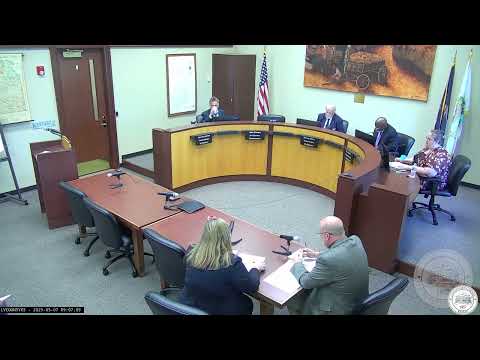
Leavenworth County adopts Region L hazard mitigation plan despite objections over climate language
Summary
The Leavenworth County Board of County Commissioners voted to adopt the county'portion of the Region L hazard mitigation plan, a move county staff said is required for local jurisdictions to remain eligible for mitigation grants and Community Rating System benefits; one commissioner voted against the measure citing wording and process concerns.
Leavenworth County commissioners voted to adopt Resolution 2025-16, approving the county'portion of the Region L countywide hazard mitigation plan. The plan'adoption was approved in a roll-call vote with one dissenting vote.
County staff told commissioners the Region L plan covers Leavenworth, Johnson and Wyandotte counties and that each municipality, water district and school district within Leavenworth County had to adopt their portions before the county could adopt its section. Staff said the county needed adoption by May 12 to preserve eligibility for federal mitigation grants and to maintain Community Rating System (CRS) benefits that affect National Flood Insurance Program (NFIP) ratings.
The plan lists goals and objectives for mitigation projects and, according to staff, enables prospective grant applicants to move forward immediately. Staff gave examples including a storm-shelter program at the University of Saint Mary and water districts seeking generators, both of which need an adopted mitigation plan before applying for federal mitigation funds.
Commissioner Steven objected to the plan's wording and overall presentation, citing typographical errors and the document's repeated references to climate change. "This document has a lot of ... errors in it ... it's got spelling mistakes on what the acronym for KDOT is," he said, and questioned whether the board should delay adoption until any new administration might change language. He also argued that scientific claims should not be described as "consensus" language in policy documents.
A county staff presenter answered that FEMA began requiring climate-change information in mitigation plans in 2022 and that the county had no option to remove that material for FEMA approval. Staff also said the plan is updated annually and formally reviewed every five years, allowing jurisdictions to propose amendments during successive cycles. The presenter added that corrections to grammar and formatting had been submitted to the contractor and state office for revision.
After discussion, the commission approved Resolution 2025-16. The roll-call vote recorded one "no" vote; staff indicated that failing to adopt would prevent jurisdictions and applicants from participating in the current mitigation grant cycle.
Commissioners and staff said they will continue to work on document corrections and that the county can pursue future amendments when the plan is reviewed again.