Get Full Government Meeting Transcripts, Videos, & Alerts Forever!
Get email alerts on the Electric Vehicle Infrastructure topic
No spam. Unsubscribe anytime.
Maricopa County Board accepts DOE grant to expand electric vehicle chargers for county fleet
Summary
The Board of Supervisors approved acceptance of U.S. Department of Energy grant funds to install electric vehicle (EV) chargers for Maricopa County fleet vehicles. County staff said the project is already in the capital improvement plan, the grant reimburses costs, and maintenance and charging costs will be recovered through departmental billing.
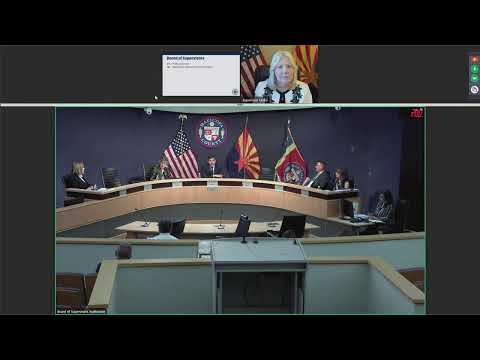
The Maricopa County Board of Supervisors on May 7 unanimously approved acceptance of federal grant funds to install electric vehicle charging stations at county sites, with restrictions and cost‑recovery measures explained by staff.
County staff told the board the award is a reimbursement grant from the U.S. Department of Energy that will augment an existing capital project already in the county’s fiscal plan. Assistant county managers and the director of facilities management said the project is fully funded in the county’s budget and capital improvement plan regardless of the grant, and that grant reimbursements would offset county spending and free capacity for future charging sites.
Supervisor Kate Brophy McGee and Supervisor Kate Lesko pressed staff on financial risks and operations. Lesko asked what would happen if the federal grant were canceled before reimbursement; staff said the county had checked with the grant agency and had not been informed of any intent to rescind funds. Staff added that the project is already funded in the county CIP and the grant is an unexpected augmentation.
On operations and upkeep, the county said Equipment Services will maintain the chargers consistent with how the county maintains fuel dispensers. Departments that use the chargers will pay into a rate model intended to recover ongoing operation and maintenance costs. Staff also said any future employee charging would be separately billed to individual employees or accounts if the county expands access beyond fleet vehicles.
On user eligibility, county officials said the initial deployment will be for county fleet vehicles only. Future phases may evaluate allowing county employees to charge during the day and the possibility of generating emission‑reduction credits tied to fleet electrification, which the county could sell to industry to offset air‑quality obligations.
The motion to approve the item passed unanimously.
The board and staff asked that departments budget for charging costs and that staff return with implementation details as the program moves beyond initial fleet use.
Notes: the board approved the item by unanimous vote. Staff emphasized the grant is a reimbursement program and that the county’s CIP already funds the project.