Get Full Government Meeting Transcripts, Videos, & Alerts Forever!
Get email alerts on the Healthcare Affordability topic
No spam. Unsubscribe anytime.
AB 1415 would expand Office of Health Care Affordability access to provider and investor data; hospitals warn of costs
Summary
AB 1415 would grant the Office of Health Care Affordability (OCA) authority to collect information directly from health systems and management service organizations, including entities controlled by private equity, to better track cost drivers. Supporters say fuller data will help rein in costs; hospital representatives said OCA already has broad
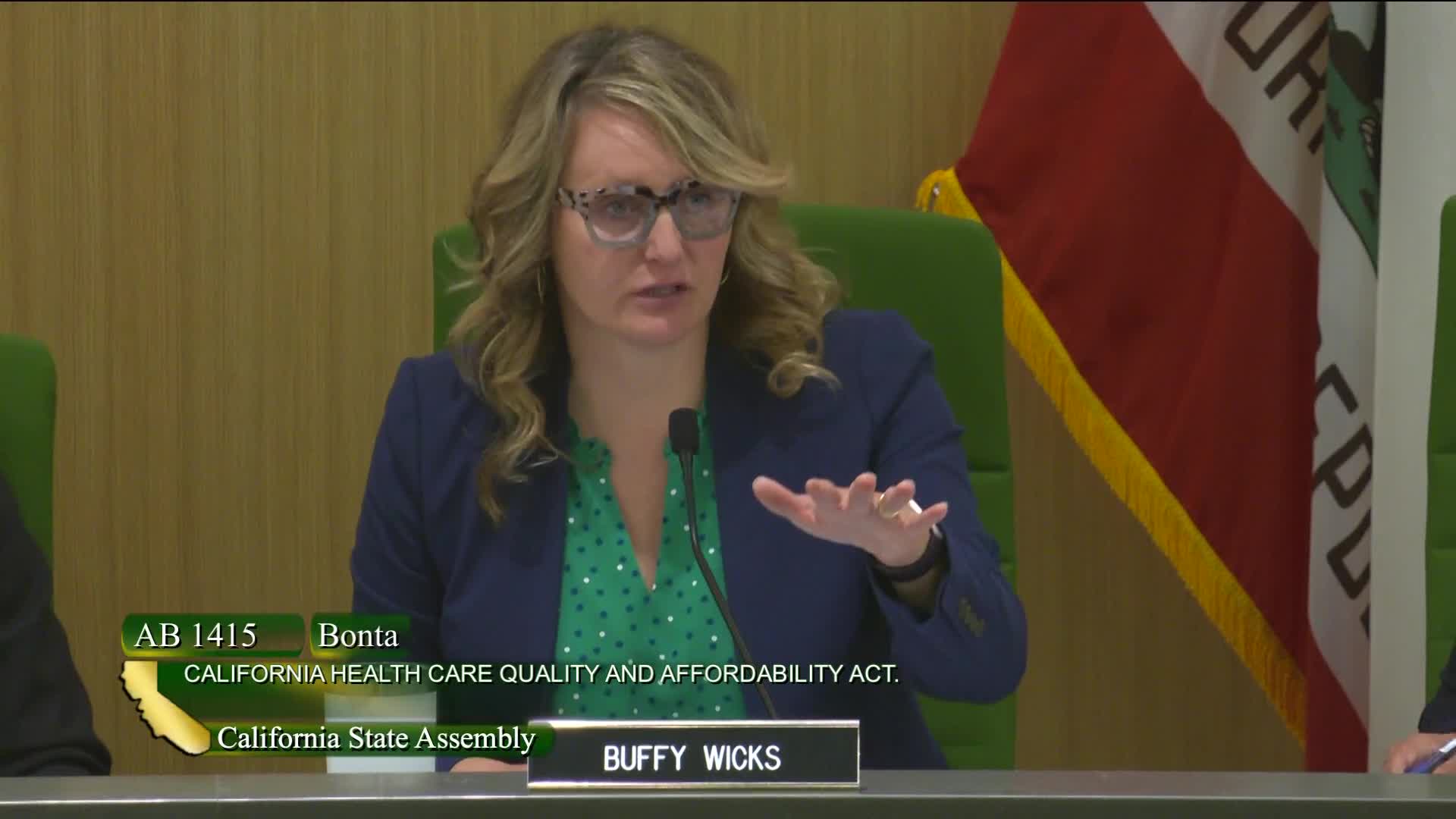
Assemblymember Bonta presented AB 1415 on May 7 to give the Office of Health Care Affordability (OCA) broader authority to collect data directly from health systems and from private equity‑backed management service organizations (MSOs). The bill’s intent, the author said, is to let OCA identify cost drivers and better manage statewide spending targets.
Supporters including Health Access California and the California Coverage and Access (SCA California) told the committee AB 1415 helps OCA achieve its goals of lowering costs, improving outcomes and addressing equity by giving the office a fuller picture of entities influencing care. Speakers said the costs to the state would be absorbable.
The California Hospital Association opposed the bill, arguing OCA already has extensive authority and warning that additional data requirements and enforcement could produce at least $1 million in state costs and require multiple positions in the department. CHA said the office’s prior imposition of spending targets could lead to spending cuts that harm patient access.
After debate, the committee moved AB 1415 out on a roll call. The transcript records both support and opposition in the hearing room and committee members’ questions about implementation and fiscal impacts.