Get Full Government Meeting Transcripts, Videos, & Alerts Forever!
Get email alerts on the Affordable Housing topic
No spam. Unsubscribe anytime.
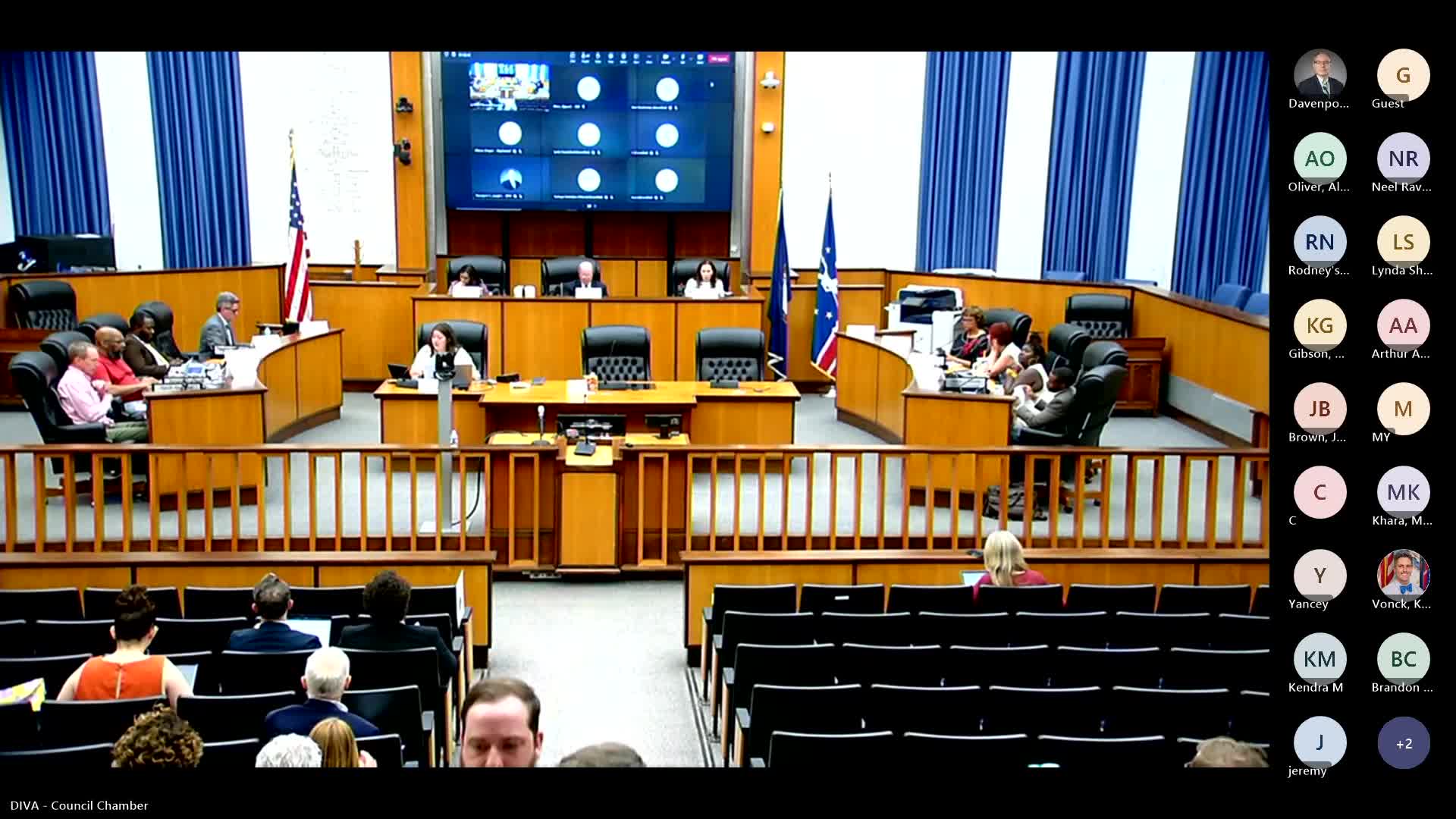
Planning Commission backs conveyance of city land to Eden Village to pursue tiny-home community for people exiting homelessness
Summary
The Planning Commission voted unanimously to forward to City Council a recommendation to convey city-owned parcels at 1501 and part of 1601 Findlay Avenue to Eden Village of Richmond Inc. for nominal consideration to support construction of a tiny-home community targeting people exiting homelessness and low- and moderate-income households.
The Planning Commission voted unanimously to forward to City Council an ordinance directing conveyance of city-owned land at 1501 Findlay Avenue (about 3.0491 acres) and all or part of 1601 Findlay Avenue (about 2.6226 acres) to Eden Village of Richmond Inc. for nominal consideration to facilitate construction of a tiny-home community aimed at people exiting homelessness and low- to moderate‑income residents.
The recommendation came after staff described the conveyance as the first step in a multi-stage process. Staff said Eden Village needs a specific site to meet a grant deadline and that the organization would be responsible for development costs, mitigation and fundraising; the city would convey the surplus parcel ‘‘as is’’ and would not be obligated to pay development or site remediation costs. Catherine Ritter, founder of Eden Village of Richmond, told the commission the model provides 400‑square‑foot permanent tiny homes with on‑site wraparound services and a community center and that residents pay modest rents (Ritter said about $350 per month). She said the model is a licensed approach used by several other communities.
Why it matters: Commissioners and the council member for the district said the proposal addresses the city’s declared affordable-housing crisis and could produce permanent housing for people living outdoors or in shelters. Councilwoman Gibson pressed for clarity about who the homes will serve and asked for explicit income targeting and binding terms in any sales agreement. Legal counsel told the commission that the conveyance ordinance must facilitate ‘‘permanent affordable housing for homeless and low to moderate income individuals’’ as written; the detailed terms of income targeting, unit counts, reverter clauses and timetables would be addressed in a sales agreement and later in the special‑use and permitting process.
Staff said Eden Village seeks to build roughly 30 tiny homes (~400 sq ft each) primarily for individuals exiting homelessness, with a small number (up to 12) of units potentially reserved at higher AMI levels (up to 80% AMI) to allow household diversity. The city staff said Eden Village has an application deadline with the Federal Home Loan Bank and needs site control to secure grant funding. The administration and Eden Village said they have negotiated a nonbinding term sheet and that any conveyance would authorize the chief administrative officer to finalize a sales agreement with conditions. City legal counsel said the ordinance’s language will require the sales agreement to ‘‘facilitate the construction of permanent affordable housing for homeless and low to moderate income individuals and associated parking’’ but does not itself create a reverter; whether a reverter clause is included would be a matter for the sales agreement and Council review.
Speakers and public remarks: Eden Village founder Catherine Ritter outlined the model and wraparound services and answered commissioners’ questions about other villages and longevity of programs. Several advocates and volunteers spoke in favor, saying the model offers supportive permanent housing for people who have been chronically homeless. No speakers offered sustained legal or procedural objections during the hearing; Councilwoman Gibson asked for clearer specificity in the ordinance and sales agreement about income targeting and fallback protections if Eden Village cannot secure financing.
Next steps: The commission’s recommendation will be forwarded to City Council with a recommendation for approval; staff and the administration said that more specific development details, income targeting, timelines and permitting will return to the commission and council in a subsequent special‑use and sales‑agreement review.