Get Full Government Meeting Transcripts, Videos, & Alerts Forever!
Get email alerts on the Healthcare Workforce topic
No spam. Unsubscribe anytime.
Assembly committee hears AB 876 to clarify CRNA independent practice; physicians urge continued oversight
Summary
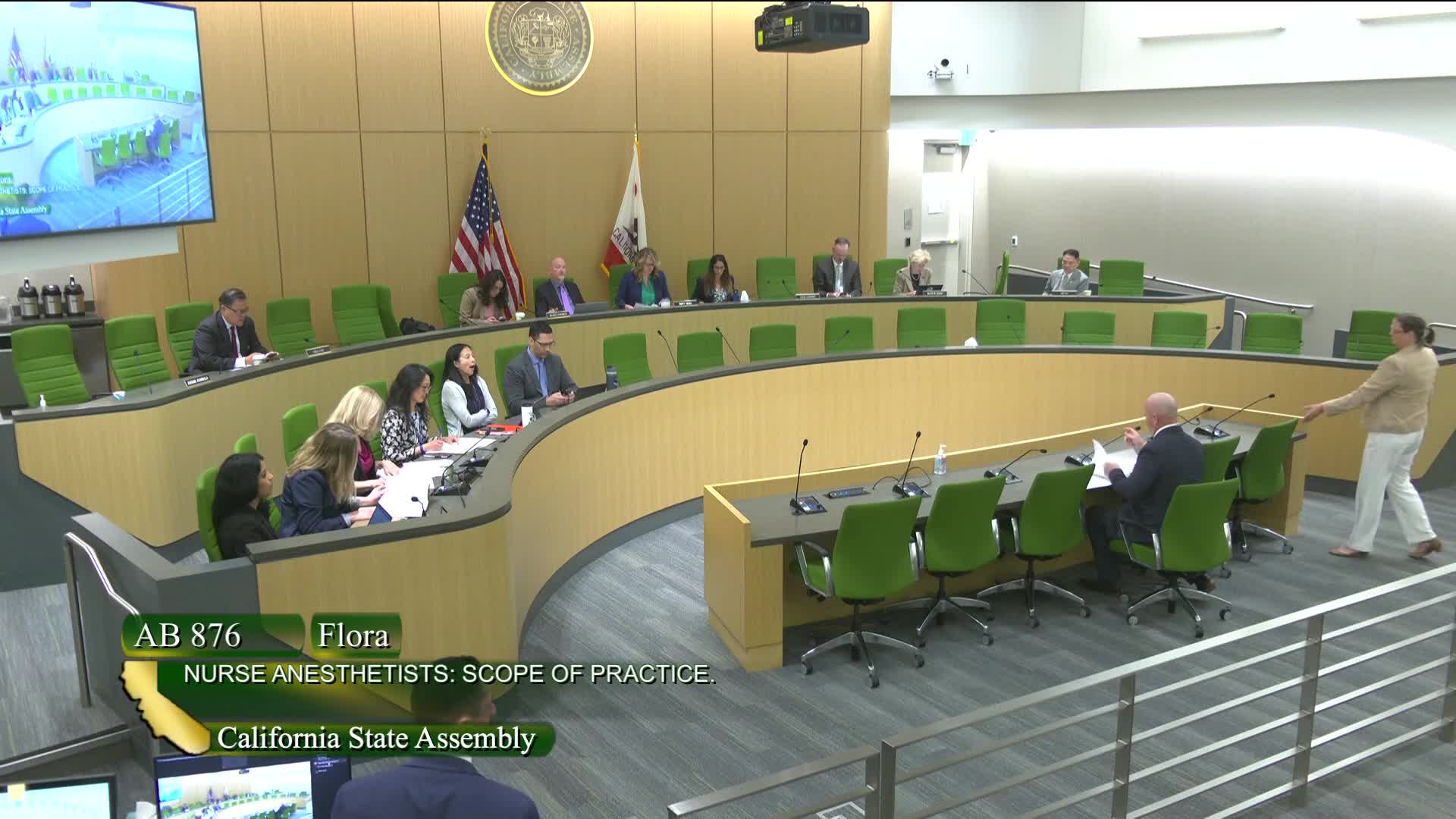
AB 876, a bill from Assemblymember Flora to clarify certified registered nurse anesthetists’ (CRNAs) scope of practice, was presented to the Assembly Appropriations Committee on May 7 and moved out after debate over independent practice and patient safety.
AB 876, a bill from Assemblymember Flora to clarify the scope of practice for certified registered nurse anesthetists (CRNAs), was presented and moved out of the Assembly Appropriations Committee after debate on May 7.
The bill’s author, Assemblymember Flora, said AB 876 “affirms CRNAs' ability to provide anesthesia services independently, consistent with their education, training, and long standing role in California,” and argued it would help “maintain access to anesthesia care in hospitals, rural, and underserved communities.” Justin Fanzawa spoke for the California Association of Nurse Anesthetists and referenced prior support in earlier committee action.
Opponents — including Jason Bryant of the California Society of Anesthesiologists and George Soories of the California Medical Association — said the proposal expands CRNAs’ authority in hospitals, outpatient facilities and dental offices and urged the committee to preserve physician-led anesthesia care. Bryant said physician leadership is “essential in ensuring patient safety.” Soories said existing practice has been in place for more than a decade and suggested safety standards should not be lowered.
Other organizations registering opposition included the California Association of Oral and Maxillofacial Surgeons and specialty societies that raised patient-safety concerns. Supporters emphasized workforce and access issues; opponents repeatedly emphasized distinctions in training and the role of physician oversight.
The committee took a roll-call motion on the bill and moved it out of committee; subsequent clerical vote changes were recorded on the floor (see actions and provenance). The transcript records multiple staff and advocates on both sides and indicates the author and proponents said no state fiscal cost was expected.
AB 876 now advances with committee direction to continue engagement between stakeholders, according to comments recorded during the hearing.