Get Full Government Meeting Transcripts, Videos, & Alerts Forever!
Get email alerts on the Emergency Powers Reform topic
No spam. Unsubscribe anytime.
Witness warns Michigan emergency powers give officials broad unilateral authority; panel discusses pandemic plan
Summary
The Oversight Subcommittee on Weaponization of State Government heard testimony that Michigan’s emergency laws allow broad unilateral executive and agency action, and the panel discussed legislative fixes including a required pandemic response plan.
The Oversight Subcommittee on Weaponization of State Government heard testimony that Michigan’s emergency authorities can vest broad, indefinite lawmaking powers in executive-branch officials — a situation the witness said risks future "weaponization" of government.
Michael Van Beek, director of research at the Mackinac Center for Public Policy, told the subcommittee the state’s emergency regime contains weak triggers, vague statutory language and few procedural constraints. "No person exercising powers of one branch shall exercise powers properly belonging to another branch except as expressly provided in this constitution," Van Beek quoted of the Michigan Constitution and used the line to argue that the existing emergency statutes permit executives and agency directors to exercise lawmaking authority that the legislature should retain or more tightly define.
Van Beek summarized four takeaways: separation of powers is the primary guardrail against government weaponization; unilateral executive control through emergency authority undermines that guardrail; several Michigan statutes permit expansive unilateral control "with the stroke of a pen"; and the legislature should adopt and require a detailed emergency pandemic response plan.
Why this matters: Van Beek and several lawmakers said vague statutory triggers and the lack of durational or procedural limits created legal and public confusion during the COVID-19 response. Van Beek told the committee he reviewed Michigan law and identified roughly 30 statutes that grant some form of emergency authority; most have limits, but three are especially broad and, in his view, problematic: the epidemic powers in the Public Health Code (MCL 333.2253), the emergency-rule authority in the Administrative Procedures Act (APA), and the governor’s authority under the Emergency Management Act of 1976.
Details from testimony and examples
- Emergency Management Act of 1976: Van Beek said the Emergency Management Act allows unilateral executive action for 28 days before legislative approval is needed, and the legislature can extend that period by statute. He described the EMA’s 28-day window as a model that can allow immediate action while ensuring later legislative involvement.
- Administrative Procedures Act: Under the APA, agencies may promulgate emergency rules that have the force of law for up to a year. Van Beek noted agencies have used emergency-rule authority in unrelated contexts (for example, to require real estate agents to register) and highlighted MIOSHA’s emergency workplace rules during COVID-19 as an instance where department-level emergency rules regulated broad swaths of daily activity.
- Public Health Code / epidemic orders (MCL 333.2253): Van Beek said the Public Health Code’s epidemic trigger is even broader than the APA’s and lacks statutory definitions for key terms such as "control," "necessary," "protect," "public health" and even "epidemic." He cited an October 2022 epidemic order that the department issued — at a time when the federal emergency had ended — which required nursing homes to offer COVID-19 vaccinations. He characterized that order as a stretch of the epidemic authority because, he said, it imposed requirements without other regulatory steps and without a contemporaneous epidemic justifying emergency action.
- Examples of problematic uses: Van Beek recalled the 2019 attempt by state health officials to ban flavored vaping products via emergency health authority, and he said courts later struck back against some emergency actions. He noted that some emergency rules issued during COVID lacked expiration dates at first and that courts or subsequent litigation sometimes truncated or invalidated those emergency actions.
Lawmakers’ questions and concerns
Committee members pressed on tradeoffs between speed and oversight. Several representatives said they supported clearer limits but raised the difficulty of designing a one-size-fits-all plan for future pandemics because transmission modes and risks vary by pathogen.
Representative Pawetsky (Representative Pawlowski in some exchanges) and Representative Wigala asked whether statutory language such as "epidemic" is already defined by administrative rule and whether that would reduce the risk Van Beek described; Van Beek said a statutory definition would be preferable to leaving the meaning to agency rulemaking alone.
Representative Schreiber noted that fully repealing or replacing the APA could require dozens of bills and asked what targeted reforms would look like; Van Beek recommended procedural checks on emergency rules (for example, agency findings subject to review, shorter maximum durations than one year, and penalties for misuse).
Representative Wolford specifically referenced MCL 333.2253 and asked whether it grants too much discretion to unelected officials. Van Beek said yes, and urged clearer statutory standards and procedural constraints.
Points of consensus and next steps
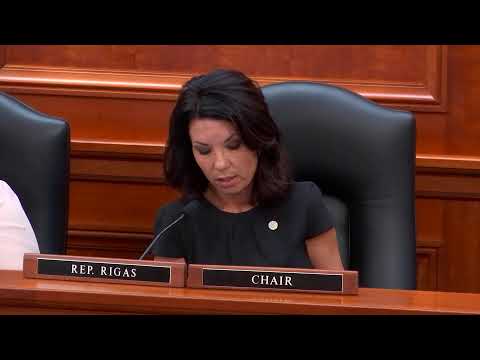
There was broad interest among members in drafting statutory reforms and a bipartisan suggestion to develop a legislatively required pandemic response plan that would: define triggers and terms, set durational limits and procedural steps, require defined opportunities for legislative and stakeholder input, and preserve meaningful roles for public health experts while imposing statutory guardrails. Chair Regas said the committee would move toward developing such a plan, stating, "we are we are definitely, going to commit to proactively crafting legislative emergency pandemic response plan."
What the committee did: At the start of the meeting Representative Wegala moved to adopt minutes of the April 23 meeting; the committee adopted the minutes with no objection.
No formal statutory changes or votes on legislation were taken at the hearing. The session closed after questions and discussion.
Sources: testimony and Q&A at the Oversight Subcommittee hearing; Michael Van Beek, director of research, Mackinac Center for Public Policy; committee floor remarks by Chair Regas and multiple Representatives as recorded on the hearing transcript.