Get Full Government Meeting Transcripts, Videos, & Alerts Forever!
Get email alerts on the Boards And Commissions topic
No spam. Unsubscribe anytime.
Council discusses paying planning commissioners; staff to return with ordinance after public hearing
Summary
Petersburg planning staff told council the FY‑26 budget includes $75 per meeting for planning commissioners if council wants to compensate members; members asked questions about precedent, funding source and attendance; staff said a code amendment and planning commission public hearing would be required before council action.
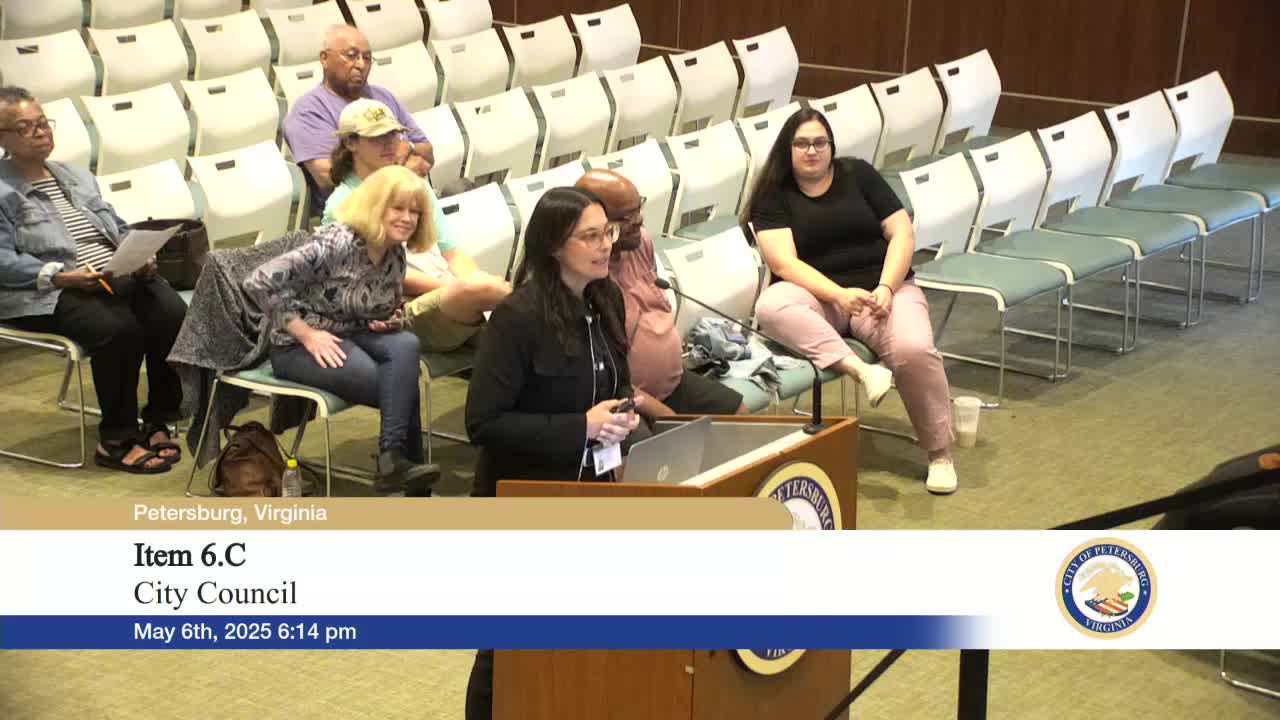
Naomi Sayadmock, identified in the meeting as the city’s planning director, told the Petersburg City Council on May 6 that the Planning Department included funding in the proposed FY‑26 budget to pay planning commissioners $75 per meeting, and asked whether council is interested in compensating commissioners for their time and training.
Sayadmock said comparable jurisdictions take different approaches: Hopewell pays $50 every two weeks (most commissioners there decline the payment), Colonial Heights pays nothing, Chesterfield County pays $25,000 annually, Dinwiddie pays $150 per month after tax, and Prince George pays $200 per meeting. She said the proposed $75 per meeting would be paid from the Planning Department’s budget and would be based on attendance.
Councilors offered mixed reactions. Vice Mayor Hill said she had no problem with a modest payment if the budget can support it and stressed payment should be tied to attendance and work. Councilman Jones objected strongly, saying residents who volunteer for public service accept the role knowing it is unpaid and warning the change could create expectations across other boards and commissions; he also questioned where the money would come from. Other councilors asked whether attendance or quorum had been an operational problem; Sayadmock replied attendance has generally been acceptable but the most recent meeting nearly lacked a quorum, and noted planning commission meetings typically run about two and a half hours and that additional meetings are expected while the zoning ordinance update proceeds.
Sayadmock said next steps would include returning to the Planning Commission for a public hearing and a code amendment to clarify that state law allows compensation, after which the item would come back to council — she estimated the amendment could reach council by July if the Planning Commission hears it in June.
Ending
Council did not vote on compensation at the May 6 work session and instructed staff to pursue the public‑hearing/code‑amendment process if council wants a formal ordinance.