Get Full Government Meeting Transcripts, Videos, & Alerts Forever!
Get email alerts on the City Budget Water Advisory topic
No spam. Unsubscribe anytime.
Wyoming council reviews budget and water system response; approves housing plan, contracts and appointments
Summary
City council held public hearings on the draft 2025–26 budget and the consolidated housing and community development plan, approved several contracts and appointments, and reviewed the city's response to a short-lived boil-water advisory tied to a pressure drop while a water tower was out of service.
The City of Wyoming City Council on May 5 held public hearings on the city's proposed 2025–26 budget and the city's consolidated housing and community development (CDBG) annual action plan, approved a package of contracts and appointments, and discussed last week's boil-water advisory in the city's low-pressure service area.
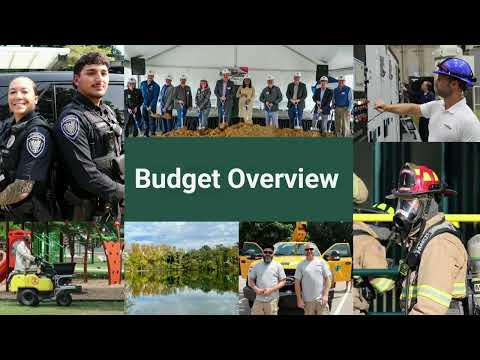
The council heard a budget overview from Jody, a city staff member who presented revenue and expenditure details for fiscal 2026 and the next steps in the adoption process. The proposed total property tax levy for 2026 is just over 13 mills (the presenter said the millage is about 13.0826, down from about 13.1493 the prior year). Staff also proposed water and sewer rate increases of about 9% (water) and 10% (sewer) for FY 2026 under a multi-year rate model intended to fund large capital projects, including design and construction work for water transmission and treatment infrastructure. Jody said the average quarterly residential water/sewer bill would rise from about $163 to about $178, or roughly $5 a month.
The presentation said total revenue across funds for FY 2026 is roughly $141 million and planned expenditures approach $181 million, requiring drawing on fund balance to pay for capital projects. Staff noted a planned capital improvement program of approximately $60 million, with major spending in water and sewer plants, roadways, parks and buildings, and said the city may consider issuing bonds later in the year.
Paul Smith, a city staff member, briefed the council on the CDBG annual action plan. Paul said the city expects grant funding “just shy of $500,000,” with program income from loan repayments projected at about $100,000. The plan spreads funds across housing rehabilitation, capital outlay and public infrastructure improvements, public services and administration. The council approved the consolidated housing and community development 2025–26 annual action plan by roll call.
Council actions and contracts
- The council approved Budget Amendment No. 42 to appropriate an additional $29,800 to pay the aerial application cost for spongy moth suppression. Staff said the expense is paid up front and later recovered via a special assessment on properties in the affected treated area. The motion passed by roll call vote (all members voting yes).
- The council adopted the CDBG 2025–26 annual action plan (the staff estimate discussed above). The motion passed by roll call vote (unanimous yes).
- The council approved amendments to the Greater Wyoming Community Resource Alliance bylaws and authorized an administrative services contract under which the alliance would pay the city a nominal fee for services. Staff described the alliance as a pass-through vehicle for some public safety-related donations and noted the bylaws were simplified to reflect the alliance's role.
- The council appointed Gregory T. Stremers as city attorney, approved his employment agreement and authorized the mayor and city clerk to sign the contract; the appointment is effective June 30. The council voted to approve the appointment and employment agreement by roll call (unanimous yes). Stremers addressed the council and said he was pleased to join the city.
- The council awarded several procurement items and contract actions the staff recommended, including: - An engineering services contract amendment to update the wastewater treatment plant operations and maintenance manual (staff said the Michigan regulatory agency required the manual update because of recent plant upgrades). The council approved the award by roll call. - A three-year trash pickup contract for city buildings and parks, split between two vendors where each was low at particular facilities; the council authorized the awards by roll call. - An extension of the TeamDynamics annual subscription (the city's work order system) to add features such as asset and project management; the council approved the subscription extension by roll call. - Acceptance of a proposal from Plante Moran to perform an organizational assessment of the finance department to identify potential efficiencies; the council approved the contract by roll call. - Replacement of a 25-year heating boiler at the 62A District Court (budget amendment No. 41 included); the low bid was about $128,000, and the council approved the contract by roll call. - Authorization to purchase copper wire and electrical splice kits for city use; the council approved the purchase by roll call.
- The council approved a records and asset-management software package for the fire department (vendor: FirstDue) to replace a largely manual, paper-based system. Battalion Chief Brad Bennett described features the department needs, including mobile inspections, automated scheduling and asset tracking. Bennett said the software is cloud-hosted and would be implemented module-by-module; reporting functionality could be online within about a month and fuller implementation would follow. The council approved the contract and funding from public-safety funds by roll call.
Land use and ordinances
- In first reading the council introduced Ordinance 725 to rezone 21130 Sixth Street SW from P-1 (Vehicular Parking) to B-2 (General Business). Staff said the rezoning would convert a longstanding nonconforming parking district parcel into a conforming commercial use to allow a financial institution to rebuild and to provide space for additional commercial tenants. The ordinance passed first reading and will return to council for the second reading and a final vote in a subsequent meeting.
Boil-water advisory and system response
City Manager John Shea briefed the council on a boil-water advisory issued last week for the city's low-pressure service area after a short loss of pressure. John said the Hook Avenue water tower is offline for interior and exterior painting and was expected back in service around May 15; while the tower is out of service, staff rely on other ground tanks, pumps and emergency interconnects. He said a regional power outage at the Gezon Pump Station prevented automatic generator start (the site's generator start delay is set to avoid cycling for momentary blips), and that SCADA (the control system) attempted automated responses. Operators observed control behavior that did not match system performance and, citing experience, manually started a different pump to restore pressure. John said the pressure drop lasted about 30 minutes; out of caution the city issued a boil-water advisory and required two consecutive negative lab tests (staff explained the minimum interval between tests is typically 18–24 hours) before lifting it. John praised staff for their rapid response and said the city is working with its SCADA vendor (under contract with Tetra Tech) to adjust control sequencing and reduce the risk of recurrence. City staff coordinated distribution sites and said SpartanNash and other private partners offered bottled water donations during the advisory.
Public comment and next steps
No members of the public addressed the council during the acknowledgement-of-visitors period. Council members publicly thanked staff for the water-response work and for the budget process. Council members were reminded that the city will consider final budget adoption, the Downtown Development Authority budget, the Grand Valley Regional Biosolids Authority budget, any fee schedule updates and the capital improvement plan at the next action session.
The meeting concluded with the council approving a motion to move into a closed session to discuss a legal opinion; the motion passed by roll call.
Ending: The council left the meeting room to begin the closed session and scheduled the remaining formal budget votes and the second reading of the rezoning ordinance for a future meeting.