Get Full Government Meeting Transcripts, Videos, & Alerts Forever!
Get email alerts on the City Manager Review topic
No spam. Unsubscribe anytime.
Cambridge committee reviews 2025 City Manager goals and evaluation process
Summary
The Government Operations, Rules and Claims Committee discussed the proposed 2025 City Manager performance-review process and draft goals, focusing on timelines, how to measure leadership work, and next steps for refining the goals and bringing a revised draft to the full City Council.
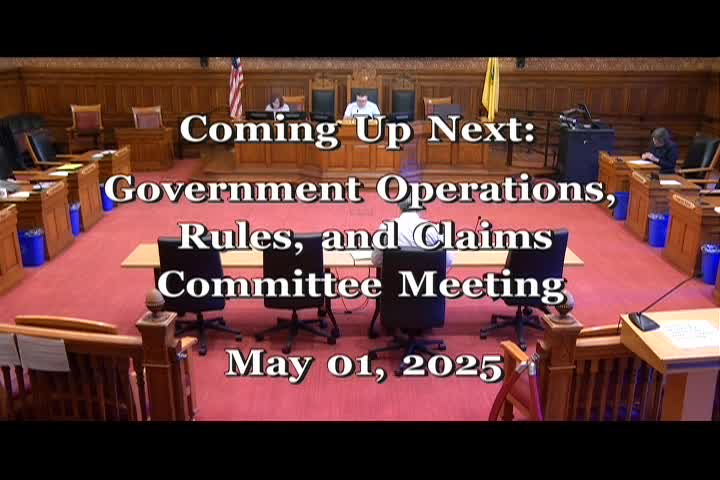
The Government Operations, Rules and Claims Committee of the Cambridge City Council held a public hearing to review the proposed 2025 City Manager annual goals and the city’s performance-review process. Committee members and the City Manager discussed the evaluation timeline, goal categories and how to measure leadership responsibilities.
The City Manager presented a largely unchanged process from prior years: council feedback on the goals and template; a midyear check-in in summer; submission of materials (including a self-review tied to goals, resident survey results and senior-leadership feedback) to a chair designated by the mayor by mid-November; and a consolidated review returned to the council in a special meeting, typically in mid-December. “These goals are a little more tied to the role of the City Manager,” the City Manager said, describing the categories as leadership, management (operations), community engagement, organizational culture, and fiscal management.
Committee members pressed for clearer, measurable criteria on several points. “It would be hard to assess because they’re not SMART goals,” Councilor Nolan said, urging more specific metrics. Councilor Katra Sudhiki asked for clearer timelines and pointed to work underway on universal pre-K as an example of a project that will require longer-term planning: “That’s going to be a big thing, given how many resources we’re putting in.” Councilor Nolan and others recommended that the leadership category be broken into more granular subcategories (for example, housing strategy, boards and commissions, and sustainability) so the council can rate progress on specific priorities rather than a single broad leadership bucket.
Several speakers suggested using the city’s expanded strategy team to produce clearer road maps for major initiatives. The City Manager said administration staff can play a more proactive role in assembling strategic plans for selected priority areas and presenting a coordinated view of options, timelines and trade-offs. Councilors also proposed systematic program evaluations to check how multiple overlapping programs (job training, homeless services, summer programs) work together and whether staffing and committee structures remain effective.
On operational priorities, the City Manager said the city is close to contracting with a benefits consultant to review health benefits and will conduct a class-and-compensation study with recommendations expected this fall. The administration also intends to continue providing a five-year capital plan and to outline a preliminary six- to ten-year view to help the council evaluate trade-offs and projected capacity for major projects.
Committee members highlighted community engagement and transparency as ongoing priorities. Councilor Susie Wilson said delayed maintenance can become more expensive over time: “Deferred maintenance just becomes more expensive as it’s deferred,” and urged that a comprehensive investment plan help set spending priorities. Several councilors encouraged earlier, less “fully baked” public outreach to solicit broader community ideas before final proposals are prepared.
No formal changes to the goals were adopted at the meeting. The City Manager asked councilors to submit written suggestions within a week; he said he would review those comments, incorporate feasible edits and bring a revised draft to the full City Council for further discussion and a vote. The committee took no formal action on the substance of the goals at the meeting and adjourned on a roll-call vote.
Outcome and next steps: the manager will collect feedback, revise the draft goals and present them to the full council for consideration. The committee did vote to adjourn at the end of the session.