Get Full Government Meeting Transcripts, Videos, & Alerts Forever!
Get email alerts on the Traffic Calming topic
No spam. Unsubscribe anytime.
City engineer recommends replacing abrupt prefabricated speed humps on Oceanview with longer, asphalt speed cushions
Summary
After six to seven months of public comment on recent Oceanview speed humps, the city engineer recommended longer, more gradual asphalt speed cushions (10–14+ ft) or larger prefabricated cushions with wheel paths for emergency vehicles; estimated cost for five asphalt cushions is $65,000–$75,000 and street‑maintenance funds are available.
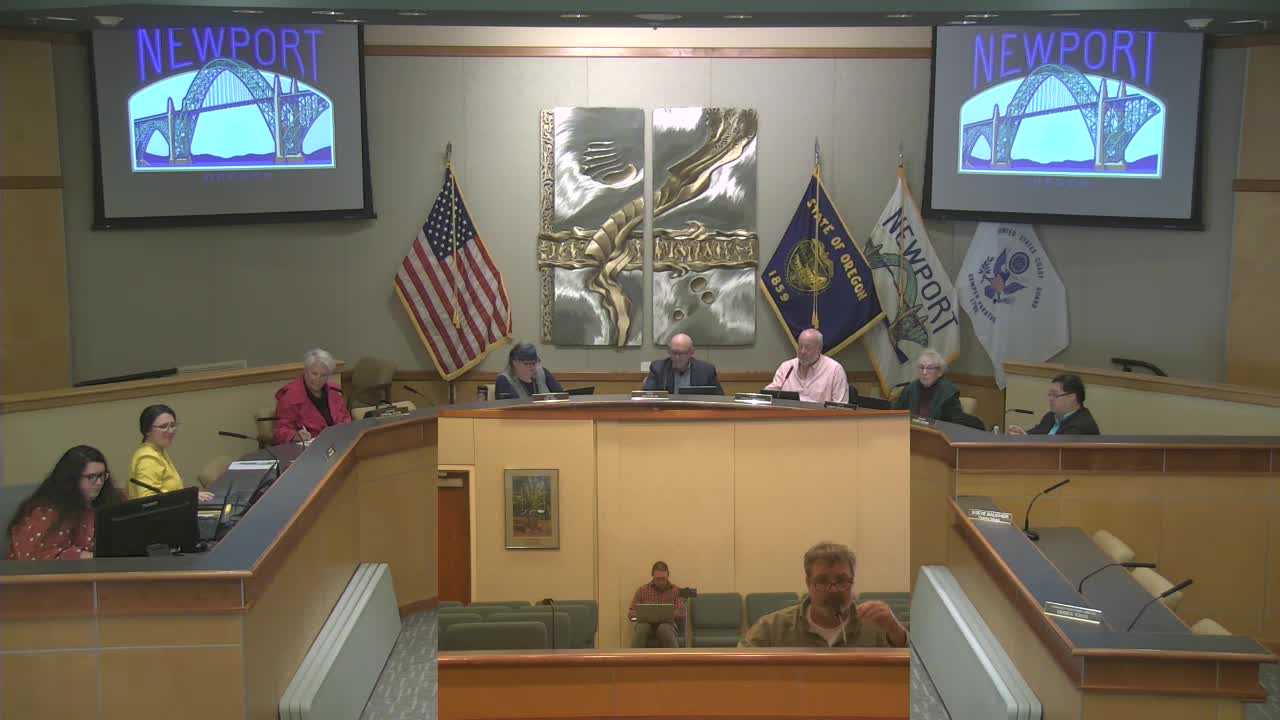
City Engineer Chris Beatty updated the Newport City Council on traffic calming measures along Oceanview, recommending replacement of the short, abrupt prefabricated speed humps installed earlier this year with longer, more gradual speed cushions.
Beatty said the existing prefabricated panels measure about 3.25 feet in length and rise roughly 3 inches, producing an abrupt profile that prompted many public comments. He described alternatives: a longer asphalt cushion (examples discussed were 10 to 14 feet or longer) with a gentler slope; asphalt cushions with engineered wheel paths that allow fire engines to straddle the cushion; and larger prefabricated units that also include wheel paths. He said the city has logged public comments—both compliments and complaints—and that several locations might be shifted slightly to avoid driveways or reduce conflict where drivers currently bypass the humps via adjacent parking lots.
Beatty said asphalt cushions would be more permanent, more comfortable for cyclists and other road users, and could be constructed longer to reduce harshness; he estimated construction and removal of the existing panels would cost about $65,000–$75,000 for five asphalt cushions. He said prefabricated larger units would be less expensive to install but still cost‑effective and noted prefabricated panels must be bolted down and can be removed if needed. Public Works Director Robert Bossier said the prefab products have held up well in town but the panels are sometimes removed or stolen; one missing panel had to be patched with asphalt.
Councilors asked about maintenance life: staff said the rubber/prefab units carry warranties typically around 15 years, and asphalt cushions have an engineering design life similar to pavement (roughly 20 years). Staff also described operational considerations—grade, driveway locations and snow‑plow impacts—and noted the city could reassign removed panels to other uses. Beatty said street funds are available to pay for the work; staff reported about $500,000 in the street maintenance fund with roughly $50,000 already spent on another project this year.
Beatty recommended moving forward with asphalt cushions, subject to final dimensions and locations. Some councilors expressed hesitation about committing to permanent asphalt without additional field testing of prefabricated options; staff said they would arrange demonstrations and site visits to nearby installations and that Public Works would take measurements and test one of the prefabricated units. Staff also said the contract could likely be direct awarded (below the formal bid threshold) to expedite installation, and they aimed to have work in place before the end of the school year if scheduling and procurement allowed.
No formal council vote was taken; staff will return with more precise design, locations, cost estimates and a recommended contract approach.