Get Full Government Meeting Transcripts, Videos, & Alerts Forever!
Get email alerts on the Transportation Planning topic
No spam. Unsubscribe anytime.
Cape Cod MPO presents draft 2026 UPWP and 2026–2030 TIP, opens public comment
Summary
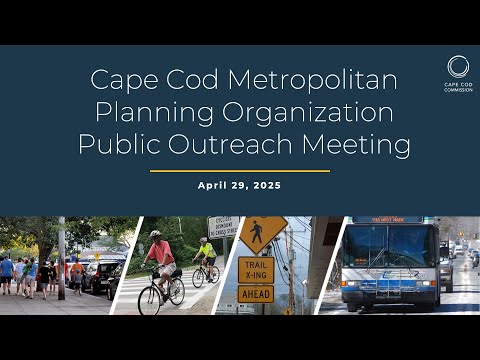
Staff to the Cape Cod Metropolitan Planning Organization reviewed the draft 2026 Unified Planning Work Program and the draft Transportation Improvement Program for federal fiscal years 2026–2030 at a virtual outreach meeting and opened a public comment period through May 12.
Staff to the Cape Cod Metropolitan Planning Organization (MPO) presented the draft 2026 Unified Planning Work Program (UPWP) and the draft Transportation Improvement Program (TIP) for federal fiscal years 2026–2030 at a virtual outreach meeting and opened a public comment period through May 12 (date stated in the meeting).
David Nolan, senior director at the Cape Cod Commission who led the presentation, said the UPWP is developed annually and “includes a number of tasks” the MPO will undertake in the coming year, including data collection and crash-data tracking, GIS mapping and online tools, and a transportation safety task that will include before-and-after studies of roadway improvements. “I’m Dave Nolan, the senior director of the division, and I’m gonna lead a discussion on the development of the 2026 unified planning work program,” Nolan said as he opened the UPWP overview.
Nolan described UPWP work categories that fund regional planning and technical assistance: multimodal studies (including a Route 6A project), local corridor studies (Station Avenue was cited), a transit needs assessment, a local bike-share research project, and assistance to regional transit providers. He said some studies are multi-year (for example, a two-year study scheduled to complete next year) and that staff set aside a funding category for other requests that arise during the year.
On the TIP, staff described the five-year funding schedule used to allocate federal highway and transit dollars across Barnstable County and its 18 towns. Nolan and presenters cited examples programmed in the draft TIP across FFYs 2026–2030, including roadway reconstruction and shared-use path projects, Harwich Route 28 work, Shank Painter Road Complete Streets improvements, a culvert replacement in Barnstable, rail-trail resurfacing and repair, and a bicycle-rack/bike-rack program noted for fiscal year 2028. Staff said approximately $24 million in highway funding was shown for the first listed set of projects and that transit-related spending presented in the meeting totaled on the order of tens of millions of dollars (the presentation referenced about $77 million in transit-related line items as presented).
The presentation noted the MPO’s equity-analysis process and identified projects expected to reduce greenhouse-gas emissions. Staff also said the Vision Zero action plan will produce specific action items for staff to include in the UPWP and asked for assistance incorporating those items into UPWP work tasks.
There were no formal votes at the outreach meeting; the materials are drafts and were presented for public review and comment. Colleen Maderos, a staff member at the Cape Cod Commission who opened the meeting, said meeting materials and project lists are available on the commission’s website (CapeCodCommission.org). An attendee, who identified herself as Rhonda, praised the session as “very informative” and said she will serve as a point of contact along with Anthony Jones for attendees.
Staff encouraged written feedback and said the draft documents discussed would be forwarded to state partners as appropriate. The meeting closed after an invitation to submit comments online or by email and after staff announced upcoming pop-up tables in the region to gather feedback on bicycle and trail projects.
Ending: The MPO staff urged residents and municipal partners to review the draft UPWP and TIP on the Cape Cod Commission website and to submit comments by the May 12 deadline noted during the meeting. Contact information and materials were posted on the commission’s site for those who cannot attend outreach events.