
Council reviews multiple long-term tax-abatement ordinances for proposed Newark housing projects
Get AI-powered insights, summaries, and transcripts
Sign Up Free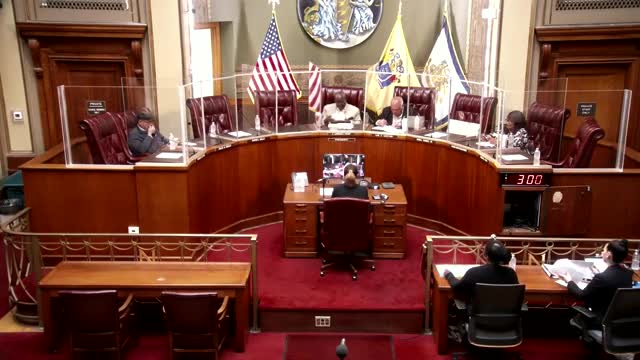
Summary
At a May 6, 2025 pre-meeting, the Newark Municipal Council discussed several ordinances that would grant long-term tax abatements to developers for new housing projects across the city.
At a May 6, 2025 pre-meeting, the Newark Municipal Council discussed several ordinances that would grant long-term tax abatements to developers for new housing projects across the city.
The clerk read multiple ordinance summaries on first reading and on second reading and final passage. Among them were: an ordinance proposing a 17‑year tax abatement to SPG 100 Frontage Road Urban Renewal LLC for a warehouse distribution building in the East Ward; a 30‑year tax abatement to Fulton Street North LLC for a project the ordinance text described as "a new multi family housing project consisting of 369 residential units" with figures read aloud for market-rate and affordable units; a 30‑year abatement to 69 Sherman Avenue Urban Renewal Company LLC for a five‑story building with 44 affordable rental units restricted to tenants at 60% of area median income in the South Ward; and a 30‑year abatement to 317 Mulberry Street Urban Renewal Company LLC for a 24‑unit market‑rate rental project (the clerk noted the ward designation on the 317 Mulberry item must be amended on the floor and said a public hearing will be held at a special meeting next week because of advertising concerns).
A request from the administration to defer one of the items (listed on the agenda as 6PSFA) was noted. A council member also requested a detailed financial breakdown and a copy of any lease connected with a long‑term lease described during the meeting as potentially extending for an initial 15 years with two extensions (one of 10 years and one of seven years); the council member said they wanted to know the total long‑term fiscal commitment before the council acted. The clerk confirmed the request would be followed up.
Council members offered sponsorships and seconds for several ordinance items as the clerk moved through the agenda. Several items were tied together in sponsorships because proponents said projects were related. For one item the clerk announced an administration request to defer; for others the clerk indicated public hearings or ward amendments would be completed at the special meeting.
Why it matters: the ordinances on the agenda would commit the city to multi‑decade tax abatements and include unit‑level restrictions tied to area median income (AMI). Council members asked for financial analyses and lease documents so they could evaluate the city’s long‑term obligations before final votes.
The council moved on after the clerk completed the readings; specific final votes on these ordinances were not recorded in the pre‑meeting transcript.
What comes next: the clerk indicated some items will return on the special meeting agenda with required advertising and ward amendments; council members asked staff to provide lease copies and financial analyses in advance of final votes.