Get Full Government Meeting Transcripts, Videos, & Alerts Forever!
Get email alerts on the Water Management Klamath topic
No spam. Unsubscribe anytime.
Assembly passes bill extending temporary Klamath-area flow rules amid tribal, farmer debate
Summary
AB 263 passed 51-16 after heated floor debate. The bill extends temporary emergency flow regulations for the Shasta and Smith tributaries of the Klamath River while longer-term rules are developed, prompting opposition from some rural lawmakers and support from tribal and environmental advocates.
The Assembly passed AB 263 on a 51-16 roll call, extending temporary flow requirements for the Shasta and Smith rivers that feed the Klamath watershed until permanent rules can be set by state agencies.
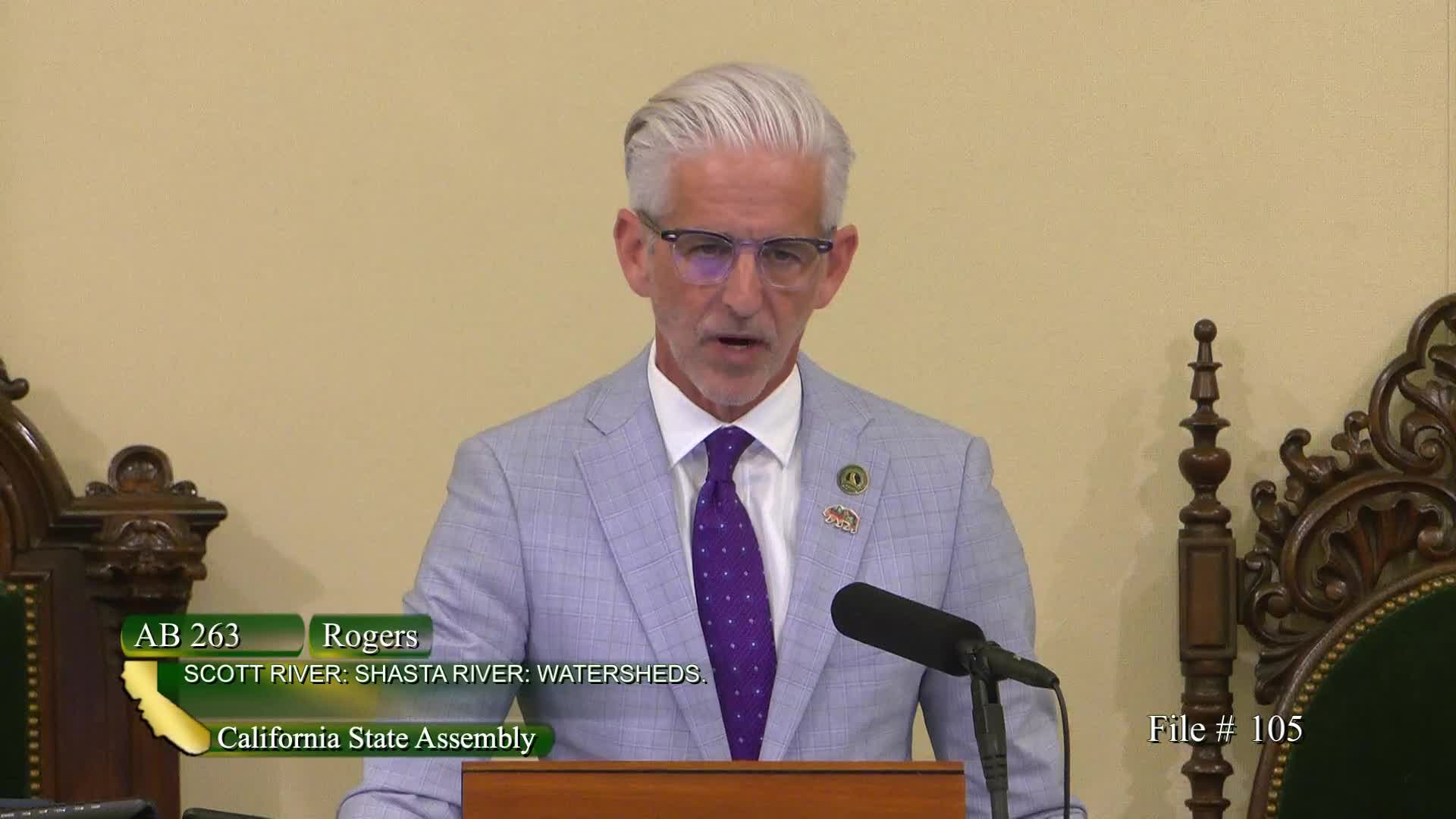
Author Assemblymember Damon Rogers said the measure preserves "certainty for the farmers, certainty for the fishermen," and argued temporary flows are a needed step while stakeholders negotiate long-term allocations. "These temporary regulations that are in place are the first time that we have ever had balance," Rogers said on the floor.
Why it matters: The Klamath watershed supports tribal fisheries, commercial fishermen and regional agriculture. Tribal leaders and coauthors told the Assembly that tribes such as the Yurok and Karuk had been historically excluded from water decisions; supporters said the temporary flows provide immediate relief for salmon and tribal economies while permanent regulations are being negotiated.
Opposition and concerns: Several members from rural districts objected that the emergency flow rules were established during drought and should not be prolonged now that water conditions have improved. Assemblymember Hadwick said the bill "introduces new uncertainty for the very people who grow our food," saying it was drafted without adequate local consultation. Minority Leader Gallagher also urged caution, arguing extended flows could harm local water users and questioning the science behind ‘‘unimpaired flow’’ approaches.
Committee and floor history: Members described AB 263 as the result of committee vetting and multiyear stakeholder talks in some forums, but floor debate showed clear divisions about process and local input. Supporters including Assemblymember Bauer‑Kahan and Speaker‑area committee members highlighted tribal testimony and the need to center tribal voices in water policy.
Vote and next steps: The clerk recorded 51 ayes and 16 noes. The bill extends the existing temporary regulations so that they remain in force while the Department of Water Resources and other agencies and stakeholders finalize permanent rules; proponents said that timeline allows for negotiated solutions without immediate disruption to fisheries or farm planning.