Get Full Government Meeting Transcripts, Videos, & Alerts Forever!
Get email alerts on the Utilities Affordability topic
No spam. Unsubscribe anytime.
Lakewood council adopts change to homestead exemption for water, sewer bills
Summary
City Council approved an ordinance to base eligibility on adjusted gross income and raise the annual threshold to $40,000, expanding the water/sewer discount to roughly 100 more households and reducing their bills by about 25%.
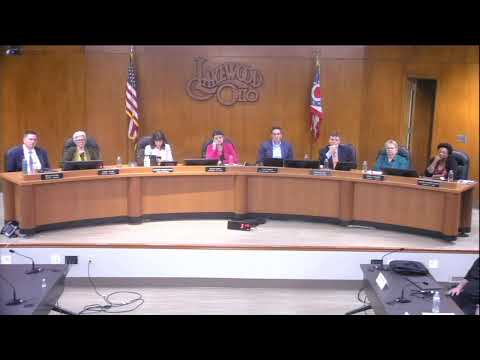
Lakewood City Council on May 5 adopted Ordinance No. 15-20-25 to expand eligibility for the city—s homestead exemption used to reduce water and sewer bills.
The ordinance changes the income test from total Social Security-inclusive income to adjusted gross income, and raises the qualifying threshold from $35,000 to $40,000 a year. Under the program qualifying households pay 75% of their current water and sewer charges (a 25% discount), an amount Director Mahoney said would save an eligible household about $480 a year.
Council members and administration officials said the change is intended to align the city—s practices with Cuyahoga County—s approach, which the county applies after state certification. "We look at adjusted gross income, which excludes non-taxable portions of Social Security, and that will allow more residents to qualify," Director Mahoney said.
Committee discussion and staff estimates supplied during the finance committee meeting put the likely number of newly eligible households at about 100. The administration also estimated the city will forgo roughly $50,000 in revenue annually as a result of the broader eligibility.
Council President Keppel and members framed the change as modest but meaningful aid for residents on fixed incomes. "When you think about what we can do to help folks who are aging in place, those are the folks that $500 a year is gonna make a really big difference for them," Councilman Baker said during committee discussion.
The ordinance includes emergency-effect language; City Council voted to adopt the measure so it will take effect once signed by the mayor rather than waiting 40 days. The finance director and councilmembers encouraged eligible residents to file taxes where appropriate and to apply for the city program through the taxation office; the administration said it will extend the application window and publicize the change on the city website and in outreach materials.
Council members discussed but did not change the proposed fixed $40,000 threshold, noting that linking the city threshold to an annually changing state or county figure would complicate administration and public understanding.
The council—s adoption followed a recommendation from the finance committee after staff described the drafting changes and anticipated fiscal impacts. Applications will be processed through the city taxation department; staff said residents may apply even if they previously filed under the old rules and that the city will accept reapplications where appropriate.