Get Full Government Meeting Transcripts, Videos, & Alerts Forever!
Get email alerts on the School Finance Budgeting topic
No spam. Unsubscribe anytime.
Manor ISD trustees receive detailed briefing on school finance, tax compression and bond capacity ahead of budget vote
Summary
District staff walked the board through how Texas school finance formulas, tax compression, recapture and debt service shape Manor ISD’s proposed 2025–26 budget and bond capacity; staff advised the board the district plans to present a balanced budget in June and may amend it after the Legislature acts.
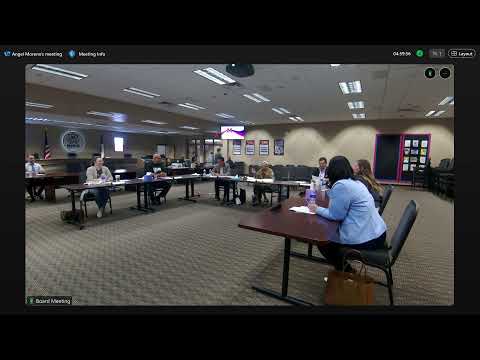
Manor Independent School District trustees on May 5 heard an extended presentation from district staff explaining how state school finance formulas, property tax compression, recapture rules and debt-service limits affect the district’s proposed 2025–26 budget and borrowing capacity.
The presentation — given during a budget workshop — explained that the Foundation School Program formulas in the Texas Education Code (chapters 46 and 48) set state funding and that changes at the state level shift the balance between state and local shares without necessarily increasing total funding. Staff noted House Bill 3 (2019) produced “compression” that reduced the district’s maintenance-and-operations (M&O) tax rate by roughly 30 cents since adoption and said the district’s current M&O rate is about $0.71 per $100 of property value.
District staff also walked trustees through recapture (the state requirement that districts return excess local revenue when local property wealth exceeds entitlement levels) and said recapture calculations differ at the Tier 1 (maximum compressed rate) and Tier 2 (enrichment) levels in the Education Code. Using example scenarios, staff explained how rapid growth in property values increases local share and can trigger recapture, and they listed options districts may use to reduce recapture (including consolidation by agreement, detachment/annexation, purchase of attendance credits, educating nonresident students and other statutory options).
On debt service (interest and sinking, I&S), staff said the district’s I&S rate is 37 cents and that I&S revenues are restricted to long-term debt principal, interest and issuance costs. The district’s bond capacity was presented as roughly $325 million without increasing the current tax rate, based on a January analysis from the district’s financial adviser; staff said that number assumes retiring some existing debt and current property-value projections.
Staff flagged House Bill 19 (pending legislation at the time of the meeting) as a potential constraint: if enacted as proposed, it could cap certain tax revenues based on a three-year average and reduce the district’s bond capacity by an estimated 6 percent (roughly $25–$30 million by staff estimate) and require cuts to the I&S rate. Staff urged trustees that a final budget may need amendment after the governor signs or rejects legislation; the district plans to present a balanced budget for adoption in June and would amend it if required by subsequent state action.
Other points covered: the difference between enrollment and average daily attendance (ADA) for state funding calculations; the district’s basic allotment cited in the presentation as $6,160 per ADA; a historical property value figure for 2024 presented as about $11.5 billion with a preliminary 2025 increase of 2.11 percent; and an example that approximately 93% of debt-service revenue is local while roughly 7% is state aid (additional state aid for hold-harmless exemptions). Staff also explained that the district has previously used M&O for a short-term loan of about $13,100,000 and emphasized the distinction between M&O-funded short-term borrowing and long-term I&S-funded debt.
Trustees were told the district maintains metrics the financial adviser and rating agencies use — including fund-balance levels and debt-to-asset ratios — and that the district currently holds an investment-grade rating. Staff said the district intends to retire some older debt and that those retirements were included in the adviser’s bond-capacity calculation.
The presentation closed with a preview of an item to appear on a future consent/agenda: adoption of commodity codes and higher purchasing thresholds for operational purchases (not capital/bond-funded projects). Staff said the change responds to auditor recommendations and grantor reporting requirements and would allow grouping similar purchases under commodity codes and aggregate thresholds that can include multiple vendors that participate in cooperative procurement.
No formal board votes on budget items or bond authorization were recorded in the workshop portion of the transcript. A motion to adjourn was solicited later in the meeting, but no mover/second or vote was recorded in the transcript excerpt provided.
Staff provided numerical scenarios and asked trustees to expect a balanced budget presentation in June and possible amendments if the Legislature finalizes new funding or taxation rules after that date.