Get Full Government Meeting Transcripts, Videos, & Alerts Forever!
Get email alerts on the Community Corrections Van topic
No spam. Unsubscribe anytime.
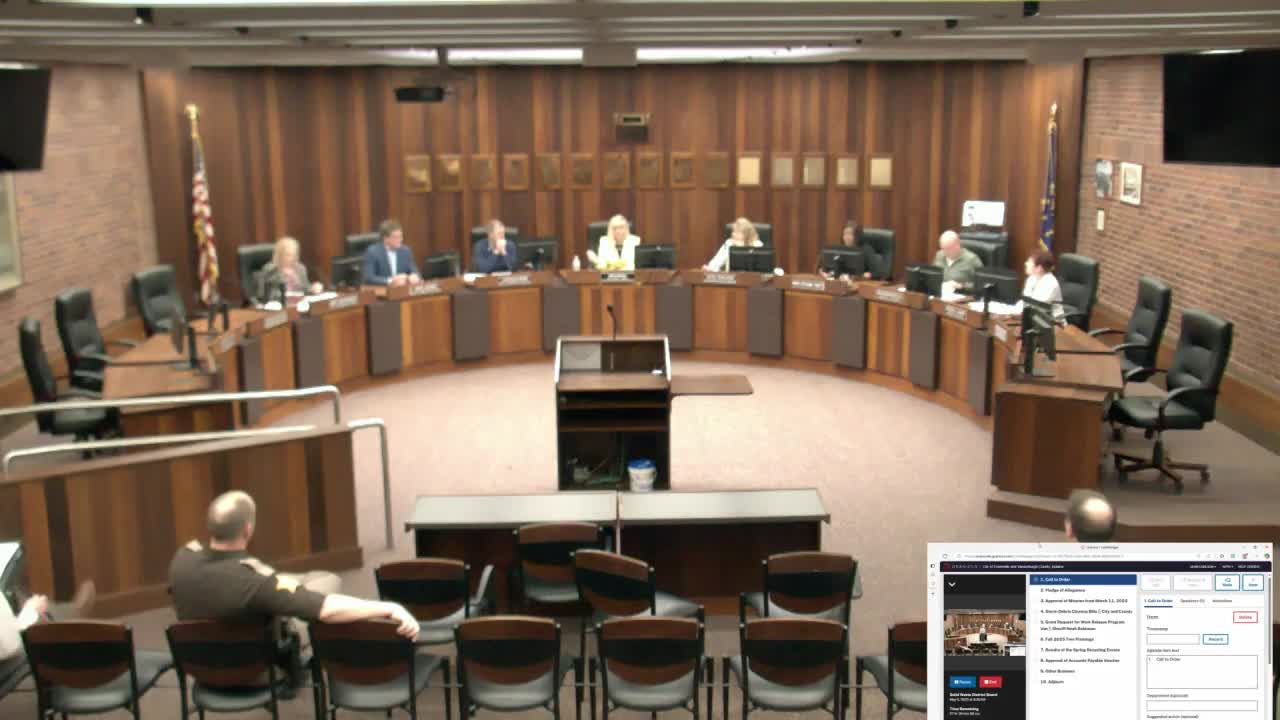
Sheriff proposes reviving work-release trash-pickup van; board approves van purchase contingent on council funding
Summary
Sheriff Noah Robinson asked the Vanderburgh County Solid Waste Management District Board to fund a 15-passenger van to restart a community corrections trash-pickup program; the board approved up to $65,000 for the van contingent on county council approval of a residential officer to run the program.
Sheriff Noah Robinson asked the Vanderburgh County Solid Waste Management District Board on a motion-approved request to fund a 15-passenger van to revive a community corrections work-release trash-pickup program, with the board approving purchase of a van up to $65,000 contingent on the Vanderburgh County Council approving a residential officer position to administer the program.
The program Robinson described would run in two phases and use a van towing an existing trailer to pick up roadside trash five days a week. Robinson said the van would carry about 15 participants at a time and that the sheriff’s office would equip it with emergency lighting; participants would wear reflective vests and ordinary street clothes rather than jail uniforms. "I would ask that, the the board consider funding a new van, a van that would allow 15 passengers at a time, to be taken to locations that need to have trash pickup," Robinson said.
Nut graf: The board framed the plan as restoring an earlier community corrections service that provided supervised trash pickup and court-ordered community service opportunities. The sheriff said the program addresses both the need for supervised community service slots and visible litter problems on city and county streets, and that the sheriff’s office and local police would coordinate on safety in high-traffic locations.
Robinson told the board the work-release pickup had been cut roughly a decade ago when confinement officers were reassigned to the jail and the program’s transport van repurposed for prisoner transport. He said the jail staffing situation has improved and courts now employ residential officers; the revival would return an element of the old program focused on community service and rehabilitation. "This is literally... giving folks an opportunity to work off their court order community service and give back to their community at the same time," Robinson said.
Board members asked about cost and operations. Robinson estimated a van at about $60,000–$65,000 and said the district already owns a trailer (it needs bearings replaced). He said the sheriff’s office would supply lighting and that participants would be outfitted with reflective vests; Indiana Department of Transportation (INDOT) had been a prior partner providing vests. Robinson also said trip logs and mileage would be kept for state audits.
On funding, board staff noted $42,005.29 currently budgeted for two part-time county highway employees who pick up trash has not been spent this year; the sheriff estimated a residential officer’s salary and benefits at roughly $75,000–$85,000 annually. Board members discussed whether the residential officer would be hired and paid by the county council or funded through the solid waste district. The motion the board approved makes the van purchase contingent on county council approving the residential officer (or otherwise securing equivalent funding). The board chair called the motion and members responded "Aye;" the motion carried.
Robinson said the program could be restarted in a matter of months, limited mainly by vehicle procurement times, and that much of the program infrastructure and recordkeeping existed from the previous iteration. He asked the board to authorize the van purchase while he works with the county attorney and council to confirm hiring and funding approaches.
Ending: Board members agreed to review legal and funding details with the county attorney and county council as Robinson pursues vehicle procurement and program setup. The board did not set a specific delivery timeline for the van beyond Robinson’s estimate of a few months depending on availability.