Get Full Government Meeting Transcripts, Videos, & Alerts Forever!
Get email alerts on the Consumer Protection Weights Measures topic
No spam. Unsubscribe anytime.
County weights-and-measures chief outlines scope, risks and consumer impacts
Summary
Jacob Murphy, chief inspector for the Evansville–Vanderburgh County Department of Weights and Measures, told commissioners the department inspects devices from retail scales to fuel pumps and that small measurement errors can cost consumers and erode tax revenue.
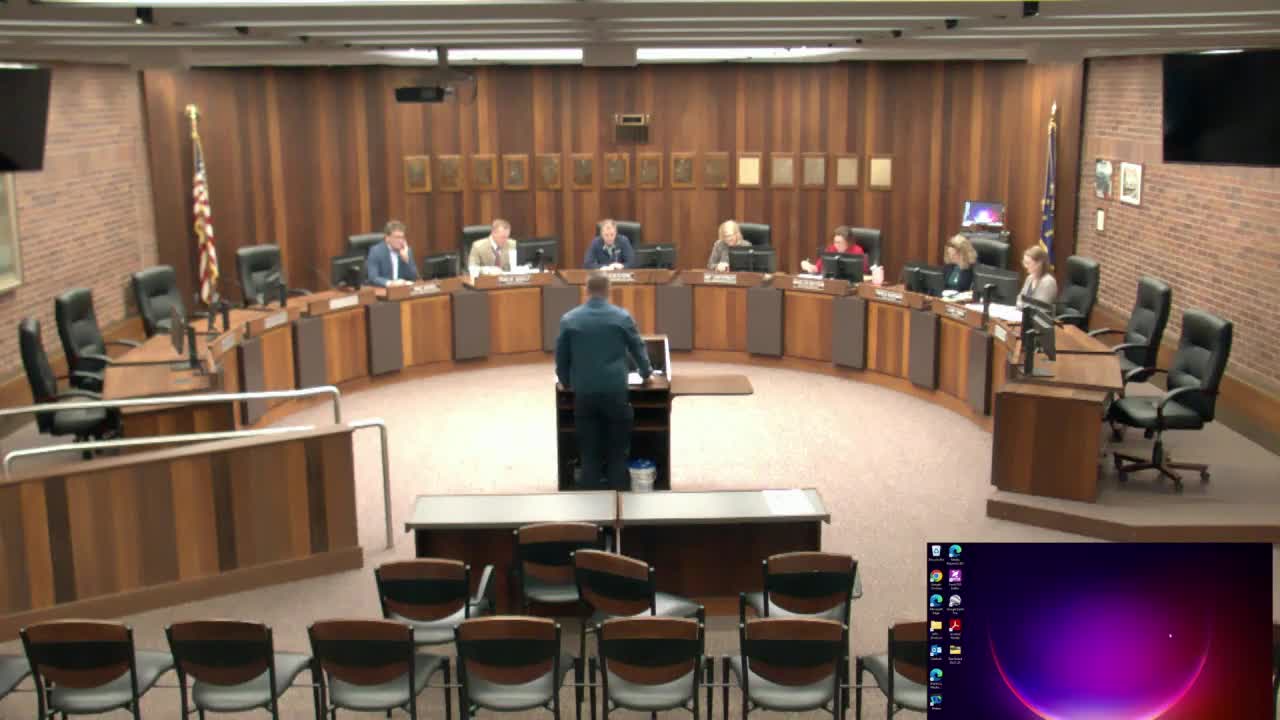
Jacob Murphy, chief inspector of the Evansville–Vanderburgh County Department of Weights and Measures, told the Vanderburgh County Board of Commissioners on May 6 that the office checks commercial measuring devices ranging from gasoline pumps to deli scales and industrial vehicle scales.
Murphy said the department’s work supports fair commerce and protects both buyers and sellers. "When we ensure accuracy, we protect consumers from being shortchanged and businesses from unknowingly giving away product," he said.
Why it matters: Murphy described the inspection program as “invisible infrastructure” for the local economy and offered several numerical examples to show how small errors add up. He said national estimates put the scale of regulated transactions in the trillions and stressed that even fractional inaccuracies at a single fueling station can represent material losses over a year.
Murphy gave numeric examples during his presentation: a station pump error of one cubic inch (about 0.004 gallons) could cost a typical station roughly 26 gallons a year; a larger error spread across many transactions could lead to thousands of dollars in overcharges or giveaways annually. He also described devices the department inspects, including clinical pharmacy scales, law enforcement drug scales, taxi meters, airport baggage scales, retail grocery scales, large-capacity vehicle scales and petroleum dispensing systems.
On enforcement, Murphy said his office prefers voluntary compliance and corrective action, but that fines and legal action are available if businesses do not correct problems after inspection. When commissioners asked whether inspections are announced in advance, Murphy said staff generally make unannounced visits so stations cannot adjust devices before testing.
The presentation closed with commissioners thanking Murphy for the overview and for the department’s work at local events and competitions.
The remarks occurred during the departmental reports portion of the May 6 meeting; no formal vote or county action resulted from the presentation.