Get Full Government Meeting Transcripts, Videos, & Alerts Forever!
Get email alerts on the Accessory Dwelling Units topic
No spam. Unsubscribe anytime.
Blaine council rejects Pepin family’s accessory dwelling unit after extended debate; directs workshop review
Summary
After more than two hours of public comment and council debate, the Blaine City Council voted down a conditional-use permit for a detached accessory dwelling unit proposed by Alex Pepin. Councilmembers passed several conditions during debate but the main approval failed; council asked staff to return the ADU policy to a future workshop.
The Blaine City Council voted down a conditional-use permit request for a detached accessory dwelling unit (ADU) proposed for a Pepin family property on Second Avenue Northeast during its May 5 meeting at Blaine City Hall.
The vote followed an extended public-comment period in which neighbors both opposed and supported the Pepins, a detailed staff presentation of ADU standards and a lengthy council discussion about zoning intent, neighborhood compatibility and program safeguards. The motion to approve the permit, moved by Councilmember Fleming and seconded by Councilmember Ford, failed on a roll call vote: Fleming and Ford in favor; Councilmembers Larson, Masolia, Newland, Robertson and Mayor Sanders opposed.
City staff told the council the city’s ADU standards — adopted in 2021 — allow detached ADUs in R1 single-family districts only by conditional-use permit and set limits on location, size and occupancy. Assistant Community Development Director Sheila Selman told the council the ordinance caps ADU size by multiple tests and that the applicant’s proposal met the listed requirements. Selman said the ordinance’s size formula is “50% of the finished square footage of the primary residence, 25% of the square footage of the rear yard, or 960 square feet, whichever is less,” and that the application proposed a unit that met those limits.
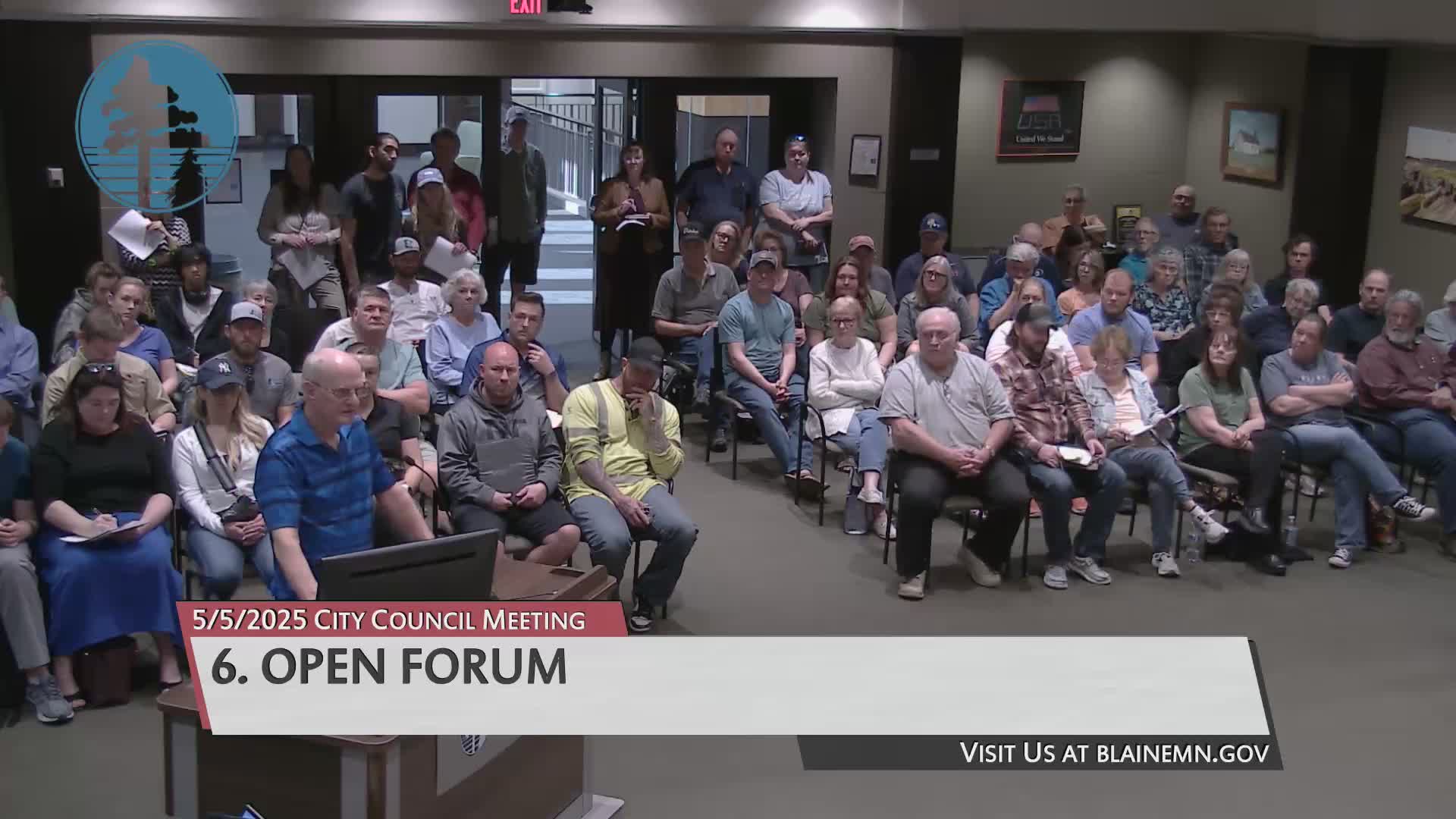
Supporters and opponents filled the public-comment period. David Heim and Pad Heim, neighbors, told the council they opposed locating a second dwelling behind a small-lot single-family home near Carrara East Park, raised concerns about safety and property values, and submitted petitions and written opposition. Darren Mathieson and Nancy Johnson said they know the Pepins personally and urged approval, saying the family intends to use the ADU to host people transitioning out of homelessness through Family Promise and would screen occupants carefully.
Councilmember Fleming described contacting Family Promise and said the nonprofit’s program generally places households that have completed a screening and are assigned a case manager. Fleming said, “these aren’t the panhandlers sitting in the in the middle of the road,” and framed the Pepins’ proposal as attempting to provide an opportunity for families to stabilize.
Several councilmembers said their concerns centered on neighborhood compatibility and the ordinance’s original intent. Councilmember Newland said the proposal “is anything but a mother-in-law suite” and argued it would materially change the character of the R1 neighborhood. Councilmember Larson cited residents’ written comments and said the ADU “does not seem to be compatible at all with the adjoining properties.”
City attorney Michael Lunan advised the council that its role was quasi-judicial for the permit decision and that council should apply the zoning criteria on the record rather than pursue legislative intent: “you sit with an application in front of you, and you have to put on that quasi judicial hat to interpret the application and make a determination.”
During debate the council adopted several amendments to conditions recommended by the Planning Commission, which had recommended approval 4–2. The council voted to (1) shift the proposed structure so its west facade is in line with the west facade of the existing house, (2) require a drain tile to divert runoff toward the street, and (3) bar use of the ADU as a “rental dwelling” as defined under the city code (an amendment that prohibits occupancy by anyone who is not the owner or a member of the owner’s family). The Planning Commission had already added a condition requiring a 6-foot privacy fence around the rear yard.
Despite the amended conditions, the main motion to grant the CUP failed by a 5–2 vote. The clerk’s roll call recorded Fleming and Ford voting yes; Larson, Masolia, Newland, Robertson and Mayor Sanders voting no.
After the vote council members agreed — by consensus — to bring the ADU policy and related conditions back to a future council workshop for additional review and potential ordinance adjustments.
Discussion vs. decision: council members repeatedly distinguished between policy intent and the current ordinance; several members said they supported the Pepins’ charitable intent but concluded the specific application did not meet the council’s test for compatibility. The failed vote is a formal decision; the later directive to return the ADU matter to workshop is a council instruction to staff for further policy review.
The planning record shows the item was the city’s first detached ADU application since the ordinance was adopted in 2021. The permit request had been approved by the Planning Commission 4–2 with 12 conditions, including the privacy fence. Councilmembers added the alignment, drain tile and rental-prohibition conditions during Monday’s meeting.
Votes at a glance: motion to approve the ADU conditional-use permit (agenda item 9.1) — Moved by Councilmember Fleming; seconded by Councilmember Ford — Outcome: failed (ayes 2, noes 5). Amendments (alignment, drain tile, rental prohibition) passed prior to the final vote.
The council’s direction to staff to return the item to workshop leaves open the possibility of ordinance changes or different permit conditions before another application proceeds.
For neighbors and the Pepin family, the result is immediate: no CUP was granted. Council members and staff said they will use a workshop to consider whether the existing ADU standards should be tightened or clarified before additional applications are considered.