Get Full Government Meeting Transcripts, Videos, & Alerts Forever!
Get email alerts on the Planning Process topic
No spam. Unsubscribe anytime.
Commission approves first reading of wide zoning/text amendments to speed reviews, add administrative streams and boost public outreach
Summary
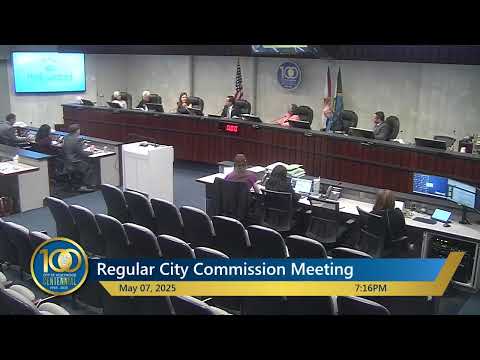
On May 7 the commission approved first reading of a broad text amendment to Hollywood’s zoning and land‑development regulations meant to speed permit decisions, create tiered administrative review tracks and require earlier, clearer public outreach.
The City Commission approved on first reading a broad overhaul of multiple chapters of the zoning and land‑development code intended to shorten review timelines, add administrative review streams and increase early public outreach. The ordinance amends Articles 2, 3, 4, 5, 6 and 10 of the code.
What staff proposed: Development Services Director Andrea Winget told the commission the text amendment aims to encourage higher‑quality development while reducing unnecessary delay. Key changes presented by staff included:
- New tiered review streams: retain building‑permit review for very small projects; create an administrative site‑plan stream for smaller projects (proposed for projects roughly 5–10 units or small site‑area changes); route mid‑sized projects to a Development Review Committee (DRC, renamed from the prior Technical Advisory Committee) for staff review and potential administrative approval; reserve the Planning & Development Board and commission review for large, complex or variance‑driven projects.
- Earlier public outreach and better notice: require two mandatory public outreach meetings for projects in the DRC and design/site‑plan streams, and require larger, more informative on‑site signs to be posted early in the review process; expand mailed notice to 500 feet and make civic association notification mandatory.
- Process efficiency: staff said the changes are meant to front‑load technical studies and applicant deliverables so reviews are completed faster; staff cited a statutory 180‑day timeline for application decisions as a state standard the city should meet.
Floor amendments and commission discussion: Commissioners debated thresholds. Several commissioners sought a conservative, incremental approach to shifting projects out of the board. After extended discussion the commission voted to amend the staff draft on the floor: the commission removed the ability for a single resident to trigger a protest for an as‑of‑right administrative approval; the commission also asked staff to clarify that administrative variances would not apply to new site‑plan projects (they are intended primarily for smaller, existing‑structure modifications). The commission additionally added a trigger so that payment‑in‑lieu‑of‑parking requests would require Planning & Development Board review.
Vote and next steps: The amended ordinance passed first reading. Staff said it would be effective 60 days after adoption to allow time for outreach and updated web/materials. The Development Services office will produce public‑facing guidance, a development review map and revised online forms; an updated urban‑design guideline rewrite and comprehensive‑plan update are in progress as separate but related efforts.
Why it matters: The package reallocates which projects are processed administratively and which receive board scrutiny, changes when and how the public is notified and adds deadlines intended to reduce delays that can lead to automatic approvals under state timelines. Commissioners and several public commenters urged clear public education so residents understand how and when to engage.