Get Full Government Meeting Transcripts, Videos, & Alerts Forever!
Get email alerts on the Solar Projects topic
No spam. Unsubscribe anytime.
Sundance Solar hearing draws heavy public comment on fire, traffic and water; BOCC recesses to continue review
Summary
The Elbert County Board of County Commissioners opened public hearings May 14 on the Sundance Solar project — a proposed 74.9 MW solar facility paired with 50 MW (four-hour) battery storage — but recessed the meeting until May 15 after extensive presentations and public comment on fire safety, traffic, water and visual impacts.
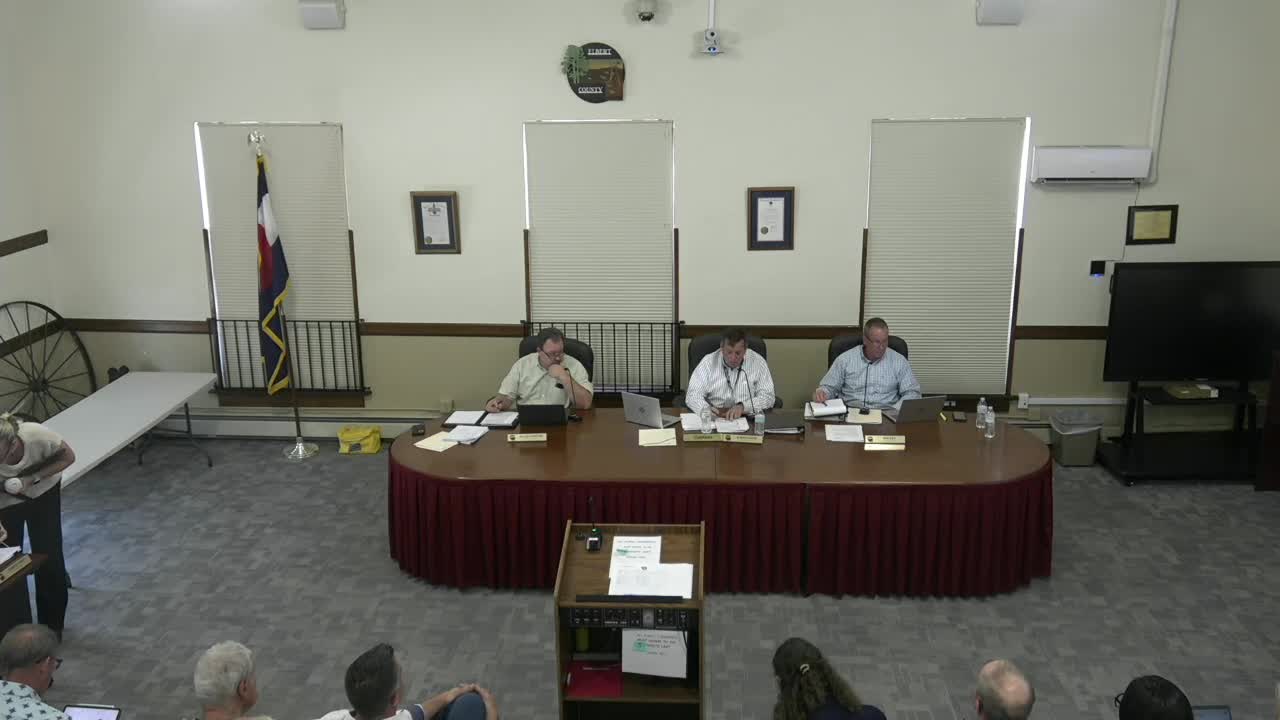
The Elbert County Board of County Commissioners on May 14 opened public hearings on the Sundance Solar project — a proposed solar and battery storage facility proposed for land at the southeast corner of Kiowa Bennett Road and County Road 154. The Board recessed the meeting until May 15 after multiple hours of staff presentations, a developer presentation and extensive public comment.
Jennifer Jones, planning manager with Elbert County, summarized the applications: a major 1041 permit and a special use by review for a solar facility with up to 74.9 megawatts of solar generation and 50 megawatts of battery storage (four-hour duration, ~200 megawatt-hours). The overall property under option covers roughly 1,119 acres with a project footprint of approximately 603 acres; the panels and battery storage would be sited adjacent to an existing Kiowa 115-kV substation, Jones said.
Jones said staff recommended approval of both the 1041 and the SUR with conditions. Key recommended conditions include a road use agreement and development agreement to address construction impacts, a decommissioning financial security (bond or irrevocable letter of credit) to cover decommissioning costs for the life of the facility, and recordation of exhibits and required fees within 180 days. Jones noted the Board’s 1041 regulations require the applicant to post financial security adequate for the project’s lifespan.
The Planning Commission previously recommended denial of both applications by votes of 7–2, citing concerns over compatibility with neighboring properties, potential archaeological impacts, visual and landscaping issues and whether the intensive industrial nature of a large-scale solar-plus-storage facility belongs in agricultural zoning. Jones read those Planning Commission findings into the record but also noted that referral agencies provided comments that staff considered addressed or otherwise manageable; outstanding items, she said, included the final road use agreement and development agreement.
Peter Moritz Burke, vice president of development for Cypress Creek Renewables, and lead developer Zach Bartholomew presented for the applicant. They said the project would deliver local power to CORE customers in Elbert County, improve grid reliability, and yield estimated cumulative county revenue of about $9.8 million over 40 years. Burke said the project would pay an Elbert County construction-related fee equal to 2% of total construction cost (estimated at $3,400,000) prior to mobilization.
Representatives for the applicant described a range of mitigation measures: an eight-foot agricultural-mesh perimeter fence (no barbed wire), a proposed 1,000-foot setback from Kiowa Bennett Road (proposed by the applicant), wildlife corridors/gaps in fence lines to preserve movement, containerized battery systems meeting NFPA 855 standards and manufacturer testing (applicant referenced "Hytheon" batteries and containerized systems), yearly first-responder trainings with Kiowa Fire, site-specific vegetation management, and visual screening options (applicant provided beige, brown and green fence-color renderings at staff request).
Applicant materials and staff presentations also listed project studies and plans provided to the county: traffic analysis, habitat and wildlife surveys, vegetation management plans, drainage reports, geotechnical studies (most recently revised 2024), and a decommissioning cost estimate. The applicant said a draft road use agreement and development agreement were under final review and would be recorded as a condition of approval.
Public commenters — including multiple residents living on County Road 154, members of Sky View and other nearby subdivisions, and representatives of local businesses and contractors — raised recurring concerns. Those concerns focused on fire risk and emergency response capacity for lithium-ion battery fires, the single dead-end access on County Road 154 and potential evacuation barriers, dust and truck traffic during construction, potential water use for panel washing and dust suppression, visual impacts and property values, potential runoff and contamination from panel or battery damage, wildlife impacts and FAA/airspace considerations.
Kiowa Fire District leadership and volunteer responders addressed fire risk directly in public comment and in questions from commissioners: they noted limitations in staffing and water resources and discussed how lithium-ion battery thermal runaway events differ from conventional structure fires. The applicant and counsel said the battery modules are containerized, each container has its own cooling and fire-protection measures, and that industry best practice for on-site battery incidents can include managed burn and containment tactics. Outside counsel and applicant representatives stressed insurance, design standards and coordination with fire district responders, and said annual first-responder trainings and written response plans would be part of operations.
Commissioners asked many technical and policy questions during the hearing, including: specifics of battery fire propagation and mitigation, water-supply and firefighting logistics, road-use and potential impacts to Kiowa Bennett Road and County Road 154, the draft road use agreement status, decommissioning-cost estimates and updates, visual-simulation methodology, fence color and landscape buffers, and whether the project relies on federal tax credits as part of its financing. Applicant representatives said tax equity is part of financing but that project viability does not hinge on that single element; they said the project had a power-purchase agreement with CORE Electric Cooperative for local offtake.
After several hours of testimony and questioning, the Board recessed the hearing until 10:00 a.m. the following day to continue deliberations and to allow staff and applicant time to finalize outstanding agreements and materials requested during public comment.