
Jackson City presents balanced 2025–26 budget, highlights public-safety, infrastructure, housing and parks investments
Get AI-powered insights, summaries, and transcripts
Subscribe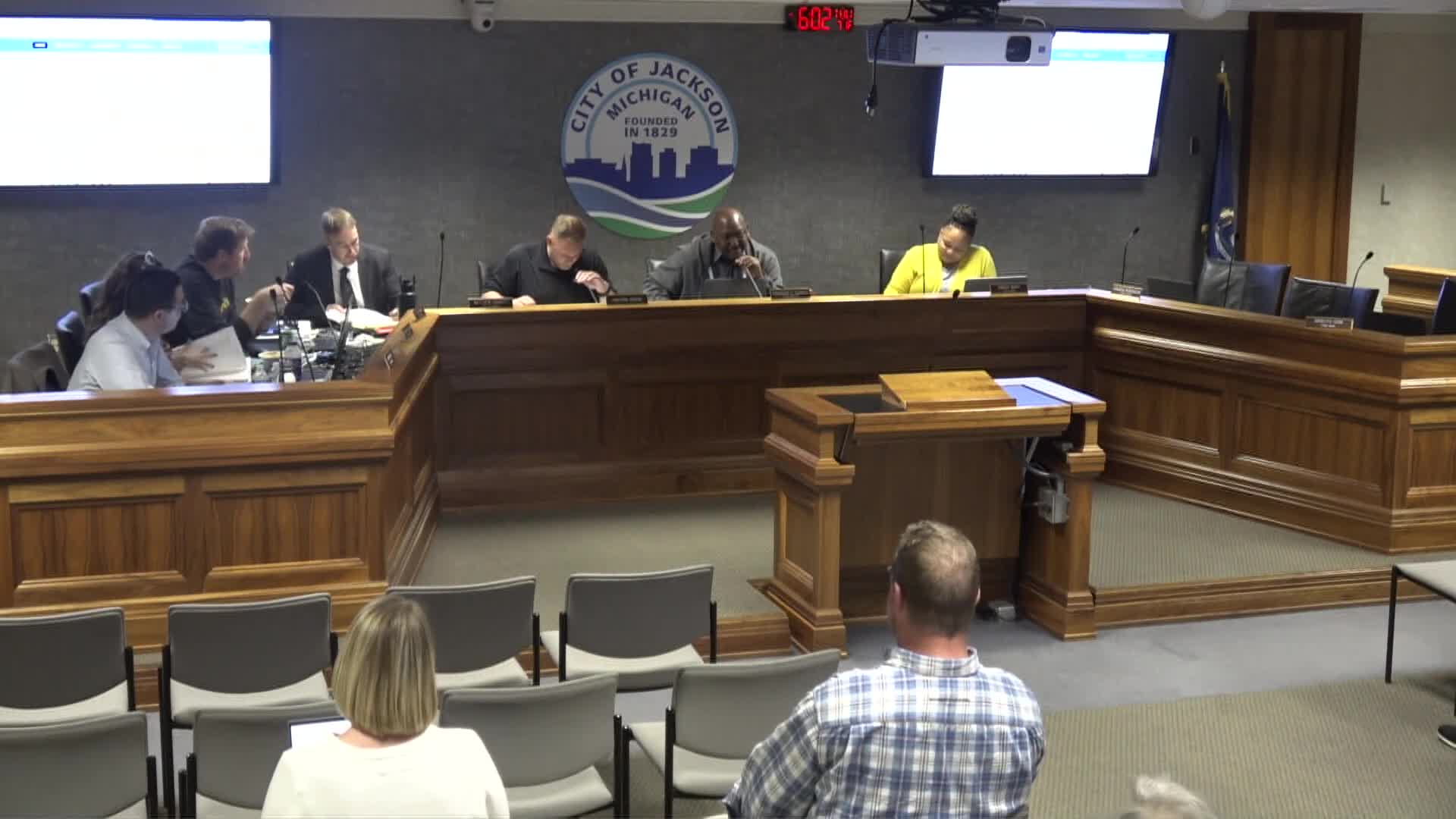
Summary
At a May budget workshop, Jackson City officials presented a proposed balanced 2025–26 budget that holds the fund balance at the council'adopted 30% target, cuts the millage by 0.7 mills and directs spending toward public safety, capital projects on the MLK Corridor and housing programs including the 100 Homes initiative.
Jackson City on Tuesday presented a proposed fiscal 2025–26 budget that city leaders described as balanced and focused on infrastructure and public safety while holding the general fund reserve at the council'adopted 30% target.
Finance Director Heather Ennis said the proposed plan would reduce the city's millage rate by 0.7 mills and keep the fund balance within the approved 15% to 30% policy; the budget projects the current-year fund balance at about 43.6% of expenditures and targets 30% at the end of fiscal 2026.
The budget workshop, led by the city manager and department directors, highlighted several priorities: continued investment in police and fire personnel and equipment; major street, water and sewer work including sections of the MLK Corridor; continuation and expansion of housing programs including the 100 Homes initiative; and increased maintenance and programming for parks and recreation.
Ennis said the city's taxable value rose 6.2% year over year, outpacing Michigan's 3.1% inflation cap partly because of uncapping on property sales. She also noted scheduled debt retirements that will reduce millage pressure, including a 2016 capital improvement bond retiring in October 2025, DDA/TIF bonds retiring in June 2026 and city hall refunding debt in May 2027.
Public safety costs account for a large share of proposed spending. Police Chief Chris Simpson presented a roughly 4% increase in the police budget driven largely by personnel costs, which he said make up about 86% of the department's budget. Simpson identified major contracted technology and equipment costs: an Axon contract for body-worn and in-car cameras that represents more than $100,000 of the software budget and continued Raven gunshot-detection service at about $25,000 per year. The department is budgeting to buy three patrol vehicles at about $49,000 apiece and is investigating a tactical SRT vehicle that could be purchased with cost-sharing from surrounding jurisdictions.
Fire Chief Tim Gonzalez proposed a 10.77% increase in his department's budget, driven in part by the expiration of SAFER grant funding that previously supported firefighter positions. Gonzalez said the city will absorb those personnel costs into the general fund and add one firefighter position to maintain around-the-clock staffing; he reported more than 6,000 calls for service in the previous year and roughly 110 structure fires. The fire department is also putting aside $200,000 annually from fire suppression to reserve for future apparatus purchases and seeks to use opioid-settlement funds to buy AEDs for city buildings.
Engineering and public-works presentations outlined a multi-year capital program. Engineering Director Troy said the city plans roughly $3.1 million on major streets in the coming year, with hundreds of construction locations across multiple funds over the next two years. Water and sewer capital plans include a projected $15.7 million in the water fund (including an estimated $11 million for transmission main work and $2.4 million on the MLK Corridor) and $5.9 million in sanitary sewer work (including $1.1 million to rehabilitate the Monkey Run interceptor, a brick sewer built in 1907). The city's engineering staff said much of the large work will be funded by state and federal grant programs administered through MDOT and other agencies.
Public Works Director Mike and staff said the city is preparing for lead service line replacements. They proposed reserving $1.6 million in the current year and $1.8 million the next year in the water equipment-replacement fund, reporting that federal Bipartisan Infrastructure Law (BIL) funds available now may not be available in future years and the city will likely need to fund replacements from local water funds over time.
Community Development Director Corey and staff reviewed housing and grant programs. The 100 Homes program has 48 approved buyers under its down-payment and rehab assistance program, and the department is preparing to spend a $1 million state allocation that will be split among the city, a local nonprofit and the housing commission. The city also is administering an EPA brownfield grant (~$500,000) and a State Land Bank Authority (SLBA) demolition grant of roughly $3 million to remove the former industrial building at Cooper and North streets; demolition timing depends on final land-bank paperwork.
Parks and recreation presentations described growing participation and ongoing maintenance challenges. Parks Director Green said vandalism and illegal dumping have increased costs, and the department is seeking targeted investments such as cameras and improved parking control at Sharp Park. The city will implement a higher recreation millage rate (moving from 0.50 to 0.75 mills on July 1) to expand programming and facilities, including a newly completed kayak/canoe launch and planned trail connections.
Treasurer and finance staff flagged several revenue details: delinquent income-tax collection historically brought about $425,000 per year (a practice the treasurer's office is pursuing, not included in the base budget), and some departments will continue to use ARPA and grant reimbursements for programs such as the police Lifeways clinician (reimbursed by ARPA through Dec. 31). Ennis and staff emphasized the budget shows a structurally balanced plan that preserves the council'adopted fund-balance minimum while investing in priority infrastructure and public-safety needs.
Votes at a glance: the council adopted the meeting agenda at the start of the workshop. Vice Mayor Dancy, Council Member Wood, Council Member Davis and Council Member Fortgrave recorded votes in support during the roll call portion of the meeting; the motion carried.
The council will hold a public hearing on the proposed 2025'26 budget at its next meeting before final adoption.