Get Full Government Meeting Transcripts, Videos, & Alerts Forever!
Harlingen and Drainage Districts outline flood-response work, grant status and coordination after March storm
Summary
City staff and officials from Cameron County Drainage Districts 5 and 6 reviewed March flooding response, described in‑house drainage work and detention projects, reported multiple pending state and federal grants, and agreed to expand public coordination and maintenance schedules.
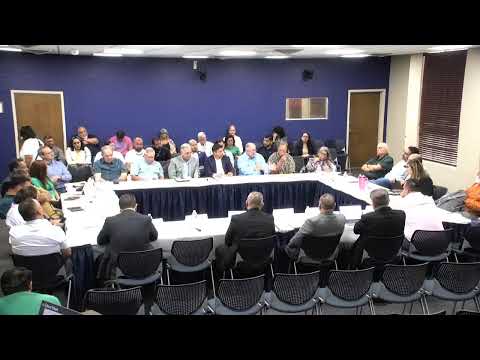
Harlingen — City staff and leaders from Cameron County Drainage Districts No. 5 and No. 6 on Thursday reviewed response and recovery work after a March storm that brought exceptional rainfall, described ongoing and planned drainage projects, and agreed to improve public communication and interagency coordination.
The presentations summarized what city and district crews did during and after the event, equipment and personnel the city has deployed, the status of several detention‑pond and channel projects, and the state and federal grant applications that are pending — some held up by long environmental or federal review processes. Drainage officials said work by in‑house crews and pumps reduced the scale and duration of flooding in several neighborhoods but noted major projects remain dependent on outside approvals and large funding awards.
City public works presenter Chris Portoldos described the city’s drainage crew equipment purchases and staffing and said crews and partnered pumps helped move water from streets to detention ponds after the heavy rain. “We got 22 inches within a span of 19 hours,” Portoldos said, and later added, “there’s no infrastructure in The US that can hold that much water and get that water out of the streets or the homes.” He reported the city purchased an excavator, two dump trucks, a front loader and a backhoe for a combined cost he gave as $1,200,000 and said annual drainage salaries total about $253,000.
Rolando Bella, general manager for Drainage District No. 5, framed the larger, regional challenge: the valley is flat and relies on artificial drainage systems of channels and detention ponds. “We are flat. We are in a delta,” Bella said, noting legislative changes that recognize “artificial drainage systems” in the Local Government Code and urging continued advocacy with state agencies. Bella and district engineers described detention ponds, channel reshaping and levee work that district staff have designed or started while they wait on…
Already have an account? Log in
Subscribe to keep reading
Unlock the rest of this article — and every article on Citizen Portal.
- Unlimited articles
- AI-powered breakdowns of topics, speakers, decisions, and budgets
- Instant alerts when your location has a new meeting
- Follow topics and more locations
- 1,000 AI Insights / month, plus AI Chat