Get Full Government Meeting Transcripts, Videos, & Alerts Forever!
Get email alerts on the Stormwater Management topic
No spam. Unsubscribe anytime.
Harlingen and Drainage Districts outline flood-response work, grant status and coordination after March storm
Summary
City staff and officials from Cameron County Drainage Districts 5 and 6 reviewed March flooding response, described in‑house drainage work and detention projects, reported multiple pending state and federal grants, and agreed to expand public coordination and maintenance schedules.
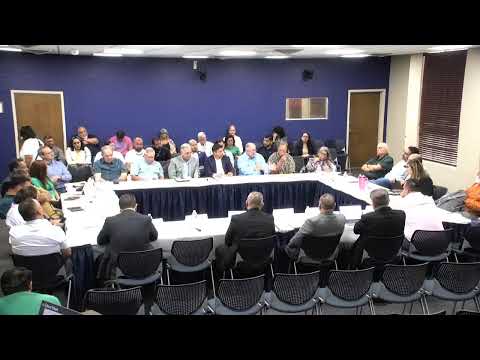
Harlingen — City staff and leaders from Cameron County Drainage Districts No. 5 and No. 6 on Thursday reviewed response and recovery work after a March storm that brought exceptional rainfall, described ongoing and planned drainage projects, and agreed to improve public communication and interagency coordination.
The presentations summarized what city and district crews did during and after the event, equipment and personnel the city has deployed, the status of several detention‑pond and channel projects, and the state and federal grant applications that are pending — some held up by long environmental or federal review processes. Drainage officials said work by in‑house crews and pumps reduced the scale and duration of flooding in several neighborhoods but noted major projects remain dependent on outside approvals and large funding awards.
City public works presenter Chris Portoldos described the city’s drainage crew equipment purchases and staffing and said crews and partnered pumps helped move water from streets to detention ponds after the heavy rain. “We got 22 inches within a span of 19 hours,” Portoldos said, and later added, “there’s no infrastructure in The US that can hold that much water and get that water out of the streets or the homes.” He reported the city purchased an excavator, two dump trucks, a front loader and a backhoe for a combined cost he gave as $1,200,000 and said annual drainage salaries total about $253,000.
Rolando Bella, general manager for Drainage District No. 5, framed the larger, regional challenge: the valley is flat and relies on artificial drainage systems of channels and detention ponds. “We are flat. We are in a delta,” Bella said, noting legislative changes that recognize “artificial drainage systems” in the Local Government Code and urging continued advocacy with state agencies. Bella and district engineers described detention ponds, channel reshaping and levee work that district staff have designed or started while they wait on environmental clearances and federal decisions.
What officials said happened during March’s event
- City and district crews activated pumps and inlet cleaning operations immediately after heavy rainfall. Portoldos said the city operates one 8‑inch pump, three 6‑inch pumps and two 4‑inch pumps and that outside municipalities and partner districts assisted. He said crews were able to stop pumping by Tuesday morning after the multi‑day response, with a few flood‑prone subdivisions requiring continued work.
- Officials reported substantially more rapid recession of floodwaters than during the 2019 event for areas where detention and channel work had been completed. Portoldos cited an area that previously stayed flooded for a week but reopened after two days during the March event following in‑house ditch work.
- District 6 board president Josh Rubison and DD6 general manager Javier Jimenez described pump operations and district investments; they reported the district has put more than $5,000,000 of local funds toward engineering, design and right‑of‑way to make projects shovel‑ready and has leveraged those dollars to secure additional state and federal support.
Pending projects and grant status
Officials described multiple projects at different stages: channel reshaping and lining (North Main Drain channel), several large detention ponds, levee certification and crossings upgrades. Some projects already have high‑level designs and are “shovel ready”; several have been awarded or are pending awards under Texas infrastructure programs (referred to in the presentations as the Texas Water Development Board FIF program), FEMA programs and other federal opportunities.
Bella and DD5 engineers said three large DD5 detention projects that received funding years earlier remain stalled by environmental review processes and other federal clearances. Bella said some federal grant lines were placed “on hold” or canceled after administrative changes; Portoldos and others confirmed that at least one previously awarded FEMA project could not be obligated and the funds were lost because the grant award could not be obligated in time.
Officials noted specific funding or administrative partners mentioned in the presentation: FEMA, the U.S. Army Corps of Engineers, the Natural Resources Conservation Service (NRCS), the Texas Water Development Board (TWDB), the Texas Department of Transportation (TxDOT), the Texas General Land Office (GLO), the International Boundary and Water Commission (IBWC) and congressional offices that have been asked to expedite reviews.
Coordination, public information and maintenance
District and city leaders agreed to increase public transparency about maintenance schedules and to coordinate an informational link between the districts and the City of Harlingen website so residents can see who is responsible for particular ditches and when maintenance is scheduled. DD5 and DD6 said they will revamp district websites with photos, schedules and educational material on detention ponds and open drains.
Administratively, officials agreed to continue regular staff‑level coordination. Several participants proposed monthly brief Zoom calls among general managers, district managers and the city assistant manager to share maintenance status, emergent repairs and progress on right‑of‑way acquisition and grant milestones.
What officials emphasized about limits and near‑term actions
- Officials repeatedly emphasized limits of local authority — districts typically maintain channels and detention ponds but not every roadside or subdivision inlet is theirs to repair. They urged residents to consult posted maps or the soon‑to‑be‑linked web resources to determine responsibility.
- Several immediate operational needs were identified: stabilizing eroded banks on the North Main Drain, clearing brush and illegal dumps from channels, coordinating contractor schedules for mowing and ditch reshaping, and pursuing right‑of‑way acquisition for projects that require expansion. Bella and engineers warned that some federal programs require leaving damaged sections in place until reimbursement eligibility is finalized, which can force difficult short‑term choices about emergency repairs.
- Officials described timelines for grant processes: applicants often hear back 6–12 months after submission and environmental reviews can take 12–24 months. District staff said they try to run processes concurrently where possible to shorten calendar time.
Why this matters to Harlingen residents
Officials said completed in‑house and partner projects meaningfully reduced flood duration in some neighborhoods during the March event, but they also made clear that the storm produced extraordinary rainfall totals and that larger projects needed to materially reduce flood risk require major outside funding and multi‑year execution. Bella: “Detention ponds temporarily store water, and when the channel recedes, then it starts going into the channel.” Officials urged residents to check flood maps, consider flood insurance and watch for updated maintenance schedules on the city and district websites.
Participants and attributions
Direct quotes and on‑record attributions in this summary come from: Chris Portoldos (city presenter), Rolando Bella (general manager, Drainage District No. 5), Eric Seiby (engineering consultant), Josh Rubison (board president, Drainage District No. 6), Javier Jimenez (general manager, Drainage District No. 6), Oscar (assistant city manager — first name only in transcript), and multiple city commissioners who took part in discussion and questions.
Ending
Officials closed the workshop with a commitment to improve public outreach (maintenance schedules and website links), continue interagency staff coordination (proposed monthly coordination calls), and pursue multiple state and federal funding tracks while pressing for faster environmental and federal approvals. No formal votes were taken during the workshop portion recorded in the transcript.