Get Full Government Meeting Transcripts, Videos, & Alerts Forever!
Get email alerts on the Public Comment Policy topic
No spam. Unsubscribe anytime.
Public commenters challenge district profanity policy and book bans during board meeting
Summary
Multiple public commenters used their allotted time to criticize district rules on profanity in public comment and to argue against book restrictions, saying the policies are inconsistently enforced and limit speech.
Several members of the public addressed the board during the May 27 public-comment period, criticizing the district’s enforcement of a policy prohibiting “foul language” during public comment and raising concerns about apparent inconsistencies between that policy and materials available in school libraries.
Dr. Justin Spies, who identified himself during the virtual comment period, told the board: “The USD 497 school board is enforcing an unconstitutional policy that prohibits speakers from using foul language during general public comment.” He said he had been removed from prior meetings for language used during public comment and asked why the district approved his sign-up if the language was prohibited. During his remarks he read examples of accepted and disallowed words as he perceived them, saying, “You can spell f u c k I n g, but you can't say *******.”
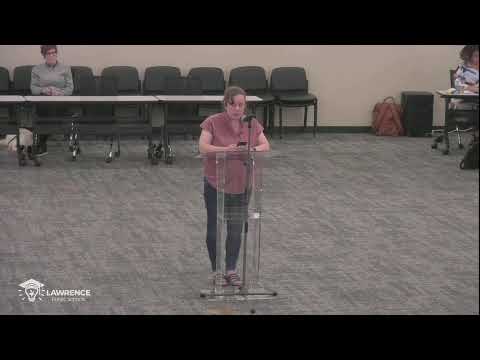
Carrie Schmidt, speaking in person, directly challenged what she described as inconsistent enforcement: she read from Concrete Rose by Angie Thomas and noted that the book—available at Southwest Middle School, Billy Mills Middle School and both high schools—contains profanity. Schmidt told the board that the same words appearing in library materials are being treated differently when used by speakers during public comment.
Chris Flowers urged the board to reconsider public-comment sign-up and said restrictions limit civic participation. Flowers argued that curse words in books and speech are a reflection of life and that removing or restricting them undermines representation of student experience.
Board President Kelly Jones and the board's public-comment policy were referenced repeatedly by speakers; commenters asked the board for clarity on what language is prohibited and how rules are applied. The district’s public-comment procedures were read aloud at the meeting; the statement explains that public comment is not the forum for complaints about identifiable staff or students and directs complainants to district policies KN and GAE.
The board did not take action on policy changes at the meeting. Speakers said they want clearer, written guidance about prohibited language and consistent enforcement; board members said they would follow standard procedures for policy review through committee processes if changes are proposed.