
City attorney proposes anti‑camping ordinance after Supreme Court ruling; council asks for enforcement policy details
Get AI-powered insights, summaries, and transcripts
Sign Up Free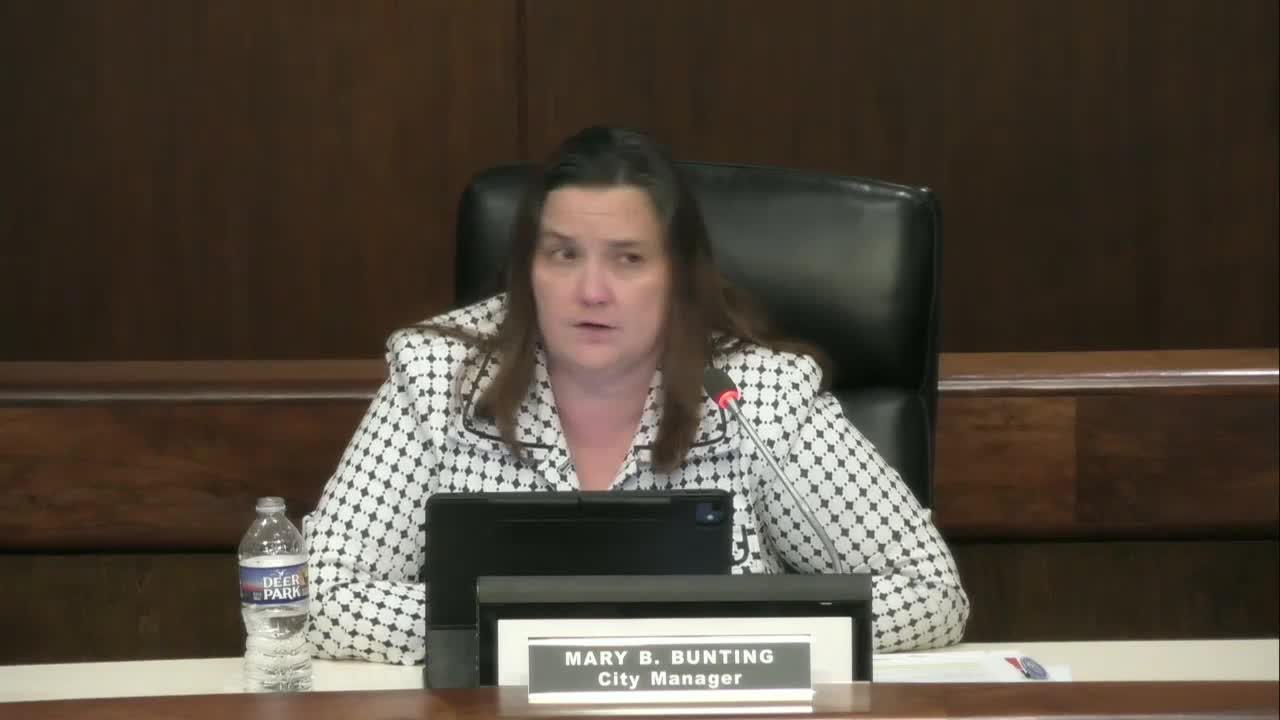
Summary
Senior deputy city attorney presented a draft ordinance that would ban camping and storage on public property consistent with the Supreme Court’s Johnson v. Grants Pass decision. Council asked staff to clarify enforcement timing, private property interactions and options for a policy to guide officers.
Senior Deputy City Attorney Brandy Law presented a draft ordinance to the Hampton City Council on May 20 that would prohibit camping, sleeping or storing items on public property and allow city staff to remove unattended property used for camping after a prior warning and offer of services.
Law told council the draft responds to the U.S. Supreme Court’s decision in Johnson v. Grants Pass, in which the court held that broadly applicable anti‑camping laws do not necessarily violate the Eighth Amendment when they are written to apply to anyone rather than targeting people because they are homeless. Law said the proposed ordinance defines “camp” and “store,” excepts authorized uses and unoccupied vehicles, and allows immediate seizure of unattended items that meet the storage definition. Items judged to be trash, hazardous or weapons could be disposed of immediately; other items would be held for at least 30 days and could be reclaimed by the owner.
Law said a violation as drafted would be a class 1 misdemeanor (up to a year in jail or $2,500 fine) but stressed the ordinance includes a required verbal warning and direction to available shelter, hotel alternatives or charitable programs before any charge would be brought. The ordinance would apply to public property in which the city or other governmental entities (for example, the school division or the housing authority) have an interest. Law and staff said the draft would let the city manager adopt administrative procedures governing seizure, storage and return of property.
Council members raised several enforcement questions: what constitutes a “reasonable time to comply” after a warning; how staff would handle property left on medians or private parking lots; and whether officers would carry pamphlets or lists of shelter options. Councilwoman Farrabee and Vice Mayor Brown asked staff to provide a clearer minimum time frame that officers should allow before moving to enforcement; Law said she could draft either a minimum time in the ordinance or leave a default but recommended handling timing and operational nuance in an implementing policy and officer training. Councilwoman Muggler suggested narrowing the ordinance’s definition of “store” to avoid sweeping up items left briefly in medians; Law said she could make that edit.
City Manager Mary Bunting clarified this item is not on the evening agenda and would be returned for formal consideration at a later meeting (staff suggested June), giving council time to direct edits and to let city attorneys draft implementing procedures. Bunting and Law said the city will need operational procedures for storage, notice, and interactions with private property owners (including written authorization for trespass enforcement when owners are not local). Council members asked police and staff to ensure resource referrals (hotline numbers and shelter contacts) are consistently available to officers.
Ending: Council members did not vote on the draft ordinance; staff will return with revised language and proposed implementing policies and training for law enforcement.