N.H. DOT proposes five-lane widening of Route 3 in Hooksett; hearing draws business and resident concerns
Loading...
Summary
The New Hampshire Department of Transportation on May 15 presented a preferred five‑lane widening of U.S. Route 3 in Hooksett, proposing new travel lanes, shoulders, sidewalks and three stormwater treatment basins to address congestion and a history of crashes on a 1.4‑mile stretch from Alice Avenue to Whitehall Road.
Good evening. The New Hampshire Department of Transportation formally presented its preferred alternative for improvements to U.S. Route 3 in Hooksett during a public hearing on May 15, 2025, outlining a five‑lane typical section, new sidewalks and three stormwater treatment basins.
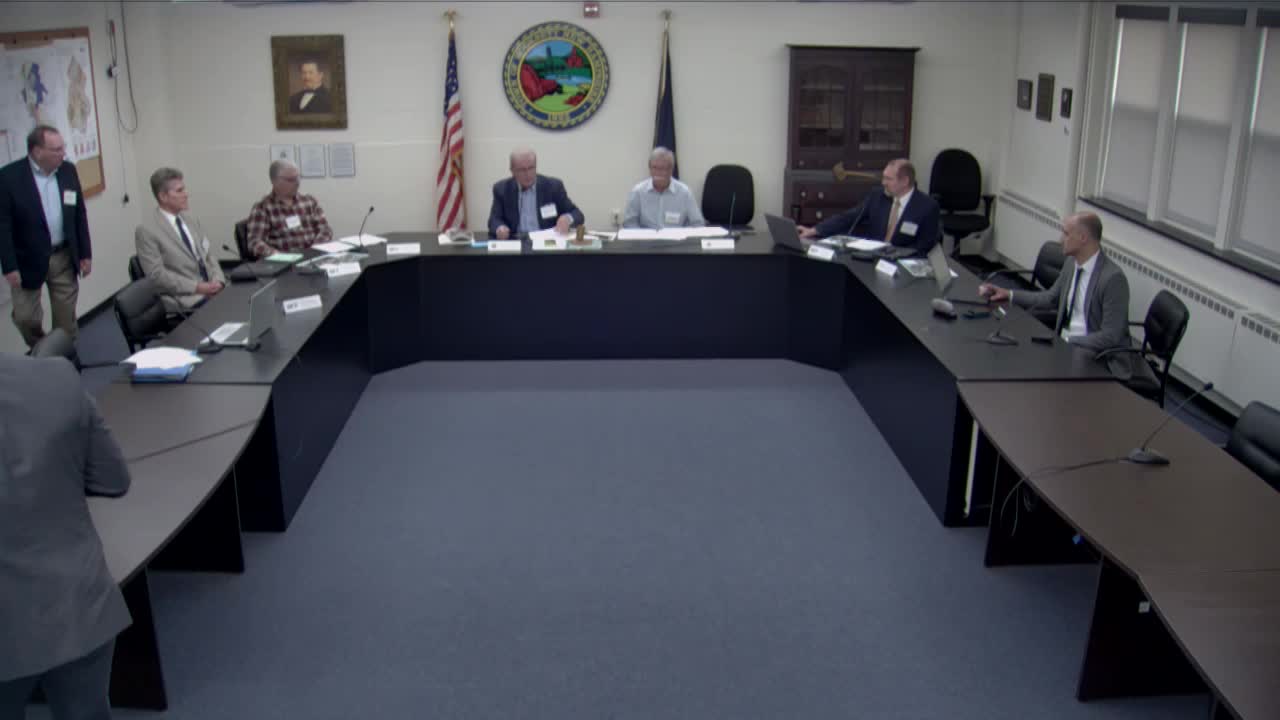
The hearing, convened by Commission Chairman Thomas Morgan and led by project manager David Smith, focused on a 1.4‑mile stretch of US‑3 from Alice Avenue north to the Whitehall Road/Martins Ferry Road intersection. "The purpose of the project is to improve safety and mobility along this segment of Route 3 for all users," David Smith said during the presentation. The plan would add a travel lane in each direction, 5‑foot shoulders, 6‑foot sidewalks in selected segments, median islands at strategic locations and a closed storm‑drain system with water‑quality basins.
Why it matters: DOT officials said the improvements respond to congestion and safety issues on the corridor, citing an estimated 404 crashes over a 10‑year period and a pedestrian fatality in 2020. The project is listed in the state's 2025–2034 10‑year transportation improvement plan with an initial construction estimate of about $20 million, funded roughly 80% federal and 20% state. DOT staff said construction would not begin before 2028 and is expected to take about three construction seasons.
What DOT presented: Liviu Sincesco of design consultant WSP described proposed cross‑sections, noting uniform 5‑foot shoulders to accommodate bicycles, sidewalks on both sides between Alice Avenue and Mammoth Road and a single sidewalk on the west side north of Mammoth Road. He described median islands chosen to reduce conflict points and a series of retaining walls where grading requires them. Project maps shown at the hearing also identified a mix of strip right‑of‑way acquisitions and three larger right‑of‑way takings for stormwater basins.
Town position and roundabout debate: Andre Guerin, Hooksett town administrator and member of the project working group, told the commission the town council had voted in favor of the five‑lane section, signalized intersections at Alice Avenue and Mammoth Road, and sidewalks between Alice and Mammoth. "The town fully understands that once those sidewalks are constructed, it will be the town's responsibility to maintain those sidewalks," Guerin said.
Several business owners and residents urged reconsideration of signalization versus roundabouts. Tom Osborne, representing Osborne's Farm and Garden and a member of the working group, asked the commission to reconsider a roundabout at the Mammoth Road intersection, saying it would improve traffic flow and provide landscaping opportunities. DOT staff replied that a roundabout at Mammoth had different right‑of‑way impacts than a signal and had been evaluated; a roundabout at Alice Avenue was not recommended because it would have required substantial grade changes and greater property impacts.
Environmental, utility and design clarifications: DOT said drainage will be upgraded to a closed system with permanent stormwater treatment and that the project will require wetland permits and coordination with agencies including the U.S. Army Corps of Engineers and the New Hampshire Department of Environmental Services. The presentation identified three historic resources in the corridor and said coordination under Section 106 found no adverse effect to National Register–eligible resources.
Next steps: DOT will accept written comments through May 27; the department said it will prepare a report of the commissioner and schedule a future finding‑of‑necessity meeting. The hearing record and plans will be posted to the project website, DOT staff said.
Less critical details: DOT staff said they will prepare appraisals and begin right‑of‑way acquisition and relocation assistance only if the commission finds in favor of the layout. Officials emphasized further design refinements remain and that utility relocations, final environmental permitting and the right‑of‑way process must be completed before advertising the contract for construction.
Ending: The hearing closed after roughly three hours of presentations and public testimony; the commission adjourned following a motion to close the meeting. DOT's project web page will list the transcript and allow for submittal of written comments through the stated deadline.