Get Full Government Meeting Transcripts, Videos, & Alerts Forever!
Get email alerts on the Healthcare topic
No spam. Unsubscribe anytime.
Minnesota lawmakers, advocates say budget deal will strip health coverage from about 20,000 immigrants
Summary
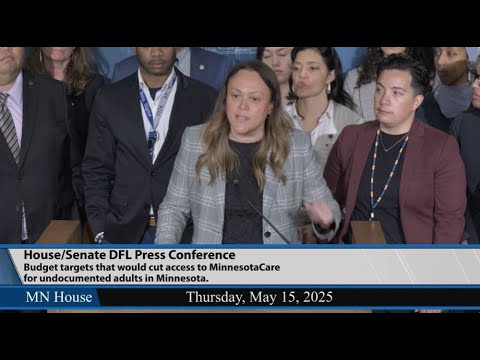
Minnesota legislators and immigrant-rights advocates criticized a budget agreement announced today that they said will remove state-funded health coverage for roughly 20,000 people without legal status at the end of the calendar year.
Minnesota legislators and immigrant-rights advocates criticized a budget agreement announced today that they said will remove state-funded health coverage for roughly 20,000 people without legal status at the end of the calendar year.
Cedric Frasier, co-chair of the People of Color and Indigenous Caucus in the Minnesota House, said the agreement would strip access to “cancer treatments” and “dialysis care” for individuals who currently rely on the coverage. “Those individuals at the end of the year will lose access to that care,” Frasier said.
Why it matters: Speakers said the deal preserves coverage for children but would leave many adults without ongoing medical care. State and advocacy speakers warned losing that coverage could lead to preventable deaths and greater strain on emergency services and hospitals.
At a downtown press conference, Frasier said his caucus had resisted a shutdown tactic by the Republican legislative caucus and that Democratic leaders had weighed compromises to “do the least harm.” “We cannot vote for that,” he said. “We are not ready to accept that for our neighbors, for our friends, for our families.”
Sen. Elise Mann (D., Senate District 50) called the agreement “cruel” and said lawmakers who backed the deal prioritized political points over health care. “There is no fiscal responsibility when you do this,” Mann said, adding that taking away coverage shifts costs to emergency departments and pushes families toward poverty.
Emily Gonzalez Avalos, executive director of Unidos Minnesota, said mixed-status families were used as “human shields” in negotiations. She said the affected people include essential workers who pay state taxes and argued private insurance markets are not a viable alternative for many of those families. “This care was not and has never been free,” she said.
Speakers gave enrollment and cost figures but cautioned the numbers have been presented in different ways. According to the speakers:
- About 20,000 people have enrolled in the program; roughly 17,000 are adults and about 3,000 are minors. - Advocates said a prior cost projection modeled by state sources placed the four‑year cost at roughly $200 million under a managed-care (MCO) capitated design. Speakers said the current program is operating on a fee‑for‑service basis and that costs to date are well below that projection; speakers described current costs as “less than $4 million” so far and said faster enrollment confirmed demand. - Advocates said state estimates of the total undocumented population used in modeling were roughly 40,000, and that earlier eligibility assumptions produced a 27,000–28,000 estimate of potential participants.
What happened next: Speakers said they intend to continue opposing the provision. Frasier said members of his caucus on the floor where the health portion will be considered had signaled they would vote no on the provision at present. He did not list specific lawmakers who would vote no.
No formal legislative action or vote was recorded at the press conference. The speakers framed the event as a public protest and a call for continued legislative and public pressure. Advocates urged supporters and mixed‑status families to keep organizing and said the matter would not be resolved at the press conference.
Context and limitations: The speakers attributed some numbers to prior state modeling and internal projections; the press conference did not present an official, document‑signed cost estimate or a bill text. When asked where replacement funding would come from, Frasier said those conversations were ongoing and not finalized. A speaker referenced a meeting with the governor but declined to describe details of that conversation.
What they asked for: Advocates pressed for continued coverage for people enrolled now and for a longer‑term solution that would not exclude residents on the basis of immigration status. Gonzalez Avalos called for a broader public‑option approach and urged Minnesotans to join advocacy efforts.
No new statute, ordinance or formal vote was announced at the news conference. The discussion was framed as public opposition to a budget provision and a promise to continue contesting it in the legislature.