Get Full Government Meeting Transcripts, Videos, & Alerts Forever!
Get email alerts on the Anaerobic Digesters Regulation topic
No spam. Unsubscribe anytime.
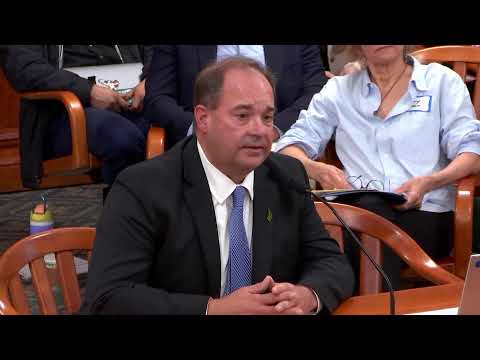
Michigan House panel hears competing views on bills to ease rules for anaerobic digesters
Summary
The Michigan House Agriculture Committee on [date not specified] heard extended testimony on House Bills 4257 and 4265, proposals from Representative Andrews that would reclassify regulation of anaerobic digesters and the material they produce and create new permitting and reporting requirements for those facilities.
The Michigan House Agriculture Committee on [date not specified] heard extended testimony on House Bills 4257 and 4265, proposals from Representative Andrews that would reclassify regulation of anaerobic digesters and the material they produce and create new permitting and reporting requirements for those facilities.
Representative Andrews, sponsor of the bills, told the committee the measures are intended to give the industry regulatory certainty and to treat digestate as a material managed under agricultural rules rather than as wastewater regulated by EGLE (the Department of Environment, Great Lakes, and Energy). Andrews said the bills would limit allowable feedstock to listed organic materials, require quarterly testing with five‑year record retention, establish approved training for operators within one year of opening, exempt small operations that accept less than 20% off‑site feedstock from additional permitting, and set a statutory review deadline for EGLE to approve or deny permits within 180 days with automatic approval if that deadline is missed. “It’s climate positive. It’s good economics for farms. So it’s win win win win win,” Andrews said.
Why it matters
Supporters said the bills would reduce permitting delays that have discouraged investment in renewable natural gas (RNG) and codigester projects, create farm revenue streams, and advance renewable energy goals. Opponents said the bills would effectively deregulate hazardous waste streams and could conflict with state and federal water protections, risking contamination of soil and water and increasing fugitive methane emissions.
What proponents told the committee
- Michael Imo, senior director of legislative external affairs for the Michigan Chamber, described anaerobic digestion as a way to convert waste streams into renewable natural gas and revenue for farms and other facilities and said states that reformed permitting have attracted investment.
- Charles Kepner, director of government affairs for Vanguard Renewables, said his company depackages and preprocesses food and beverage waste and tests digestate to ensure nutrient levels and suitability for land application. He told the committee the proposed legislation requires testing and procedures Vanguard already uses.
- Industry and business groups including the Michigan Manufacturers Association and the Michigan Corn Growers Association said digesters can reduce methane emissions, provide a fertilizer substitute, and support rural jobs and processing industries. Scott Piggott of the Michigan Corn Growers Association thanked lawmakers for negotiating the language and pointed to research cited at the hearing that shows reductions in odor and certain microbes from digestion.
What opponents told the committee
- Christy (Sierra Club representative) said legal memos from the Environmental Law & Policy Center conclude the bills would place Michigan in violation of state and federal law and a recent Michigan Supreme Court decision affirming the state’s authority to protect its waters. She warned that industrial‑scale deployment can increase herd sizes to produce methane and cited research indicating significant fugitive methane plumes from some digesters and wastewater plants.
- Megan Tinsley, water policy director for the Michigan Environmental Council, told the committee that the bills would exempt digestate from EGLE water permits if land application follows Generally Accepted Agricultural Management Practices (GAMPs). She said GAMPs are voluntary recommendations that do not substitute for Clean Water Act permits and noted that nutrient and contaminant risks (PFAS, heavy metals, pharmaceuticals, pathogens) are not addressed by nonbinding guidance.
- Representatives of Clean Water Action and Michiganders for a Just Farming System described digesters as expensive, likely to monetize pollution, and to create siting and health concerns in rural communities. Cheryl Ruble, M.D., argued digestate can contain microplastics, PFAS, pharmaceuticals and pathogens that anaerobic digestion does not neutralize and said digestate storage prior to land application raises additional risks.
Research and technical testimony
- George Smith, director of MSU AgBioResearch, and Dr. Wei Liao of the MSU Anaerobic Digestion Research and Education Center described Michigan State University’s research program and long‑running digester operation. MSU staff presented nutrient data, odor reduction figures (they reported digestion can reduce odor by roughly 90% in some studies), and land‑application practices from their campus operation. Dr. Liao said MSU’s Southern Campus operation generates roughly 15,000 gallons of digestate per day and currently applies digestate to several hundred acres; he said MSU monitors wells on the site and has not observed contamination in those monitored wells under its practices. MSU staff emphasized they conduct research and do not offer policy positions.
Regulatory and process details discussed
- Sponsor Andrews and several witnesses discussed moving permitting or oversight responsibilities between EGLE and MDARD (Michigan Department of Agriculture & Rural Development). Representative Andrews said digesters are agricultural in nature and that returning oversight to MDARD could be reasonable to consider.
- The sponsor described statutory details included in the bills: limiting feedstock to specified organic materials (manure, crop waste, food waste, excluding plastics and packaging); requiring contingency planning and annual reports; quarterly testing and five‑year record retention; operator training within one year; exemptions for small, farm‑connected digesters accepting under 20% off‑site feedstock; and a written 180‑day EGLE decision deadline with automatic approval if the deadline lapses.
Committee action and next steps
The committee adopted the minutes from a prior meeting without objection earlier in the session (Representative Alexander moved to adopt the minutes; hearing no objections, the minutes were adopted). The committee took public testimony on House Bills 4257 and 4265 but did not take a committee vote on the bills during the hearing.
Context and outstanding questions
Witnesses on both sides asked for additional data and agency input: committee members requested counts of permitted digesters, application timelines, and staffing and capacity information from EGLE; proponents and MSU offered to provide more operational data. Opponents pointed to legal memos and a need for explicit protections for water quality and for regulation of contaminants that they say are not covered by voluntary GAMPs.
The bills remain at the committee stage following the public hearing; no committee vote was recorded on either bill at this meeting.