Get Full Government Meeting Transcripts, Videos, & Alerts Forever!
Get email alerts on the School Budget topic
No spam. Unsubscribe anytime.
Maury County budget panel postpones decision on school funding after hours of debate
Summary
The county budget committee heard hours of testimony on school operations and capital needs, then voted 6-1 to postpone a final decision on the Maury County School District's operating request until a follow-up meeting May 29.
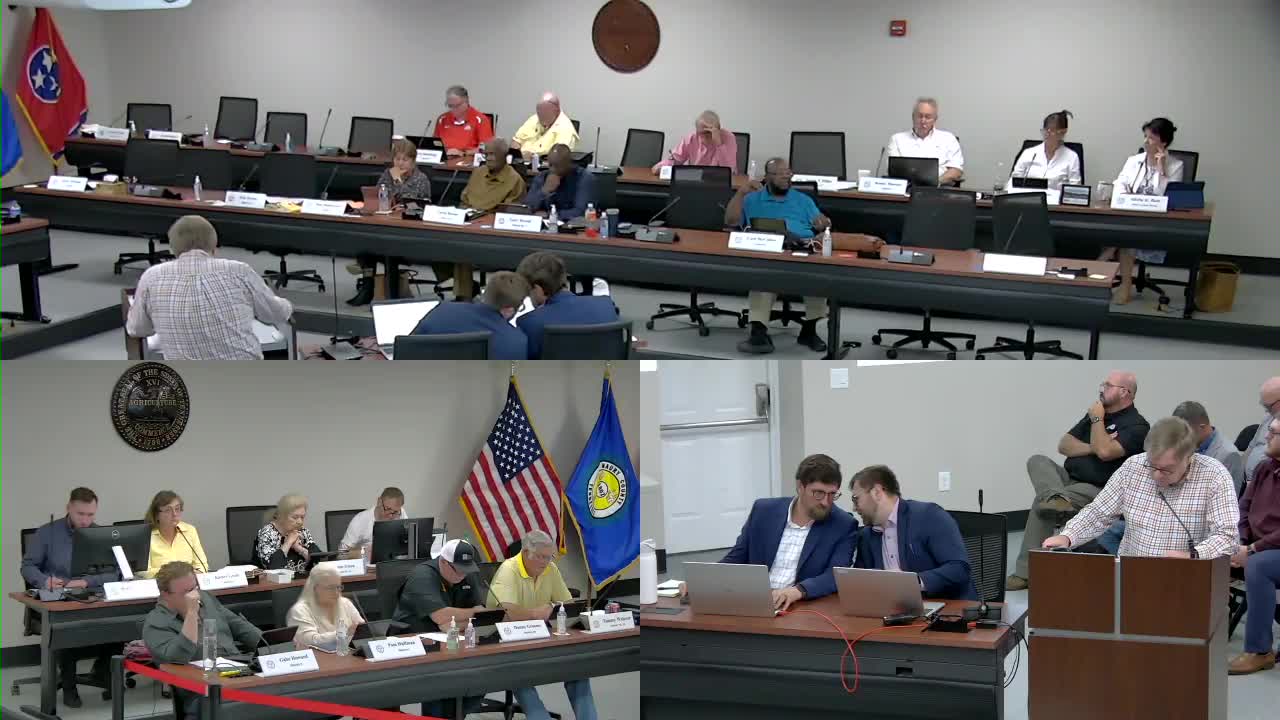
MAURY COUNTY, Tenn. — The Maury County budget committee on May 25 postponed a vote on the school district's fiscal 2025-26 operating request after several hours of public comment and commissioner questions about pay, enrollment and capital needs.
The Maury County Board of Education asked the committee to increase local funding to close an estimated $4.6 million shortfall in the draft operating budget and to pay for a teacher pay proposal that would raise the district's minimum starting salary. The district officials asked for the equivalent of a 10.3-cent increase in the county property tax rate to meet the request.
The request matters because the school budget is the county's single largest operating expenditure and the committee's decision affects property-tax revenue distributed to schools, county operations and capital projects.
School officials and a teacher said the county needs to act to recruit and retain teachers and to relieve overcrowded elementary schools. Leanne, who identified herself as a Maury County teacher working across eight schools, told the committee: "We are not asking for luxury. That's not what teachers are about. But we are asking for dignity." She described staff teaching in storage rooms and hallways and urged commissioners to invest in pay and facilities.
Eric Perryman, a school system official who presented budget detail to the committee, said the district has budgeted pay increases largely to comply with a state-mandated increase in the minimum starting salary for teachers. "We're trying to stay ahead of that law going into place," Perryman said, summarizing the board's approach to raise the minimum and to hold competitive wages to recruit teachers.
County finance staff provided the committee financial context: the school board's draft total was about $160.9 million, up roughly 4% from the current $154.3 million budget. That increase included roughly $5.3 million tied to the district's proposed moves toward a $50,000 starting teacher pay and about $1.1 million for non-teacher step increases. The county finance official said an immediate $4.44-cent allocation would cover a smaller step toward the state-required $47,000 minimum next year (estimated at roughly $2 million), while the full 10.3-cent request was tied to the district's full set of raises and operating needs.
Commissioners asked detailed questions about the district's revenue assumptions, the state's TISA funding adjustments and the district's use of fund balance. Doug, a county finance official, told the committee the state had reduced the district's projected state funding by about $900,000 in a recent estimate, a change the schools said contributed to the larger funding gap.
Several commissioners said they were reluctant to commit to the full request without more time to weigh other county priorities and the effect on the county's capital plan. Commissioner Howard pressed on the risk of spending design and engineering money on a school that might not be funded later, saying the county needed to avoid spending taxpayer money on projects that do not get completed.
The committee also debated one specific school capital item: the school board's earlier request to move forward with additional design fees and engineering work on North Columbia Elementary, a new elementary school the board has proposed to relieve multiple overcrowded campuses. The board has already purchased property and previously obtained contractor bids; the draft before the committee reflected higher projected construction costs after updates to the 2021 International Building Code and general market cost increases. Commissioners discussed alternative options including rezoning, portables and repurposing existing buildings.
After the discussion, the committee voted 6-1 to postpone a final decision on the district's operating budget request to a reconvened budget meeting on May 29. The roll call on the postponement recorded the following votes: Commissioner Green (yes), Commissioner Willover (yes), Commissioner Grooms (yes), Commissioner Sumners (yes), Commissioner Howard (yes), Commissioner Huffman (yes); the chair voted no. That vote will return the matter to the committee with an expectation of additional options and numbers to weigh the schools' request against other county needs.
Clarifying details from the meeting: the school board's draft operating total was presented at about $160.9 million (current-year budget shown as about $154.28 million); the district estimates a $4.6 million difference between draft operating revenues and projected cash receipts; the board's proposal to reach a $50,000 starting salary was estimated at roughly $5.3 million ongoing; raising the minimum to $47,000 next year was presented as costing approximately $2.0 million (about 4.44 pennies on the tax rate); the full 10.3-cent request was presented as the county allocation needed to balance the board's preferred spending plan.
What happens next: the committee reconvenes May 29, when school officials and county staff are expected to present updated revenue and funding options and a capital-funding plan. If the committee approves a recommendation, the process will move to a full commission vote later in the budget cycle.
Ending note: commissioners and school leaders repeatedly stressed the trade-offs ahead: short-term operating choices, long-term capital needs and the limits of county revenue sources. The committee did not adopt any permanent tax-rate change at the May 25 meeting; it set a short timeframe for further committee review and a follow-up meeting on May 29.