Get Full Government Meeting Transcripts, Videos, & Alerts Forever!
Get email alerts on the Unfpa Funding Cuts Afghanistan topic
No spam. Unsubscribe anytime.
UNFPA official warns U.S. funding cuts will force closure of hundreds of Afghan health sites
Summary
Andrew Saberton, deputy executive director for management at the United Nations Population Fund, said U.S. cuts to UNFPA funding will force closures of many community health facilities in Afghanistan and reduce midwife support by roughly half, putting reproductive and psychosocial services for millions at risk.
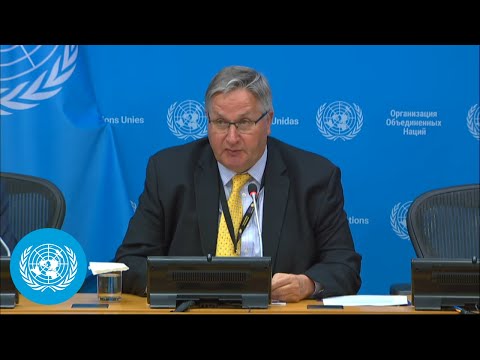
Andrew Saberton, deputy executive director for management at the United Nations Population Fund (UNFPA), told a United Nations briefing that recent U.S. funding cuts to UNFPA programs will force the agency to close hundreds of community health sites in Afghanistan and sharply reduce midwife support.
Saberton said UNFPA aims to reach 7,300,000 people in Afghanistan this year — about 80 percent of them women and girls — with reproductive health and psychosocial services. “Funding cuts in Afghanistan will result in lives lost,” he said. “There are no birth plans in Afghanistan, only survival plans.”
The UNFPA official described services he visited on a recent mission: a 24/7 basic health center and a transit emergency maternity clinic at the Torkham border with Pakistan; a family health “house” in Bamyan Province where locally trained midwives provide maternal care and make community visits; and a Kabul hospital offering fistula repair. He said those facilities are often the only accessible care in remote areas and that women and girls travel hours on foot, donkey or trucks to reach them.
Saberton gave several figures for the scale of the cuts and their effects. He said the United States cut “over $330 million” in global funding to UNFPA; roughly one-third of those cuts affected the Asia-Pacific region, with Afghanistan “one of the hardest hit” at about $102 million. He said 6,300,000 people — mostly women and girls — will lose access to life‑saving care as a result, and that UNFPA will be forced to reduce the number of midwives it supports by about half. "In 2026, UNFPA will support fewer than half the community facilities it did in 2024. We'll only have 418 facilities left," he said, adding that the agency currently supports roughly 982 (he also referred to the number 972 in a subsequent remark).
He described services that would be cut back or closed as including family health houses, mobile health teams and psychosocial support. Saberton said supplies are running out, health workers are being laid off, and mobile clinics in remote areas are being withdrawn. "We need urgent support to keep these services running and protect the dignity, health, and lives of Afghan women and newborns," he said.
During a question-and-answer exchange, Edith Lederer of the Associated Press asked whether Saberton had raised girls’ education and training of women health professionals with Afghan authorities. Saberton said he met the minister of public health, the vice minister of youth and the governor of Bamyan Province and raised the risk that excluding girls from education would create no future pipeline of midwives. He said he could not promise that raising the issue would result in action but that he had “made this case” in every meeting.
When a reporter identified as Yvonne asked how de facto authorities and ordinary people reacted to the projected cuts, Saberton said the authorities were “very concerned” and that UNFPA discussed whether local authorities could take over some basic services. He also said community leaders he met — described as male local leaders who guide health initiatives — expressed support for clinic services and wanted women and girls to receive care.
Saberton emphasized that UNFPA will “remain” in Afghanistan and that the agency will “prioritize the best we can” with remaining funds, but he reiterated that the cuts will reduce services dramatically and put lives at risk.
The briefing concluded after Saberton took questions; he briefly noted that the U.N. special envoy for Yemen, Hans Grundberg, would be appearing shortly at a separate Security Council stakeout.