Get Full Government Meeting Transcripts, Videos, & Alerts Forever!
Get email alerts on the Transportation Impact Fees topic
No spam. Unsubscribe anytime.
Agoura Hills council adopts updated transportation impact fees, cites $24.2 million in eligible projects
Summary
The City Council on May 14 adopted Resolution No. 25-2101 to approve a 2025 Transportation Impact Fee (TIF) Nexus Study, a capital improvement program and an increase to impact fees to fund transportation projects identified to serve future development.
The Agoura Hills City Council voted 5-0 on May 14 to adopt Resolution No. 25-2101, approving the city's 2025 Transportation Impact Fee Nexus Study, a Transportation Impact Fee Capital Improvement Program and an update to TIF schedules intended to capture new-development shares of identified transportation improvements.
The action will allow the city to collect updated TIFs tied to a 22-project capital improvement "menu" the staff and consultant team said addresses deficiencies identified in the city's traffic analysis. "The TIF Program plays a critical role in ensuring that new development contributes its fair share to the necessary improvements to the city's transportation infrastructure," said Charmaine Yambao, the city's director of public works and city engineer, during the staff presentation.
Why it matters: The Nexus Study and fee schedule are intended to ensure that growth under the city's general plan pays toward projects needed to accommodate the additional trips it generates. Consultants from Kimley-Horn reported an estimated $40.8 million in total project costs, of which roughly $23.7 million (about 58 percent) was identified as the proportionate share attributable to new development; with administration costs the feeable total used to calculate per-trip fees was described to the council as about $24.2 million.
What the study found: Consultant Chris Gregerson of Kimley-Horn told the council the analysis examined existing and expected future demand at 30 intersections and 48 roadway segments and identified 12 deficient intersections and 11 deficient roadway segments. "The total estimated cost of the improvements is about $40,800,000 but only $23,700,000 is eligible to be included in the program based on our proportionate share analysis," Gregerson said. The proposed program emphasizes active-transportation, transit and safety projects in addition to some signal and turn-pocket work.
Council debate and context: Council members asked about the TIF account balance and how fees are applied to projects. Yambao said the TIF account held about $1.3 million, of which $336,000 was immediately available and the remainder was being reconciled with an audit related to prior fronted funding for Agora Road work. Council member Deborah Klein Lopez, who served on the subcommittee that reviewed the study, called the update "a win win win" for prioritizing alternatives to widening and supporting climate and multimodal goals. Council member Bramstead asked whether the proposed fees represented a roughly threefold increase over the 2011 rates; staff and the consultants confirmed the 2011 schedule has not changed for 14 years and the proposed fees are higher than 2011 but generally in line with surrounding jurisdictions.
How fees are charged: Staff said projects that had an application deemed complete before the fee update (for example approved housing projects) would generally pay under the prior schedule; most other projects are charged at the fee in effect at certificate of occupancy or final building inspection. Yambao and the consultants stressed that the TIFs fund a portion of listed improvements and that other funding sources will be required to complete the full project costs.
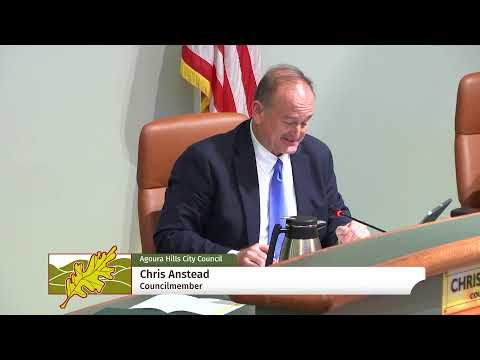
Formal action: Council member Anderson moved and Council member Chris Anstead seconded adoption of Resolution No. 25-2101. Roll-call votes were recorded as Anderson, Anstead, Klein Lopez, Mayor Pro Tem Wolf and Mayor Sylvester voting "aye." Mayor Sylvester announced approval 5 to 0.
What happens next: The council adoption establishes the Nexus Study, the capital improvement project list and the updated fee schedule. Project priorities and use of collected fees will be determined in future budget or project-specific actions, staff said.