Get Full Government Meeting Transcripts, Videos, & Alerts Forever!
Senate passes 2025 Health and Human Services omnibus after hours of debate and close votes
Summary
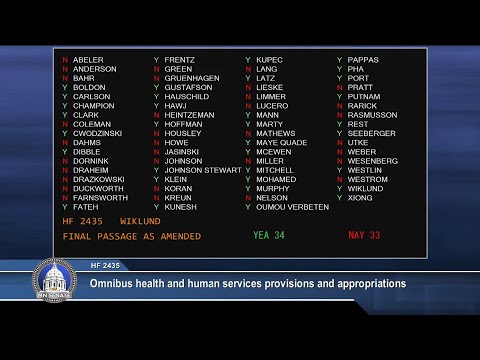
The Minnesota Senate passed House File 2435, the 2025 Health and Human Services omnibus bill, 34–33 on May 14 after extended floor debate and votes on more than a dozen amendments covering hospital payments, pharmacy rules, ambulance funding and eligibility for MinnesotaCare.
The Minnesota Senate passed the 2025 Health and Human Services omnibus, House File 2435, on May 14 by a 34–33 vote after hours of floor debate and a string of roll-call votes on amendments.
The bill, presented by Senator Wicklund, lays out a broad package of health and human services policy and spending that sponsors said is intended to stabilize hospitals, increase rates for some providers and expand program integrity work. Key provisions include directed payment programs intended to boost hospital and provider reimbursements; changes to pharmacy benefit management for public plans; funding for ambulance operating deficit grants and higher ambulance reimbursement rates; restoration of a 2% provider tax; and several maternal and reproductive health provisions including rates for birth centers and licensure for certified midwives.
Senator Wicklund, the floor sponsor, described the bill as “the product of months of thoughtful collaboration,” and said it “establish[es] a directed payment program to stabilize hospital finance systems” and includes measures to “raise medical assistance reimbursement rates to match Medicare levels.” She also told senators the omnibus is more than a budget exercise: “This bill is about preserving health care access, supporting our most vulnerable families, and investing in a sustainable, healthy future for all Minnesotans.”
Why it mattered
Supporters said the measure is aimed at strengthening access to care amid provider shortages and reinsurance funding changes at the federal level. The bill includes a 20% premium subsidy intended to reduce individual-market premiums, funded by an assessment on health plans, and directed payments that lawmakers said would maximize federal matching dollars. The bill…
Already have an account? Log in
Subscribe to keep reading
Unlock the rest of this article — and every article on Citizen Portal.
- Unlimited articles
- AI-powered breakdowns of topics, speakers, decisions, and budgets
- Instant alerts when your location has a new meeting
- Follow topics and more locations
- 1,000 AI Insights / month, plus AI Chat