Get Full Government Meeting Transcripts, Videos, & Alerts Forever!
Get email alerts on the Uas And Test Ranges topic
No spam. Unsubscribe anytime.
Commission approves expanded UAS radar purchase and Camp Gruber infrastructure funding
Summary
The Oklahoma Aerospace and Aeronautics Commission approved a $1.7 million contract amendment to buy additional radar hardware for the Clinton-Sherman UAS test range and authorized about $1.4 million in infrastructure work at Camp Gruber to support National Guard UAS testing.
The Oklahoma Aerospace and Aeronautics Commission on May 14 approved two actions to expand the state's unmanned aircraft systems (UAS) testing capacity: a contract to procure additional radar hardware for the Clinton-Sherman test range and initial construction funding for UAS facilities at Camp Gruber.
The commission voted to authorize a phase‑2 hardware and software package for the Clinton‑Sherman Beyond Visual Line of Sight (BVLOS) test range, a purchase described at the meeting as “a little over $1,700,000.” The board also approved roughly $1,400,000 to fund initial site work and foundational construction at Camp Gruber, part of a longer-term National Guard plan to develop a multi‑phase UAS test site.
Why it matters: the radars and Camp Gruber work are intended to strengthen Oklahoma’s capability to host BVLOS demonstrations and other advanced UAS testing, supporting commercial, defense and academic users and drawing business to state test ranges.
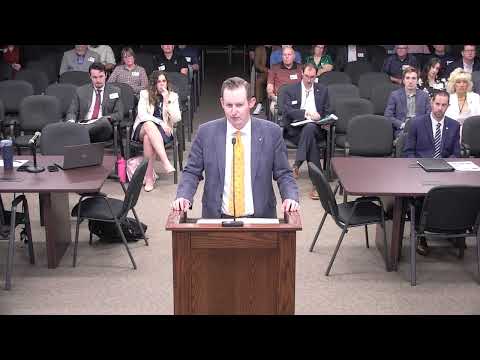
The contract for the Clinton‑Sherman test range will add rotating long‑range 2‑D radar and 3‑D radar elements that staff said expand the existing red “race track” coverage area and reduce gaps in detection (the so‑called “cone of silence”). Director Grayson Artes said the additional hardware will help the state demonstrate to the Federal Aviation Administration that the test range can detect and deconflict nonparticipating manned aircraft that do not broadcast ADS‑B signals.
“As we try to prove to FAA the concept of this electronic observer…we want to make sure that if there's any nonparticipating traffic, any traffic that's not advertising their ADS‑B signal, that we can make sure that we can deconflict between the UAS aircraft and any manned aircraft that comes into the test range,” Artes said.
Artes said the department has already received the phase‑1 equipment and that procurement lead times can be long; buying the phase‑2 hardware now protects against price escalation and delivery delays. He recommended approval of the hardware purchase and the commission voted unanimously to pass the item.
Commissioners asked for operational details during discussion. Commissioner Kevin Potter asked who would operate the radars; Artes said the state will fund the hardware while a contractor—Vigilant—will operate the system day‑to‑day under oversight from department staff. Artes said MITRE, a federally funded research and development organization, is providing technical analyses supporting radar coverage estimates.
On Camp Gruber, Artes summarized an $80,000 planning study with the Oklahoma National Guard and described the first construction phase as primarily earthwork, roads and utility preparation for future buildings and operational sites. He said the $1.4 million request covers the first phase of work and leaves roughly $1 million of the previously programmed $2.5 million unspent for later phases. The commission approved that item as presented.
Both items received discussion but no amendments. Commissioners voted in roll call for each motion; both measures passed.
The director cautioned that operational contracts (staffing, recurring operations and maintenance) are separate procurements and will require future commission action when the department seeks extensions or ongoing service agreements. Artes said the initial operational period of the phase‑1 contract was 24 months, and any continuation of operational services after that will be brought back for approval.
Funding and next steps: Artes said the hardware procurement is for the phase‑2 package only; operational contracts and recurring costs are not part of this vote. Staff will proceed with contract execution for the hardware and coordinate with the operator and MITRE for system integration. The Camp Gruber notice said additional phases would be returned to the commission for approval when ready.
Provenance: The UAS contract and Camp Gruber items were introduced and discussed by Director Grayson Artes (transcript entries starting at the hardware description for Clinton‑Sherman and the Camp Gruber planning summary). The first related remark appears in the meeting at the presentation of item 15 and the final roll call for items 15 and 16 concluded later in the meeting.