Get Full Government Meeting Transcripts, Videos, & Alerts Forever!
Get email alerts on the Water Crossings topic
No spam. Unsubscribe anytime.
Norwood conservation approval clears three trail water crossings; construction depends on river levels and botanical review
Summary
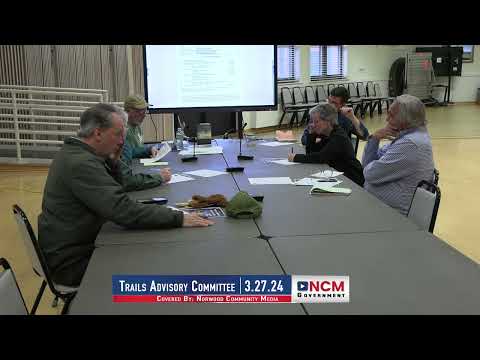
The Norwood Trails Advisory Committee reviewed three water‑crossing (boardwalk/bridge) projects approved by the Conservation Commission. Committee members discussed procurement, access logistics, timing tied to river height and a required botanical survey for a sedge species.
The Norwood Trails Advisory Committee on May 13 reviewed three water‑crossing projects that the town’s Conservation Commission recently approved. Committee members said the crossings are part of a broader effort, funded in part by Community Preservation Committee money, to make more trail segments passable and to link additional trail stretches.
Why it matters: approved crossings would reduce barriers on multi‑use trails and help connect segments toward the skating club, the dog‑kennel/University Avenue corridor and other trailheads. Committee members said the work requires coordination on timing, certified botanical surveys and careful logistics to move materials to sites with limited vehicle access.
What the committee discussed
Lee Leach summarized the filing and approvals and told the committee the three crossings were filed together and approved by the Conservation Commission. He said the projects will go in sequentially and that procurement of materials and site access plans are underway.
Funding and approvals: committee members said Community Preservation money is the funding source for the current crossings. A short administrative waiting period follows Conservation Commission approvals and a certified botanist must survey sites to check for a sedge species identified during permitting review. Lee told the committee the sedge is a state‑level concern that must be checked at each site to ensure the work won’t impact sensitive plant populations.
Construction logistics and timing
The group discussed limited vehicle access at many sites, the possibility of floating materials across low sections of the river and staging construction work when river heights are low. Lee said the crossings are designed to be passable up to a specific gauge and explained: “they're designed to be crossable up to a certain level of the river. On our gauge, it's 11 feet.”
Committee members said the work team would put footings in when conditions permit and possibly install decking later; volunteers and key participants (including a member the committee identified as Jerry) will coordinate schedule availability. Members said the work may proceed as soon as site conditions and the botanical clearance allow and expressed hope some of the crossings could be completed this season, though they cautioned actual progress depends on river levels and material readiness.
Follow‑up
The committee requested the botanical clearance and the final procurement timeline be shared once available. Members said the crossings filing is one step in a larger multi‑year plan to add a number of boardwalks and crossing structures to improve year‑round trail access.