Get Full Government Meeting Transcripts, Videos, & Alerts Forever!
Get email alerts on the Contractor Registration topic
No spam. Unsubscribe anytime.
Caroline County board approves two‑year electrician registration, $75 fee; staff to bring draft to commissioners
Summary
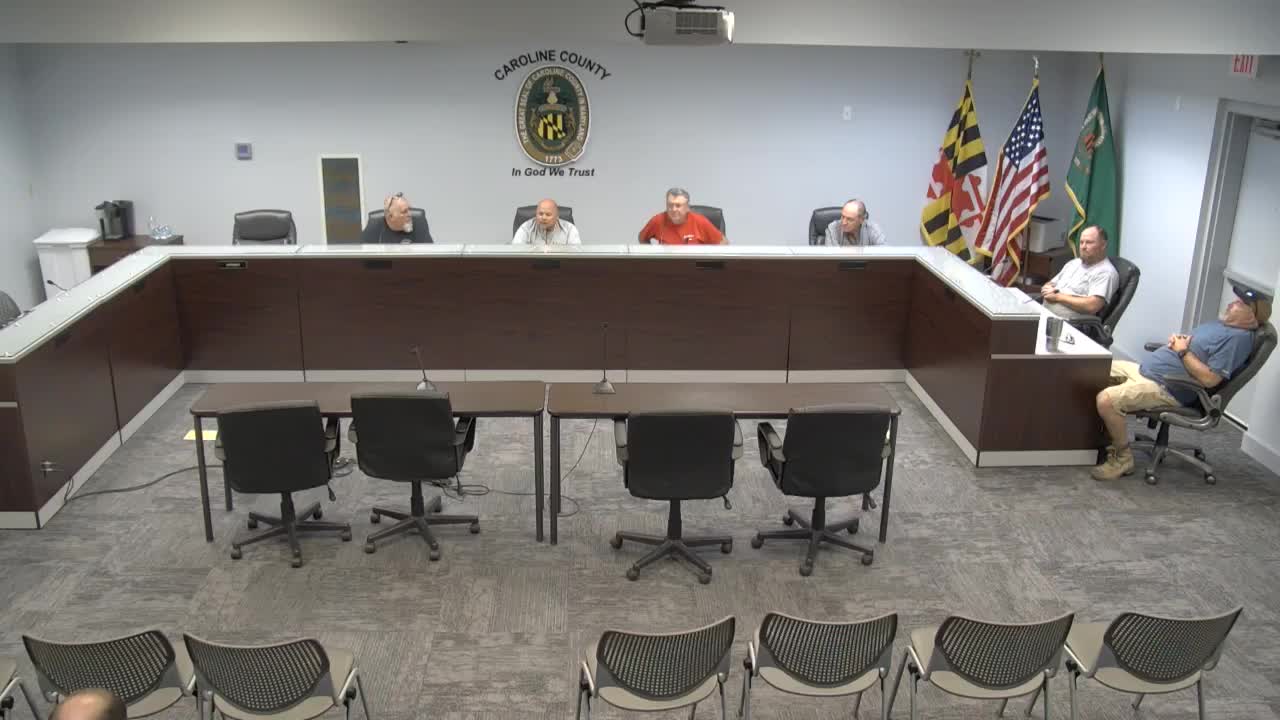
Caroline County — The Caroline County advisory board voted unanimously to establish a two‑year electrician registration requiring a valid state license, a valid driver’s license and a certificate of insurance and set the proposed registration fee at $75.
Caroline County — The Caroline County advisory board voted unanimously to establish a two‑year electrician registration requiring a valid state license, a valid driver’s license and a certificate of insurance and set the proposed registration fee at $75.
The action, moved and seconded during the meeting, passed on a voice vote. Board members also directed staff to prepare a draft regulation and supporting materials for presentation to the county commissioners, and asked staff to gather nearby counties’ registration rules for comparison.
The registration requirement is intended to reduce so‑called “license farming” and unlicensed or uninsured contracting activity that board members said has been reported in and around the county. Several speakers described cases where individuals holding journeyman or master licenses were listed on permits while other, unlicensed workers performed the work; in at least one matter the person whose license was being used was reported as having dementia.
Earl Dempsey of First State Inspection Agency described a separate but related enforcement issue: whether required preparations for electric‑vehicle (EV) chargers should be checked during electrical inspection or during building plan review and final building inspection. "It's not part of the NEC," Dempsey said, referring to the National Electrical Code, meaning the EV‑charger requirement is a state law that building plan reviewers should catch. Board members directed that plan review notes flag EV charger readiness so builders will see the requirement on plans.
Legal counsel Stuart (county attorney) told the board he could not draft regulations on his own without direction from the county commissioners. "It can't be me that draws it up at this moment because I haven't been directed to do so by the county commissioners," he said; the board agreed to present its recommendation and supporting materials to the commissioners and seek direction for a draft regulation.
The board also instructed staff to collect registration and fee examples from neighboring counties (Talbot, Dorchester, Queen Anne's and others were cited) so commissioners would see how Caroline's proposed rule would align with regional practice. Staff members present said processing a registration could take roughly an hour to two hours of staff time and recommended a fee level meant to cover administrative cost without being onerous for license holders.
Next steps recorded in the meeting: staff will gather neighboring counties’ regulations and sample forms, prepare a draft registration/regulation for the county commissioners, and add EV‑charger readiness checks to the building-plan review and final inspection checklists. Board members also discussed referring known unlicensed/uninsured cases to the State Board of Master Electricians or to the state's prosecuting authorities when appropriate; the board agreed that, where enforcement is outside the county’s direct permit jurisdiction (for example, within incorporated towns that issue their own permits), the county should still collect evidence and forward incidents to the State Board.
No ordinance or county code number was assigned at the meeting; the board’s action was a vote to pursue a registration program and to present a drafted regulation and supporting materials to the county commissioners for approval and formal adoption.