Get Full Government Meeting Transcripts, Videos, & Alerts Forever!
Get email alerts on the State Property Conveyance topic
No spam. Unsubscribe anytime.
Committee hears bill to convey Standish prison property for public sale
Summary
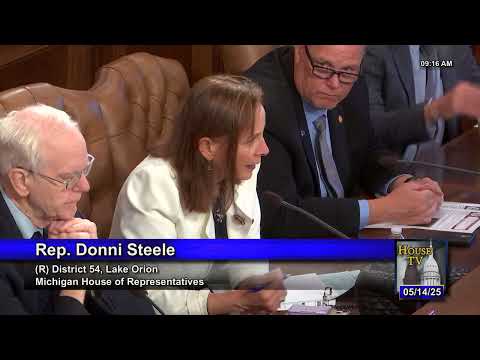
The Michigan House Appropriations Committee held a hearing on House Bill 4011, which would transfer the Standish Maximum Correctional Facility from the Department of Corrections to the Department of Technology, Management & Budget so the property can be declared surplus and offered for public sale.
The Michigan House Appropriations Committee heard testimony on House Bill 4011, introduced by Representative Hoadley, which would transfer the Standish Maximum Correctional Facility from the Michigan Department of Corrections (MDOC) to the Department of Technology, Management & Budget (DTMB) to allow the property to be offered for public sale.
Representative Hoadley said the facility, which opened in 1990 and closed in October 2009, contains multiple housing units, administrative and recreational buildings and has been largely mothballed since its closure. “This facility provides a resource for the community that is severely lacking in this regard,” Representative Hoadley said, describing interest from mental-health and health-care providers to repurpose the site.
The bill’s sponsor told the committee the property has had a history of break-ins and minimal maintenance while vacant and that transferring clear title would allow the state and local community to pursue redevelopment or a sale that could return the property to the local tax rolls and create jobs.
MDOC representative Kyle Kaminski told the committee the department supports declaring Standish surplus and moving forward with conveyance after local stakeholders, including law enforcement and health-care organizations, visited the site and discussed reuse possibilities. “Declaring the property surplus and moving forward with conveyance was certainly in the best interest of the local community,” Kaminski said.
Neil D’Souza of DTMB described the sales process: once the agency declares a property surplus and legislation permits a sale, DTMB conducts an appraisal (typically by an outside appraiser), runs the real-estate process and is obligated to accept the best offer. He said proceeds from a sale go to the state general fund, not a department-specific account.
Committee members asked about maintenance costs, acreage and ongoing state expenditures. MDOC said the property has been minimally maintained by crews borrowed from another facility and that there is not an annual budget dedicated to Standish; periodic capital work, such as roof repairs, has been done but exact historic costs were not available at the hearing. Committee members recorded two different acreage figures during questioning: one speaker cited 39 acres and Representative Hoadley later said the parcel is roughly 78 acres.
No formal committee vote on House Bill 4011 was taken during the hearing; the session was a testimony and question-and-answer hearing only.