Get Full Government Meeting Transcripts, Videos, & Alerts Forever!
Get email alerts on the Elections Poll Workers topic
No spam. Unsubscribe anytime.
Montgomery County election board approves temporary poll workers, tabulators and canvass boards for May 20 primary
Summary
The Montgomery County Board of Elections approved three appointment lists — temporary poll workers, election tabulators and provisional/absentee canvass boards — for the May 20, 2025 primary. Board members discussed partisan balance on canvass teams and recruitment challenges ahead of the election.
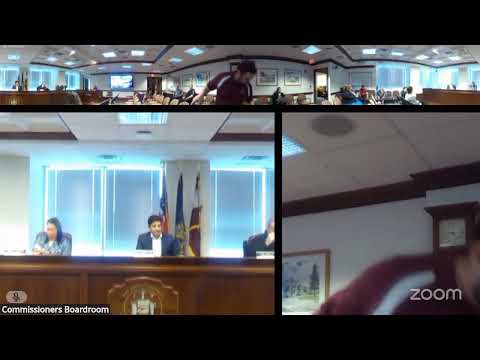
The Montgomery County Board of Elections voted May 14 to appoint temporary poll workers, election tabulators and provisional and absentee ballot canvass board members for the May 20, 2025 primary election.
Director of Elections Frank Dean told the board the appointments are drawn from lists attached to the meeting agenda and are limited to service on the date of the 2025 primary. "Today, I have 3 requests for you," Dean said as he presented the three appointment lists.
The board approved the three motions by voice vote. The first motion, to appoint the names on the document titled "Poll worker appointments for the 2025 primary election" for service on election day, was moved by Commissioner DeBellos and seconded by Commissioner Winder and carried on an oral vote. The second motion, to approve the "Election tabulator appointments for the 2025 primary election" to assist in vote computation, was moved by Commissioner DeBellos and seconded by Commissioner Wagner and carried on an oral vote. The third motion, to appoint the individuals on the attached "Canvasser appointments 2025 primary election" list to serve on the provisional and mail/absentee canvass boards, was moved by Commissioner Weiner, seconded (unnamed on the record), and carried on an oral vote.
Dean cited state election-code provisions when describing canvass duties, saying the board delegates to representatives to examine provisional and absentee envelopes after the election. He referenced "Section 3050 of the election code" and "Section 3146.8 of the election code" when explaining the canvass and provisional-review processes.
Board members and staff discussed the makeup of the appointment lists. Dean said some entries with vendor numbers may still be county poll workers and that vendor identification does not always mean a person is noncounty staff. He also said the office tries to keep canvass and tabulation teams bipartisan but acknowledged that it is "a little bit harder to get folks, especially in primary," and that turnout and staffing needs are smaller than in a general election.
Several commissioners pressed the office on outreach and representation. One commissioner said the appointment spreadsheet showed many people listed as vendors rather than county employees and asked whether past general-election workers had been contacted to work the primary; Dean said county employees are often easier to recruit because it is simpler to obtain authorization and manage scheduling. Dean estimated the office expects about 50,000 ballots to be returned and said the primary will not require the same 24-hour staffing cycle used in larger elections.
Board members also noted recent poll-worker training attendance: commissioners and staff reported one training session drew about 250 attendees and another about 290, and Dean said the trainings run about two hours. A commissioner praised long-serving poll workers and new volunteers alike for their efforts.
Dean and the board agreed to continue outreach before the November general election to try to secure broader bipartisan representation for canvass and tabulation teams.
The board adjourned after completing the three appointment votes.