Get Full Government Meeting Transcripts, Videos, & Alerts Forever!
Get email alerts on the Budget Police Overtime topic
No spam. Unsubscribe anytime.
Board approves ordinance shifting reserves to cover $91 million in projected police and sheriff overtime; vote 8-2
Summary
The Board passed an ordinance reallocating city reserves and other lines to provide $61 million for Police Department overtime and $30 million for Sheriff's Department overtime; the measure passed 8-2 with Supervisors Fielder and Walton voting no.
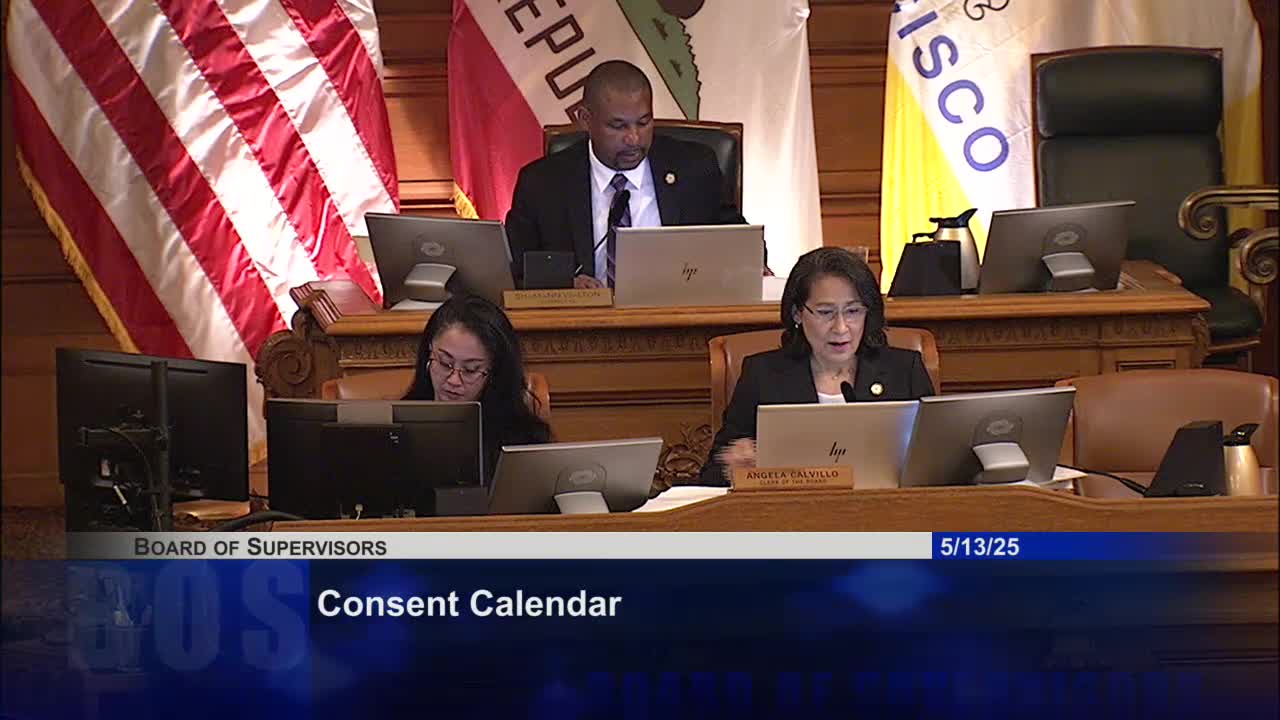
The San Francisco Board of Supervisors approved an ordinance on May 13 to reallocate funds to cover projected overtime costs in public-safety departments. The ordinance passed on final passage by an 8-2 vote.
The ordinance de-appropriated roughly $86.3 million from various salary, fringe-benefit, vehicle, programmatic and capital lines and re-appropriated approximately $61,000,000 to overtime in the Police Department and $30,000,000 to overtime in the Sheriff's Department; other smaller appropriations and de-appropriations were included in the package.
Why it matters: The measure redirects existing city funds to meet projected payroll pressures in law-enforcement overtime rather than increasing the overall budget. Overtime costs have been a recurring pressure for the two departments and were a central justification in the administration's recent public-safety briefings.
Vote and disposition: Roll-call votes recorded by the clerk show 8 ayes and 2 nos. The supervisors recorded as voting no were Supervisor Fielder and Supervisor Shamann Walton; the eight ayes were Supervisors Mahmood, Melgar, Sauter, Cheryl, Chan, Chen, Dorsey and Enguardio.
Process and limits: The ordinance appropriated funds from the general reserve and from boarding-of-prisoners revenue and reallocated existing salary and capital budgets to fund the overtime increases. The measure does not itself change staffing authorizations; it funds anticipated overtime liabilities.
Ending note: The ordinance passed by the board addresses an immediate budgetary shortfall tied to overtime. Any longer-term changes to staffing levels, hiring or structural reforms remain subject to future budget items and collective-bargaining processes.