Get Full Government Meeting Transcripts, Videos, & Alerts Forever!
Get email alerts on the Federal Legislation Health Human Services topic
No spam. Unsubscribe anytime.
Lake County officials warn proposed federal reconciliation package could cut Medicaid, SNAP and shift costs to counties
Summary
Rachel Mackey of Paragon Government Relations told the Lake County Board of Supervisors that House reconciliation text released ahead of committee markups would cut Medicaid by roughly $700 billion over 10 years and seek about $300 billion in SNAP reductions, proposals that county officials said could force greater administrative burdens and shift costs to Lake County.
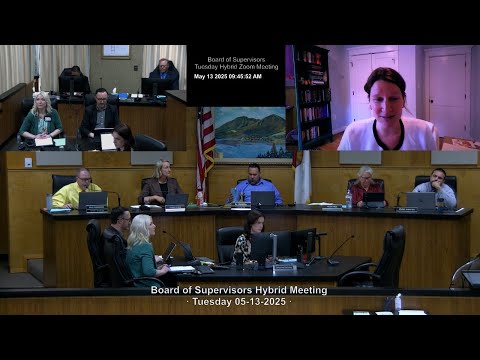
Rachel Mackey of Paragon Government Relations told the Lake County Board of Supervisors on the county’s federal legislative update that newly released reconciliation text in the U.S. House would make substantial changes to safety-net programs that could affect local benefits and county operations.
"We have been worried most about what this proposal could mean for Medicaid and for SNAP," said Rachel Mackey, Paragon Government Relations, during the board’s discussion. She said text released ahead of House committee markups would cut Medicaid by roughly $700 billion over 10 years and seek about $300 billion in SNAP reductions over the same period.
The change could take several forms, Mackey said: a 10-percentage-point reduction in the federal medical assistance percentage (FMAP) for expansion populations in some states, limits on states’ use of provider taxes, more frequent eligibility redeterminations and mandatory work requirements. "The legislation would also force eligibility redeterminations to go from yearly to every six months," Mackey said, and described an "80-hour-a-month requirement" for certain Medicaid recipients. The nonpartisan Congressional Budget Office has estimated the combined Medicaid and Affordable Care Act provisions in the draft could lead to about 13.7 million people losing coverage over 10 years.
Local officials said the proposed changes would add immediate administrative work and could shift costs to county budgets. "About half of Lake County currently receives Medi-Cal benefits and about a third of Lake County currently receives SNAP, locally known as CalFresh," said Rachel Dillman Parsons, Social Services Director for Lake County. Parsons said local realignment funding that helps pay county shares could be threatened by economic shifts that reduce vehicle-license revenues.
Parsons laid out other local effects discussed during the presentation: a provision that would freeze or limit changes to state provider taxes; expansion of work requirements in CalFresh to older age cohorts; and higher state cost-share requirements in some scenarios. Mackey said the House agriculture committee’s text would change how error rates affect states’ share of SNAP benefits, applying tiers up to 25 percent of benefit costs for states with high error rates. "California has around a 13 percent error rate," Mackey said, compared with a national average of roughly 11.6 percent, which could place California toward higher tiers under the proposal.
Board members pressed for contingency planning. One supervisor, speaking during the board discussion, said the county should prepare fallback plans. "I would love to see, what does plan B look like for Lake County, because there's many, many millions of dollars on the line," the supervisor said. Another supervisor cautioned that local and state governments have limited ability to backfill large federal cuts: "The reality is ... we don't know what's happening, but if we continue on this pathway, we're gonna have to make difficult decisions. We're not gonna be able to provide the services that we have for the people that need them."
Presenters also described administrative and agency-level changes separate from reconciliation. Mackey outlined a large reorganization at the U.S. Department of Health and Human Services that the administration has proposed, including staffing reductions she said could total about 20,000 full-time positions and consolidations of agency components. She said those personnel changes have already affected technical assistance and grant processing at the agency level. Mackey also noted the administration’s "skinny" budget proposals remove or reduce several programs by proposal, including the Commodity Supplemental Food Program and AmeriCorps, while LIHEAP funding for FY 2025 has so far been distributed as expected.
County staff listed other federal programs they are monitoring for potential local effects: continuations or reductions in HUD funding, FEMA and disaster-response grant availability, Section 1115 waiver decisions such as CalAIM implications for Medi-Cal waivers, and USDA programs that support forest health and conservation (including EQIP). A county staff member reported about $14 million in Forest Reserve funds remain frozen and $20 million had been applied for but not yet disbursed.
No formal action was requested of the board on this update. Presenters and supervisors said the package and agency proposals remain in flux; Mackey noted the House must finish committee markups, then proceed through the Rules Committee and a likely floor vote before any agreement reaches the Senate. "This update might not be accurate in eight hours, just based on what type of action Congress takes," she said.
Looking ahead, county leaders asked staff to continue monitoring the bill texts, CBO scores and administrative changes and to report back with contingency planning options. Mackey urged officials to watch committee markups and Senate developments; Parsons recommended coordination with state agencies to assess impacts on county administration and eligibility processes.
The board’s discussion closed with thanks to the presenters. Matthew Rothstein, Chief Deputy County Administrative Officer, introduced the briefing and framed it as informational: "No specific action is requested of your board in connection to this item. But you may consider providing direction to staff as appropriate."