Get Full Government Meeting Transcripts, Videos, & Alerts Forever!
Get email alerts on the Archaeology topic
No spam. Unsubscribe anytime.
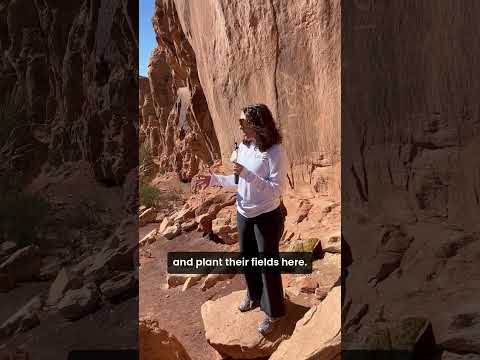
Presenter describes ancient farming landscape visible from Cub Creek petroglyph panel
Summary
In a recorded presentation, a speaker described how petroglyphs at a site overlooking Cub Creek face an ancient farming landscape shaped by repeated burn-and-plant cycles; the speaker cited evidence that early Fremont farmers grew corn, beans, squash and, based on tool residues, potatoes.
A presenter described an ancient farming landscape visible from a petroglyph panel overlooking Cub Creek and said the deposits and tool residues at the site show repeated burn-and-plant cycles and food crops used by early Fremont people.
"1 thing that I really like to do when I go to petroglyph sites is instead of spending all of my time facing the wall where people have written on it, actually see the other direction. Look out at what petroglyphs are seeing," Presenter 1, a staff member, said. "And in this case, what the petroglyphs are looking over is an ancient farming landscape. So down here, you can see Cub Creek. It is become a little bit more of an arroyo these days."
Presenter 1 said that in prehistoric times the creek ran through the center of the area and that people used fire to clear fields and plant crops: "They would have planted corn, beans, and squash, the 3 sisters. Just like farmers today do, we can think that perhaps back in the day, people were taking some of the debris and detritus from their fields, collecting it here, and making a little burn pile." The presenter described cycles of sediment deposition from Cub Creek flooding followed by additional burning that raised and reshaped the planting surface over time.
Presenter 2, a staff member, added context about archaeobotanical evidence: "And we've been talking about early Fremont and how they use the space for farming. And I learned just today that potatoes were an important part of early people's diets. I thought that was really interesting because you hear so much about corn, but potatoes, bridal down over time. You can't see those remnants. But you can do some analysis on grindstones or cutting tools and see some of those potato starches that were left on the tools they were using." The speaker described starch-residue analysis on tools as a method for detecting crops whose physical remains do not persist on the surface.
The presentation consisted of explanatory remarks and interpretation; there were no formal actions, votes, or policy decisions recorded in the transcript. The remarks combined observational description of the modern arroyo condition of Cub Creek with interpretive archaeological detail about past farming practices attributed to early Fremont communities.
The discussion may be of interest to archaeologists, local historians and land managers because it connects visible rock art with the surrounding agricultural landscape and references laboratory methods (starch-residue analysis) that can identify otherwise invisible crops such as potatoes.