Get Full Government Meeting Transcripts, Videos, & Alerts Forever!
Get email alerts on the Municipal Budget topic
No spam. Unsubscribe anytime.
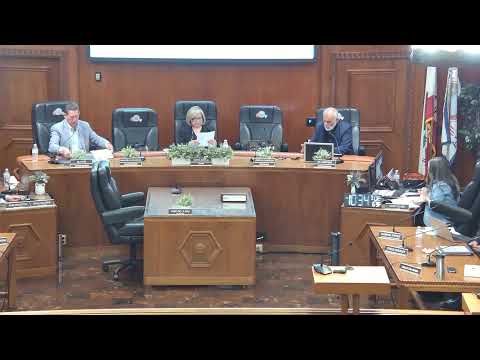
South Gate council approves midyear budget adjustments, carries over $75.8 million in CIP work
Summary
City council adopted midyear budget amendments that adjust revenue estimates, add operational appropriations and roll forward roughly $75.8 million in capital-improvement projects while noting large vacancy-driven savings this fiscal year.
The South Gate City Council on Tuesday approved midyear budget amendments that revise revenue estimates, add roughly $4.1 million in appropriations and carry forward $75.8 million in capital-improvement projects into the next fiscal year.
The midyear package, presented by interim and finance staff, trimmed revenue estimates by a net $1,020,000 in some categories while adding $2,081,000 in operational appropriations and transferring about $2,032,000 to capital projects. The council heard that vacancy savings of about $4,546,000 in the general fund are offsetting much of the new spending, leaving a net reduction of approximately $451,000 to the general fund for the year.
City finance staff framed the midyear as both a "true up" for expenses recorded in the current year and a normal carryover of multi‑year capital projects. John Downs, who led the midyear presentation, said the city extended the typical midyear review through March 31 to get a clearer picture of revenues and expenditures. "By going through to the March 31st, we're getting a better picture," Downs said.
Why it matters: Council members were briefed that although vacancy savings are covering the midyear changes this year, the city faces longer‑term budget pressures. Staff reported a projected operating deficit of about $4,700,000 and an estimated ending general fund balance of roughly $4,900,000. The city still reserves about $13,000,000 for emergencies and $6,000,000 for budget stabilization — together approaching $24,000,000 — but staff warned headwinds remain, notably softening sales tax and one‑time sources.
Key details and supporting figures presented to council include: - Vacancy count: staff reported 55 vacant positions citywide and noted the police department alone had about 21 vacancies; staff said the resulting salary/benefit savings are roughly $4,546,000 this year. - Revenue adjustments: a net $1,020,000 adjustment (staff cited a softening in sales tax and other permit revenue declines, partially offset by higher property‑tax estimates and an anticipated reimbursement tied to a Downey construction project). - Appropriations and transfers: roughly $4,100,000 in net budget adjustments, comprised mainly of CIP transfers and department true‑ups; $2,032,000 in transfers earmarked for capital projects. - CIP carryovers and amended total: staff proposed about $75,800,000 in CIP carryovers and an amended overall CIP budget of about $115,600,000 after new appropriations were added. - ARPA usage: staff reported use of American Rescue Plan Act funds this fiscal year of about $5,600,000 for eligible items including IT, homelessness support and certain sewer/stormwater projects.
Council questions focused on the sustainability of relying on vacancy savings and the structure of special assessment funding. Councilmember Hurtado and others asked how long the city can rely on savings from unfilled positions and whether increased contractor costs or overtime in understaffed units, particularly police, will reverse the apparent savings. "We can't run this low," the city manager said, noting the police department faces minimum staffing needs and overtime pressures.
Council also discussed the street lighting and landscape assessment district. Staff said the assessment revenue has not been updated with a CPI clause for many years; the district currently generates roughly $1.99 million but requires closer to $3.0 million to cover operations and CIP needs, producing an estimated one‑million‑dollar shortfall.
Public comment: Residents and an email correspondent raised concerns about staffing shortages, permitting delays and the use of ARPA funds. One commenter urged a deeper five‑year plan and clearer presentation of fixed versus discretionary costs so residents can judge tradeoffs. Another resident said permit turnaround times are causing people and contractors to work without permits.
Council action and next steps: After discussion, the council voted to adopt the midyear report and the related budget amendments. Staff said the next step is a full fiscal‑year budget presentation and departmental budget workshops in June, when the council will consider new spending priorities and longer‑term vacancy and service strategies.
"We have the funds for this year," the city manager said, "but in June we will be having that discussion about vacancies, cost, budget, and where our deficit is."